

Guest post backlinks are links earned by publishing helpful content on relevant third-party websites. They help SEO by building authority, improving topical relevance, increasing referral traffic, and supporting stronger search visibility over time.
When done properly, guest posting for SEO is not only about placing a link. It is about creating useful content for a real audience and earning a natural backlink from a website that makes sense for your niche.
A strong guest post link building strategy focuses on quality, relevance, and natural anchor text. Instead of publishing on random websites, the goal is to choose trusted sites, write valuable articles, and place links where they genuinely help readers.
What Are Guest Post Backlinks?
How Guest Post Backlinks Work
Guest post backlinks come from articles published on external websites. In most cases, a business, marketer, founder, or writer contributes a useful article to another site. That article may include a contextual link to the writer’s website, blog post, service page, tool, or resource.
For example, a digital marketing agency might write an article about content promotion for a business blog and naturally link to a helpful resource on its own website. The link works because it supports the article, gives readers a next step, and fits the topic.
Businesses that want a structured approach often use a professional guest posting service to find relevant websites, manage outreach, and secure placements that match their niche.
Key idea: The best guest posting for SEO is not built around forced links. It is built around useful content, relevant publishing sites, and a reader-first reason for every backlink.
Why Guest Post Backlinks Help SEO
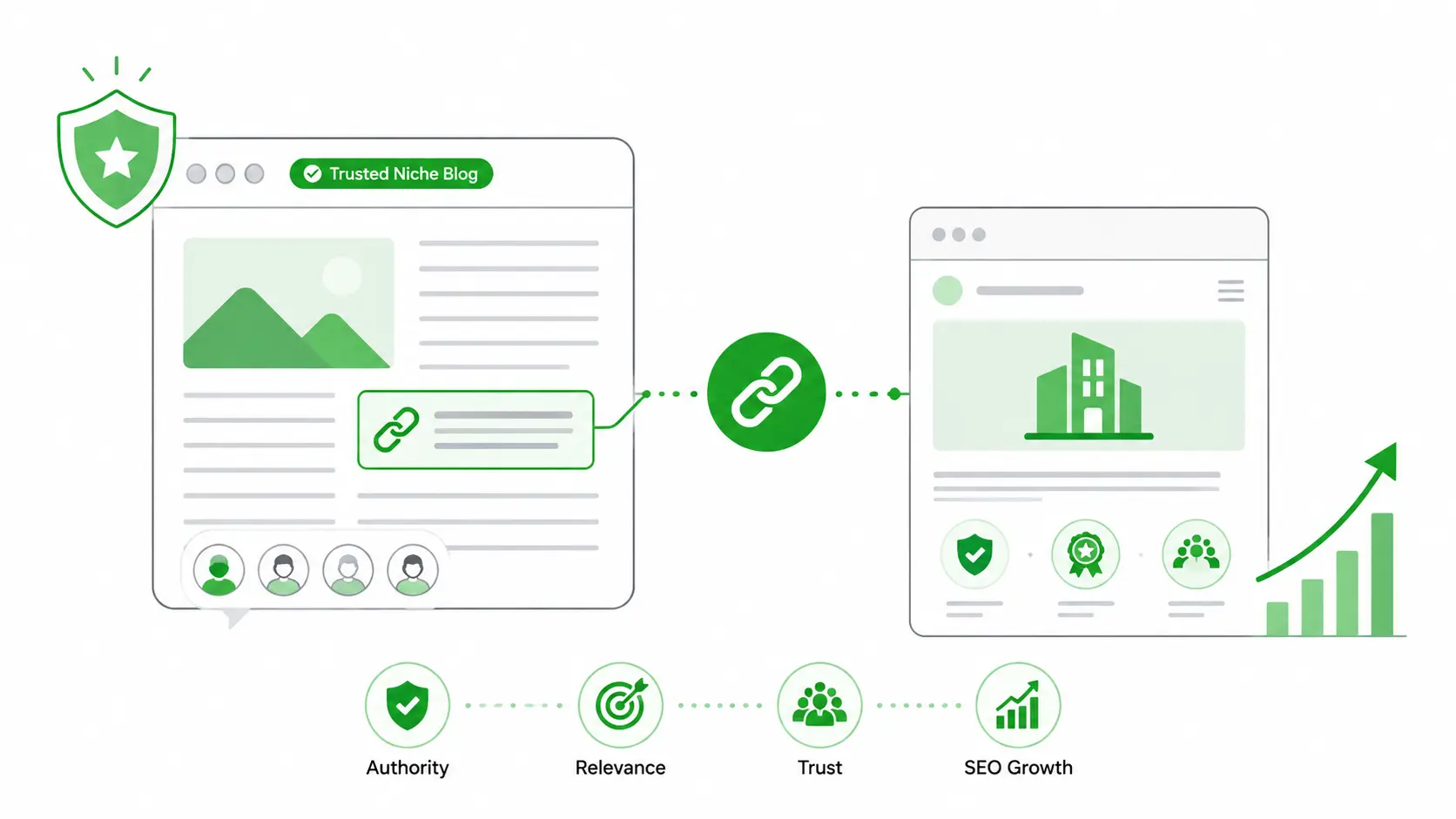
Guest post backlinks can help SEO because they show that other websites are willing to reference your content. Search engines use backlinks as one signal to understand trust, authority, and relevance.
However, not every guest post link is valuable. A link from a random, low-quality website may do little for your SEO and can even create risk if the placement looks unnatural. Quality depends on the publishing site, the article topic, the audience, the link context, and the anchor text.
High quality guest post backlinks come from websites that publish real content for real readers.
Why Guest Post Backlinks Matter for SEO
Guest Post Backlinks and Website Authority
Guest post backlinks can support authority when they come from websites with real content, real traffic, and a relevant audience. A backlink from a trusted niche website can help search engines understand that your site is connected to your industry.
Authority is not only about numbers such as domain rating or domain authority. Those metrics can be useful, but they do not tell the full story. A smaller website in your exact niche may be more valuable than a large unrelated website with weak editorial standards.
For example, a backlink from a respected marketing blog is more useful for an SEO agency than a backlink from a general lifestyle site that publishes every topic under the sun. Relevance gives the link meaning.
Guest Posting for SEO and Referral Traffic
Guest posting for SEO is often discussed as a ranking strategy, but referral traffic is just as important. A strong guest post can send targeted visitors to your website when the topic is helpful and the link is placed naturally.
This traffic can lead to:
- New leads
- Email subscribers
- Service inquiries
- Brand searches
- Returning visitors
- Better audience trust
A good guest post also introduces your brand to people who may not have discovered you through search. When readers see your name or business on multiple relevant websites, your brand becomes more familiar and credible.
That is why guest post link building should not feel like a shortcut. It should feel like content marketing with SEO value attached.
How to Find Relevant Websites for Guest Post Backlinks
Check Niche Relevance Before Metrics
The first rule is simple: relevance comes before metrics. Many people look only at DR, DA, traffic numbers, or backlink counts. These numbers can help with filtering, but they should never replace human review.
A lower-authority website with a focused audience may be better than a high-authority website that has nothing to do with your industry. If the website’s readers are not interested in your topic, the backlink will feel misplaced.
| What to Check | Why It Matters | Good Sign |
|---|---|---|
| Niche relevance | The backlink should make sense within your industry. | The site publishes topics closely related to your business. |
| Organic traffic | Real visibility can bring SEO and referral value. | The website ranks for real keywords and attracts readers. |
| Editorial standards | Quality control reduces spam risk. | Articles are original, helpful, and properly formatted. |
| Outbound links | Your link appears near other external links. | Links are natural, relevant, and not overused. |
Look for websites that have content related to your industry, real organic traffic, active publishing history, clear editorial standards, natural outbound links, real audience value, relevant categories, and articles written for humans.
Relevant websites also make it easier to earn contextual backlinks that fit naturally inside helpful content.
Review Website Quality Before Outreach
Before pitching a guest post, review the website carefully. A good opportunity should look trustworthy from a reader’s point of view, not just from an SEO tool.
Ask these questions before outreach:
- Is the content original?
- Does the website publish helpful articles?
- Are there too many paid-looking posts?
- Are outbound links relevant to each article?
- Does the site rank for real keywords?
- Is the design clean and easy to use?
- Are author pages, contact details, or editorial guidelines visible?
Also check the site’s recent articles. If every post links to unrelated businesses, casinos, random software tools, and unrelated service pages, the site may not be a good fit. A clean outbound link profile matters because your backlink appears in that neighborhood.
The goal is to publish on websites where your content adds value and your link makes sense.
How to Build Guest Post Backlinks Without Looking Spammy
Use Natural Anchor Text for Guest Post Backlinks
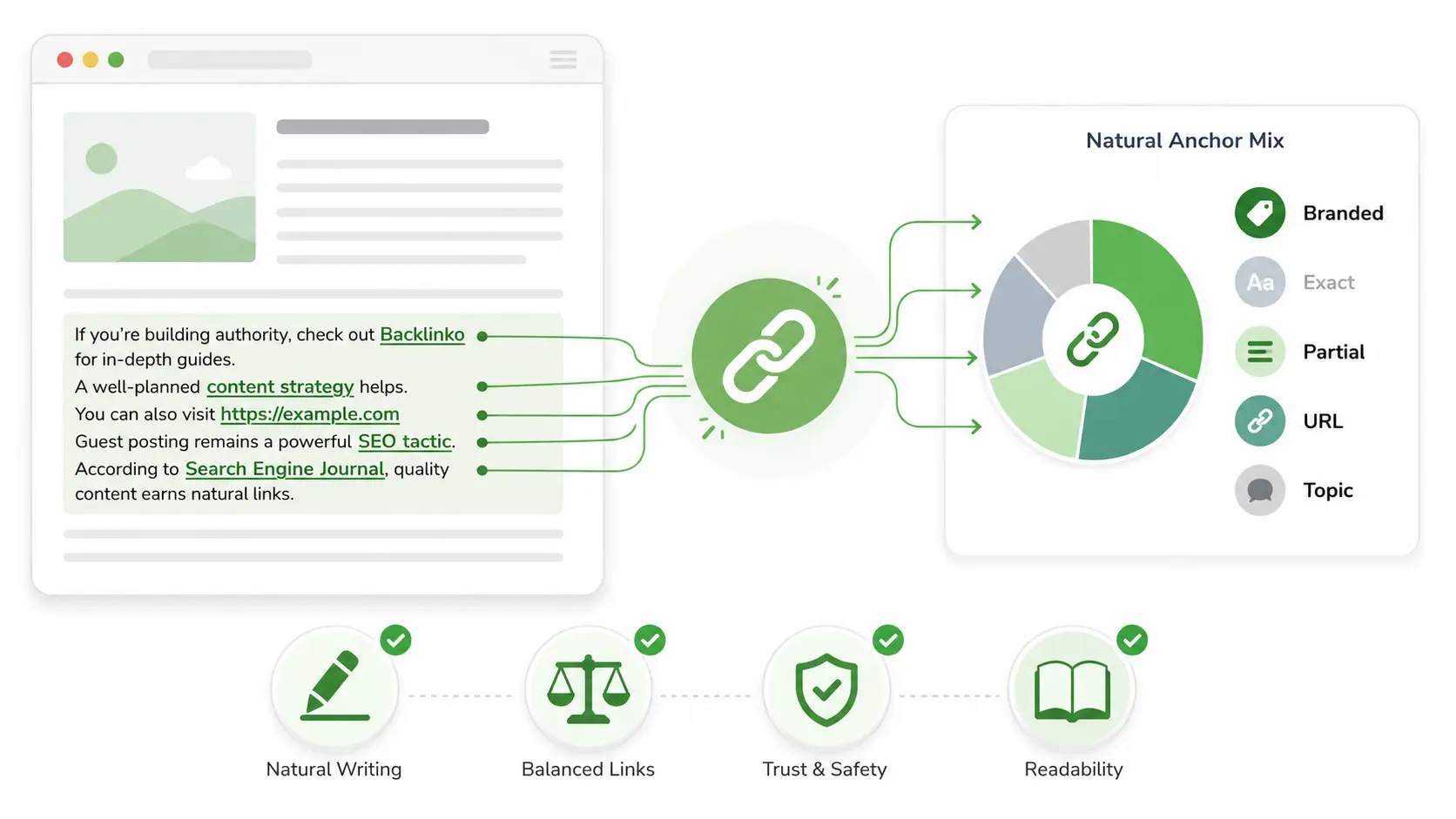
Anchor text is the clickable text used in a backlink. One of the biggest mistakes in guest post link building is overusing exact-match anchors.
For example, using “guest post backlinks” every time you build a link can look unnatural. A healthy backlink profile includes different types of anchors.
| Anchor Type | Example | Best Use |
|---|---|---|
| Branded anchor | Ilyas Marketing Hub | Useful for brand recognition and natural link diversity. |
| Exact-match anchor | guest post backlinks | Use carefully and only when it fits the sentence naturally. |
| Partial-match anchor | guide to guest post link building | Good for relevance without forcing the same keyword repeatedly. |
| URL anchor | ilyasmarketinghub.com | Useful for natural backlink profile variation. |
| Natural anchor | this link building guide | Helpful when the link supports the reader’s next step. |
| Topic-based anchor | SEO authority strategies | Works well when the surrounding topic gives context. |
The anchor should fit the sentence smoothly. If the link feels forced, rewrite the sentence or choose a different anchor. Natural anchor text protects the quality of your backlink profile and makes the article easier to read.
Create Helpful Content, Not Link-Focused Content
A guest post should never exist only to place a backlink. The article should solve a real problem, explain a useful idea, or help the publishing site’s audience make a better decision.
This is where high quality guest post backlinks stand apart from weak placements. The backlink is valuable because the article itself is valuable.
A strong guest post should:
- Match the website’s audience
- Cover a specific topic clearly
- Include practical advice
- Avoid thin or generic writing
- Use examples where helpful
- Link only where the reader benefits
- Feel complete even without the backlink
Keeping the process clean and reader-focused is also an important part of white hat link building strategies.
If the article would still be useful without your backlink, the placement is usually stronger.
Common Guest Post Link Building Mistakes to Avoid
Choosing Websites Only Based on Metrics
Metrics can be helpful, but they are not enough. A website can have strong-looking numbers and still be low quality, irrelevant, or risky. Some sites are built mainly to sell links, not to serve readers.
Avoid websites that show signs of poor quality:
- Unrelated topics across the blog
- Copied or AI-spun content
- Too many outbound links
- No clear editorial process
- No real audience value
- Thin posts with little depth
- Suspicious author profiles
- Articles that exist only to host backlinks
Guest post backlinks should help build trust. Publishing on weak websites can do the opposite.
Overusing Exact-Match Keywords
Another common mistake is using the same keyword anchor repeatedly. While exact-match anchor text can be useful in moderation, too much of it can make your link profile look unnatural.
Instead of forcing “guest post backlinks” into every article, use natural variations such as “guest posting strategy,” “relevant backlink placements,” “SEO link building guide,” or “guest post link building resource.”
The best anchor is the one that helps the sentence read naturally. Search engines are better at understanding context, so you do not need to force the same phrase every time.
Focus on balance, not repetition.
Guest Post Backlinks Checklist
Quality Checklist Before Publishing
Before publishing any guest post, use this checklist to review the opportunity:
This checklist helps you avoid low-quality placements and focus on links that support long-term SEO growth.
Final Guest Post SEO Review
Before publishing, review the article from a reader’s perspective. Does the topic make sense for the website? Does the backlink help the reader learn more? Does the anchor text fit naturally? Would the article still be helpful without your link?
If the answer is yes, the placement is likely stronger.
Guest post backlinks work best when they are built with relevance, quality, and patience. Instead of chasing quick links from random websites, focus on building relationships, publishing useful content, and choosing placements that make sense for your niche. A natural guest posting for SEO strategy can support long-term authority, better visibility, and stronger search performance.
FAQs
Are guest post backlinks good for SEO?
Yes, guest post backlinks can be good for SEO when they come from relevant, trustworthy websites and are placed inside useful content. The value depends on the quality of the publishing site, the relevance of the topic, and how naturally the link fits into the article. Low-quality or unrelated guest posts can be risky, so quality matters more than quantity.
How many guest post backlinks do I need?
There is no fixed number of guest post backlinks every website needs. It depends on your niche, competition, current backlink profile, and SEO goals. A small website in a low-competition niche may need fewer links, while competitive industries usually require a stronger and more consistent link building strategy. Focus on steady, high-quality growth instead of building links too quickly.
What makes a guest post backlink high quality?
A high quality guest post backlink usually comes from a relevant website with real content, real traffic, and a clean link profile. The article should be original, helpful, and written for readers, not only for SEO. The backlink should appear naturally inside the content and use anchor text that fits the sentence.
Can guest post backlinks look spammy?
Yes, guest post backlinks can look spammy if they are placed on unrelated websites, use repeated exact-match anchor text, or appear inside thin content. Publishing too many low-quality guest posts in a short time can also create an unnatural pattern. To avoid this, focus on relevance, editorial quality, and natural link placement.
What is the difference between guest posting and guest post link building?
Guest posting is the process of writing and publishing content on another website. Guest post link building is the SEO strategy behind using those guest posts to earn backlinks. A strong strategy combines helpful content, relevant websites, natural anchor text, and quality control to build links that support long-term SEO performance.