
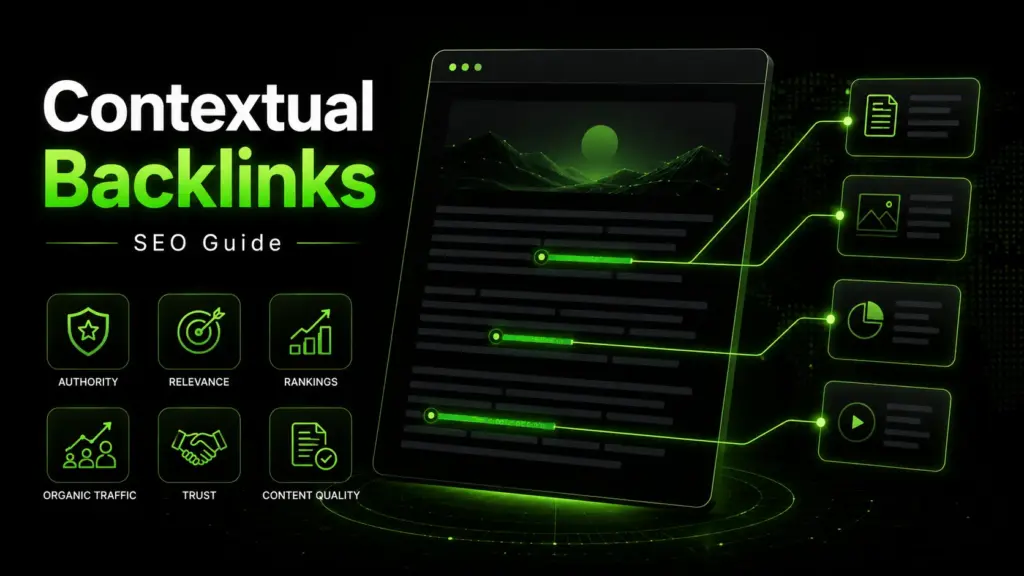
Contextual backlinks are links placed naturally inside relevant content, such as blog posts, guides, case studies, tutorials, or editorial articles. They matter for SEO because they connect one page to another in a meaningful way. Instead of appearing randomly in a footer, sidebar, or profile page, contextual links sit inside useful text that explains why the linked page is helpful.
When done properly, contextual backlinks can support topical relevance, authority, referral traffic, and long-term organic growth. The goal is not to collect as many links as possible — the goal is to earn high quality backlinks from pages that make sense for your audience, your topic, and your website. A strong backlink strategy starts with understanding which links actually matter and why.
What Are Contextual Backlinks?
Contextual Backlinks Meaning in SEO
Contextual backlinks are inbound links placed within the main body of a page, surrounded by relevant content that supports the destination page. The key word is "contextual" — the link should not feel forced. It should help the reader understand the topic better, find a useful resource, or continue learning about a related idea. In SEO, these links are valuable because search engines can evaluate the surrounding text, anchor text, page topic, and destination page together, creating a clearer relationship between the two pages.
Examples of Contextual Links in Content
Contextual links can appear in many types of content — blog posts, guest articles, resource guides, comparison pages, case studies, expert roundups, interviews, research summaries, and educational tutorials. For example, if an article explains how to plan a safe backlink strategy, it may naturally link to a deeper guide that helps readers organize link goals, outreach targets, anchor text, and quality checks. That link is contextual because it appears where the topic is already being discussed.
Why Contextual Backlinks Matter for SEO
How Contextual Links Support Relevance and Authority
Contextual links help search engines understand relationships between topics. If a trusted website writes about SEO and links to your page from a relevant paragraph, that link sends a stronger topical signal than a random link from an unrelated page. This matters because modern SEO is not only about link numbers — search engines look for patterns of trust, usefulness, and relevance. Contextual backlinks can also help users: readers are more likely to click a link when it appears naturally in a sentence that explains its value, leading to better referral traffic and stronger engagement.
Why High Quality Backlinks Can Improve Organic Growth
High quality backlinks can support organic growth when they come from relevant, trusted, and active websites. A strong backlink should make sense even if search engines did not exist — it should help real readers discover useful information.
- Relevant page topic that matches the destination
- Natural placement inside useful editorial content
- Clear, helpful surrounding text explaining the link
- Trusted referring domain with real organic traffic
- Clean anchor text that fits naturally in the sentence
- No spammy outbound link patterns on the page
- Real value for the reader — not just SEO benefit
A small number of strong contextual backlinks can often be more useful than many weak links from unrelated websites.
Contextual Backlinks vs Other Types of Backlinks
Contextual Backlinks vs Footer and Sidebar Links
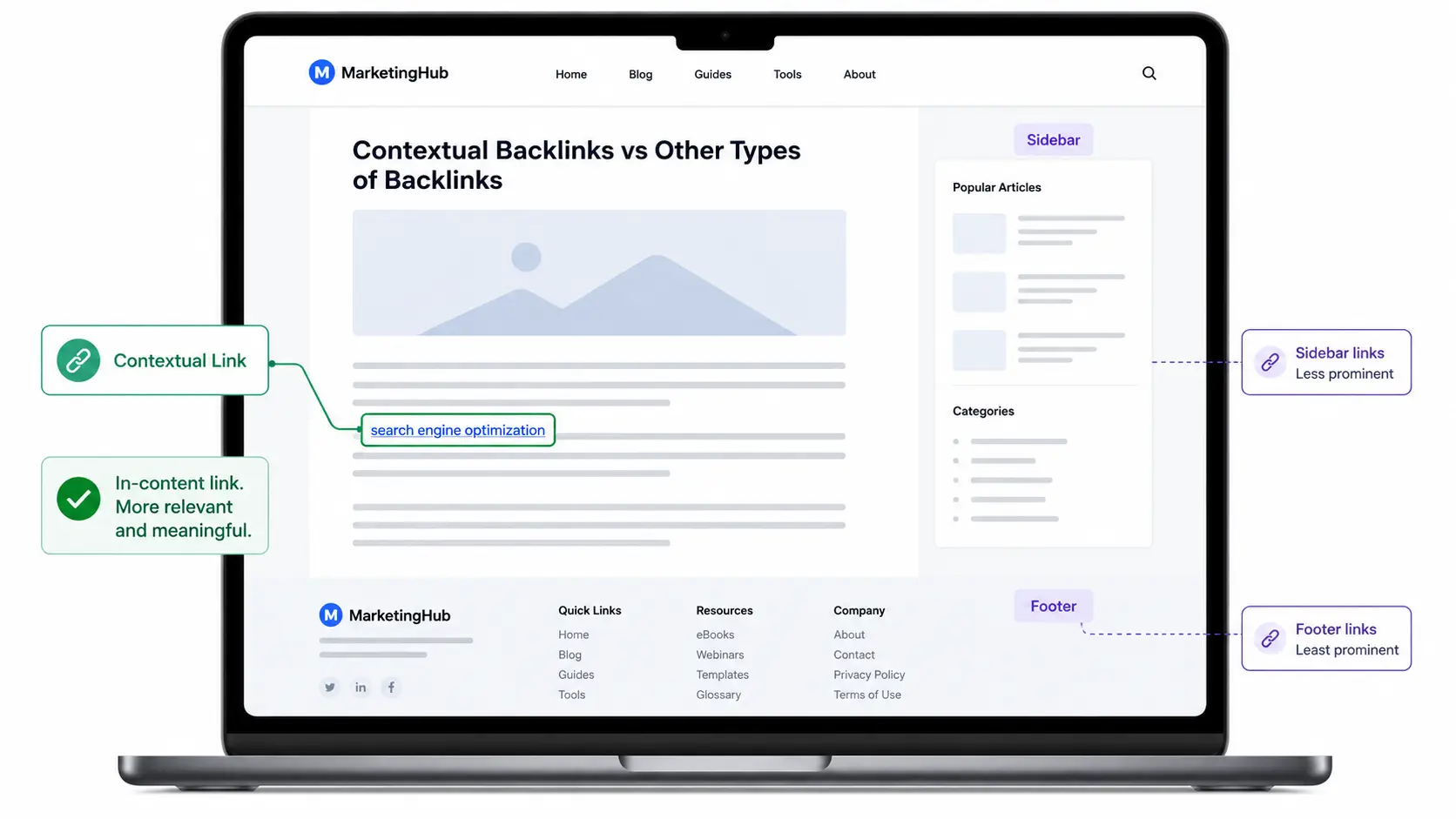
Contextual backlinks appear in the main content area. A footer link may appear on every page of a website, but it often lacks a clear reason for being there. A sidebar link may be useful for navigation but may not explain the relationship between two pages. Contextual links are different because they are part of the actual discussion — a link inside a paragraph about link quality is easier for readers and search engines to understand than a sitewide footer link with vague anchor text.
- Outside the main editorial flow
- Often sitewide or repeated on every page
- Lacks surrounding explanatory text
- May look self-created or generic
- Usually weaker topical signal
- Inside the main body of relevant content
- Appears once — specific to that article
- Surrounded by useful explanatory text
- Editorial in nature — harder to fake
- Stronger topical and authority signal
Contextual Backlinks vs Directory and Profile Links
Directory links, profile links, comment links, and author bio links can still have a place in a natural backlink profile, but they are usually less powerful than relevant in-content links. Contextual backlinks are often stronger because they appear within content that has a topic, purpose, and audience — they are not just links, they are recommendations placed inside useful information. This does not mean every contextual link is good. A contextual link from a spammy article on an unrelated website is still risky. Placement matters, but relevance and quality matter more.
How to Build High-Quality Contextual Backlinks

Contextual Link Building Through Guest Posts
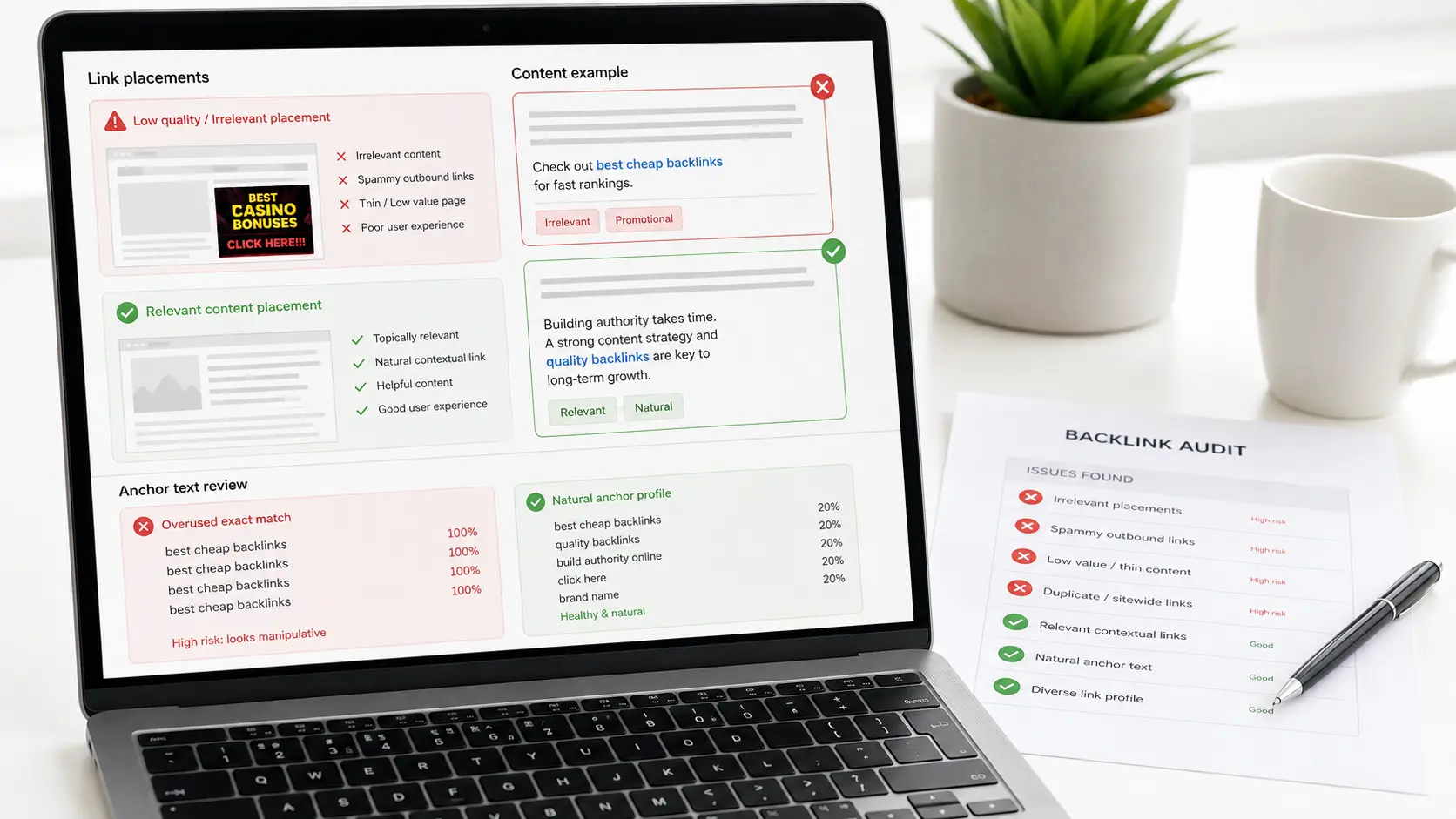
Guest posting is one of the most common ways to earn contextual backlinks. The safe approach is to write genuinely useful content for relevant websites in your niche — the link should support the article, not interrupt it. A good guest post should match the host website's audience, provide original value, and include only natural links. Avoid thin posts written only to place anchor text, as that kind of contextual link building can look manipulative and create long-term SEO risk. Before pitching, check whether the website publishes real content, has a clear audience, maintains editorial standards, and avoids spammy outbound linking.
Contextual Backlinks from Editorial Mentions
Editorial mentions are links earned because your content, data, product, quote, or insight deserves to be referenced — these are powerful because they are placed by the publisher, not forced by the website owner. You can earn editorial links by publishing original research, expert commentary, practical templates, statistics, case studies, and strong opinion pieces. Journalists, bloggers, and niche publishers often need useful sources, so if your content solves a real problem it becomes easier to reference naturally.
10 Best Ways to Build Contextual Backlinks
Create Link-Worthy Content Assets
The best links usually point to content worth citing. Instead of asking people to link to basic service pages, create assets that add value to their content — original research, industry statistics, calculators, checklists, templates, comparison guides, expert roundups, case studies, visual explainers, and detailed tutorials. These assets make outreach easier because you are offering something that improves the publisher's content, not just asking for a favor.

Use Outreach to Earn Relevant Contextual Links
Outreach works best when it is specific, personal, and useful. Find pages where your content genuinely adds value — do not send generic emails to hundreds of websites. Here are 10 safe ways to build contextual backlinks:
The best link building tools can help you analyze competitors, discover relevant websites, review link quality, and track outreach progress.
Best Practices for Contextual Link Building
Choose Relevant Websites and Pages
Relevance should come before metrics. A link from a smaller but highly relevant website can be more useful than a link from a large website that has nothing to do with your topic. Check the website's niche, content quality, organic traffic, audience, outbound links, and publishing standards. Also review the specific page where your link may appear — a relevant website is good, but a relevant page is even better. For businesses that do not have time to manage outreach internally, professional link building services can help organize research, content placement, and quality control.
Use Natural Anchor Text for Contextual Links
Anchor text should describe the destination page naturally. Avoid repeating the same exact-match keyword too often — over-optimized anchors can make a backlink profile look unnatural. A healthy anchor text mix may include branded anchors, partial-match anchors, page title anchors, natural phrase anchors, and plain URL anchors. The right anchor depends on the sentence, the topic, and the reader's expectation — "contextual link building guide" may work in one sentence, while "learn more about safer link building" may work better in another.
Write anchors for humans first. A link that fits the sentence smoothly is more useful for readers and more trustworthy for search engines than a forced keyword phrase.
Common Mistakes to Avoid with Contextual Backlinks
Final Thoughts on Contextual Backlinks
How to Build Links Safely Over Time
Safe link building is a long-term process. Start with useful content, choose relevant websites, personalize outreach, and keep anchor text natural. A strong link should make sense to a reader before it makes sense to an algorithm. Build slowly and consistently — review each referring website, page topic, anchor, and link placement. If a link looks forced, irrelevant, or low value, it is probably not worth pursuing.
Why Quality Matters More Than Quantity
Contextual backlinks are valuable because they connect relevant ideas inside useful content. They help readers discover better resources and help search engines understand topical relationships. The best approach is simple: create content worth referencing, build relationships with relevant publishers, and focus on high quality backlinks instead of shortcuts. When contextual backlinks are earned naturally and placed with purpose, they can support stronger authority, better visibility, and sustainable SEO growth.
Need Help Building High-Quality Contextual Backlinks?
Get professional link building support to earn relevant, editorial backlinks that improve topical authority, organic visibility, and long-term SEO growth.
View Link Building Services →Frequently Asked Questions
Contextual backlinks are links placed naturally inside the main content of a page, such as a blog post, guide, or article. They are surrounded by relevant text that explains why the linked page is useful. Because of this context, they are often more valuable than links placed in footers, sidebars, directories, or unrelated profile pages.
Yes, contextual backlinks can be good for SEO when they come from relevant, trustworthy, and high-quality websites. They can support topical relevance, authority, referral traffic, and organic visibility. However, they should be built naturally — links from spammy websites, irrelevant pages, or over-optimized anchor text can create unnecessary SEO risk.
Contextual backlinks are placed inside relevant content, while other backlinks may appear in footers, sidebars, directories, comments, author bios, or profile pages. The main difference is context — a contextual link is supported by surrounding text, making it more useful for readers and easier for search engines to understand the relationship between pages.
You can build high-quality contextual backlinks through guest posts, editorial outreach, digital PR, expert contributions, original research, resource pages, and useful content assets. The safest approach is to choose relevant websites, provide helpful content, use natural anchor text, and avoid spammy placements. Quality should always matter more than quantity.
There is no fixed number of contextual backlinks every website needs. It depends on your niche, competition, website authority, and target keywords. A few relevant, high-quality links can be more valuable than many weak links. Focus on consistent, natural growth from trusted and topically related websites.