

Google Ads for small business can be a powerful way to reach people who are already searching for your products or services. Unlike social media ads, where you often interrupt people, Google Ads lets your business appear at the exact moment someone is looking for help, prices, services, or nearby options.
But Google Ads is not magic. It can generate leads quickly, or it can waste money quickly. The difference usually comes down to strategy, targeting, landing pages, tracking, and regular optimization.
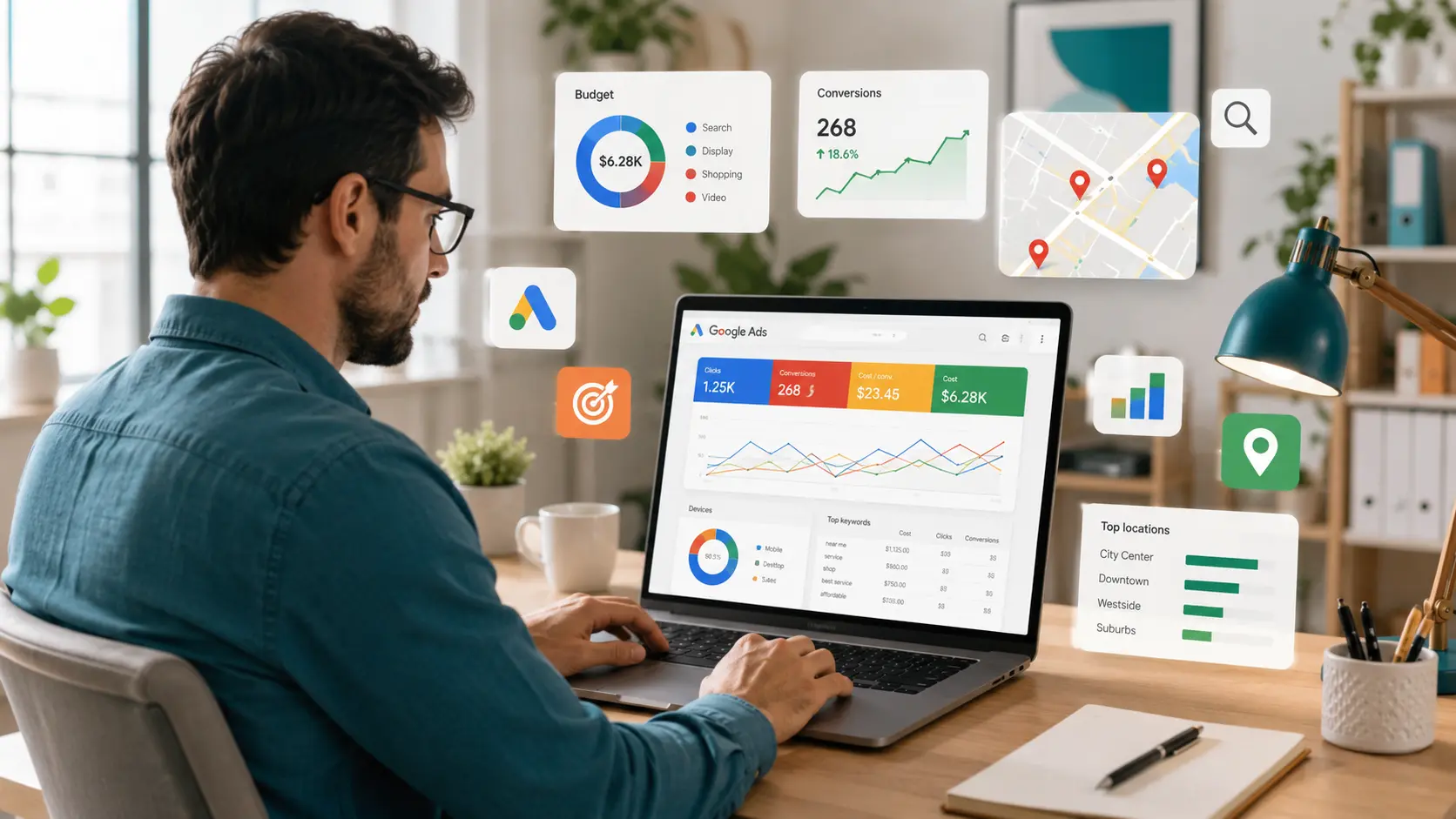
What Is Google Ads for Small Business?
Google Ads for small business is a paid advertising platform that helps local shops, service providers, ecommerce stores, consultants, and other small brands appear across Google Search, Maps, YouTube, Display, and partner placements. For most small businesses, Search campaigns are the most practical starting point because they target people typing specific keywords into Google.
How Google Ads Helps Small Businesses Reach Ready Buyers
Google Ads helps small businesses reach people with clear intent. Someone searching "emergency plumber near me" is usually much closer to taking action than someone casually reading a plumbing maintenance blog. That is why Google Ads works well for businesses that need calls, bookings, quote requests, form submissions, store visits, or online sales. Paid search gives small businesses faster visibility than SEO, although it should not replace long-term organic marketing.
Why Google Ads for Small Business Needs a Clear Strategy
Small businesses often have limited budgets, so every click matters. A strong campaign should define the target location, keyword intent, ad groups, ad copy, landing pages, conversion actions, and budget limits before launch. Without a plan, campaigns can attract irrelevant clicks, broad searches, and visitors who never convert. A good strategy turns Google Ads from "paying for traffic" into a measurable lead-generation system.
Is Google Ads Worth It for Small Businesses?
Yes, Google Ads is worth it for small businesses when campaigns are built around clear goals, relevant keywords, strong landing pages, and proper conversion tracking. It is especially useful for businesses that want leads, calls, bookings, or local customers.
When Google Ads for Small Business Can Deliver Strong Results
Google Ads for small business works best when the offer is clear and the search intent is strong. A dental clinic promoting emergency appointments, a roofer targeting repair requests, or a local accountant advertising tax services can all benefit from search ads because customers are actively looking. Conversion tracking helps advertisers understand what users do after interacting with ads — such as purchases, calls, or sign-ups — making tracking essential for knowing whether campaigns produce business value, not just clicks.
When Small Businesses Should Be Careful With Paid Ads
Small businesses should be careful when campaigns are too broad, tracking is missing, or landing pages are weak. Google Ads can become expensive if a business targets every possible keyword or sends all visitors to a generic homepage.
A campaign should not begin with "Let's get as much traffic as possible." It should begin with "Which customer action is worth paying for?"
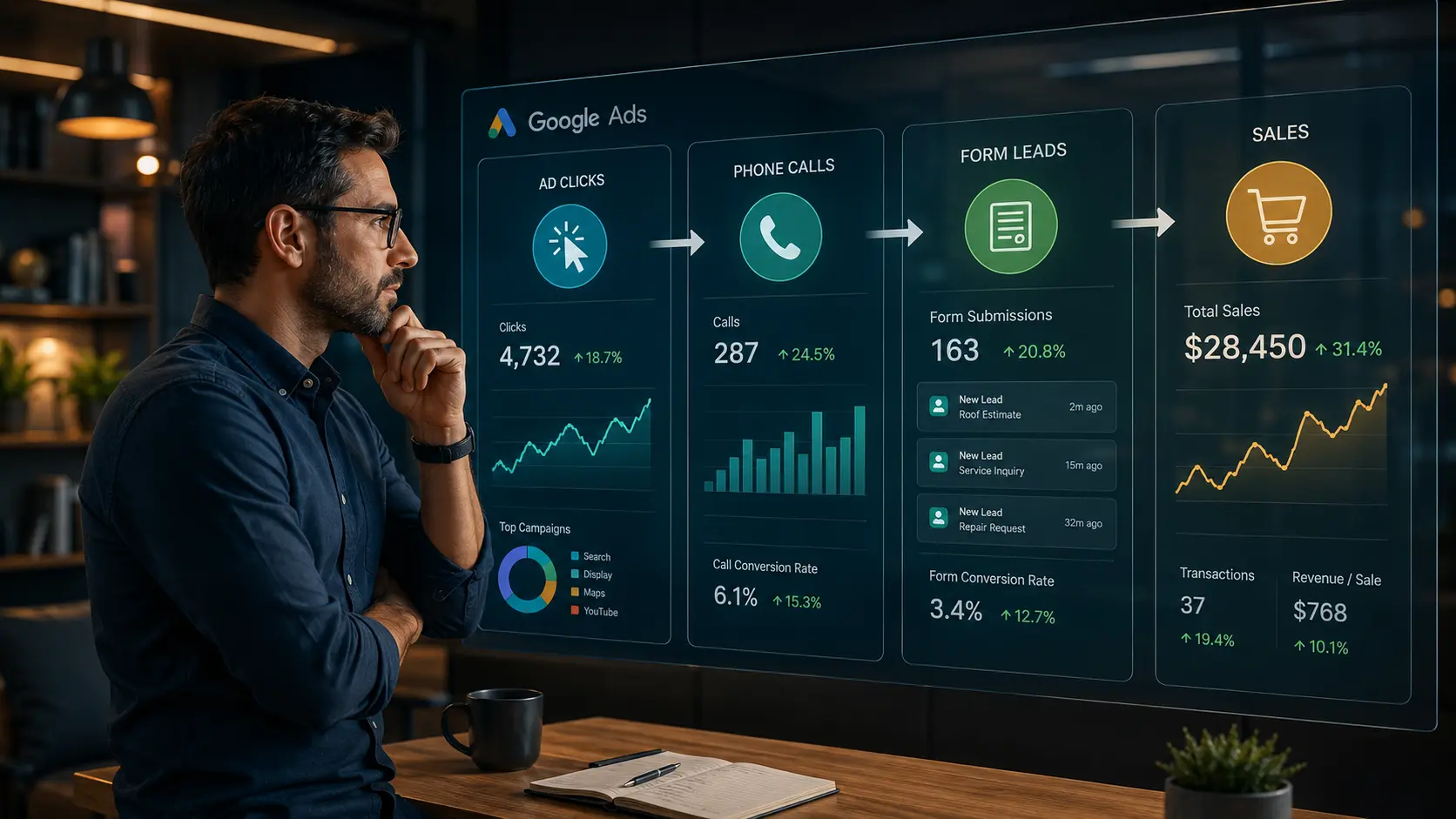
How Much Should a Small Business Spend on Google Ads?
There is no single perfect budget for every business. The right amount depends on the industry, city, competition, average cost per click, profit margin, and value of each lead or sale.
Understanding Google Ads Budget for Small Business
A practical Google Ads budget for small business should start as a test, not a gamble. The goal is to collect enough data to see which keywords, ads, and landing pages create qualified leads.
A local business in a low-competition area may test with a modest daily budget and still get consistent results.
A lawyer, roofer, dentist, or HVAC company in a competitive city may need a larger test budget because clicks cost more.
How to Start Small and Scale Without Wasting Budget
Begin with one or two focused campaigns. Do not advertise every service at once. Start with high-intent keywords, monitor search terms, pause poor performers, and invest more in keywords that generate real inquiries. For example, "commercial cleaning quote" is more valuable than "cleaning tips" — the first search suggests buying intent, the second may attract people looking for free advice.
10 Google Ads Tips for Small Business Growth
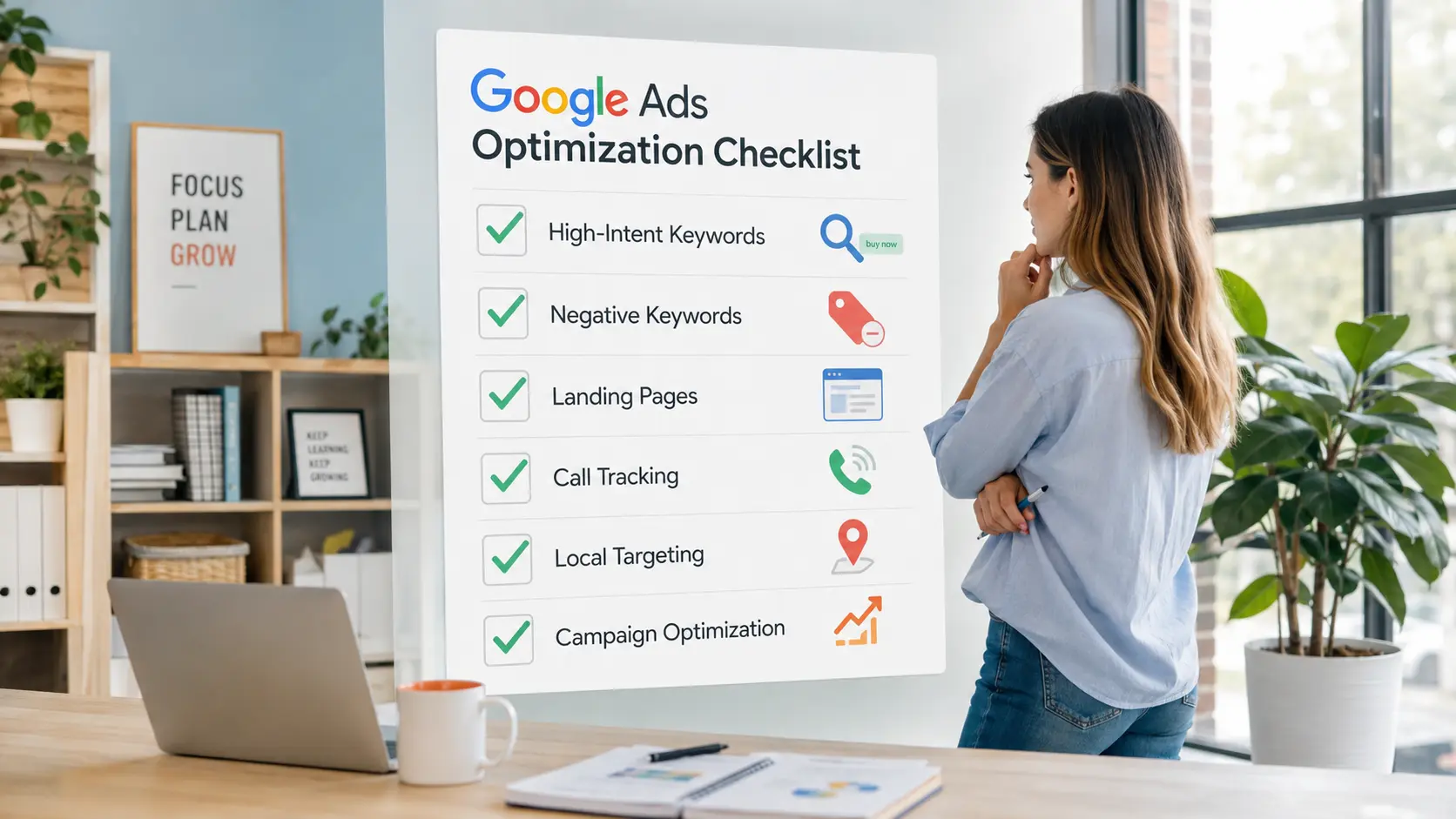
These tips are designed to reduce wasted spend and improve lead quality for small business campaigns.
Google Ads for Local Business: How to Get Better Results
Google Ads for local business campaigns should focus on nearby buyers, not random website traffic. The goal is to attract people who can actually visit, call, book, or request service.
Best Google Ads Tips for Local Business Campaigns
The best tips for local business campaigns include using precise location targeting, choosing service-specific keywords, adding call assets, writing local ad copy, using negative keywords, and sending visitors to relevant landing pages. A local campaign should prioritize quality leads over traffic volume — ten strong local inquiries are usually better than one hundred broad clicks from people outside your service area.
How to Use Local Search Intent in Your Campaigns
Local customers often search with urgent intent. Phrases like "near me," "open now," "best," "repair," "service," and city names can show stronger buying intent. For example, "garage door repair in Dallas" is more specific than "garage doors." Location-based wording helps small businesses connect with customers who are closer to taking action.
| Weak Keyword | Stronger Local Keyword |
|---|---|
| plumbing | emergency plumber near me |
| cleaning | commercial cleaning quote [city] |
| garage doors | garage door repair in Dallas |
| accounting | book tax consultant [city] |
| roofing | roof repair estimate near me |
Should Small Businesses Use Performance Max Campaigns?
Performance Max can be useful, but it is not always the best first campaign for beginners.
When Performance Max Can Help Small Businesses
Performance Max is a goal-based campaign type that can serve ads across Google channels from one campaign — including Search, YouTube, Display, Discover, Gmail, and Maps. It can help small businesses appear across multiple Google channels, but it works best when conversion tracking, audience signals, creative assets, and campaign goals are properly prepared. Businesses can learn more from this guide to Performance Max campaigns.
When Search Campaigns May Be a Better Starting Point
Beginners may benefit from starting with Search campaigns because they offer more direct keyword control. With Search, you can see which keywords are spending money and which ones are producing leads. Performance Max can be useful later when the business has enough conversion data, strong creative assets, and clear campaign goals.
Search campaigns give you more visibility into what is working. Once you have consistent conversions, Performance Max can extend your reach across more Google channels.
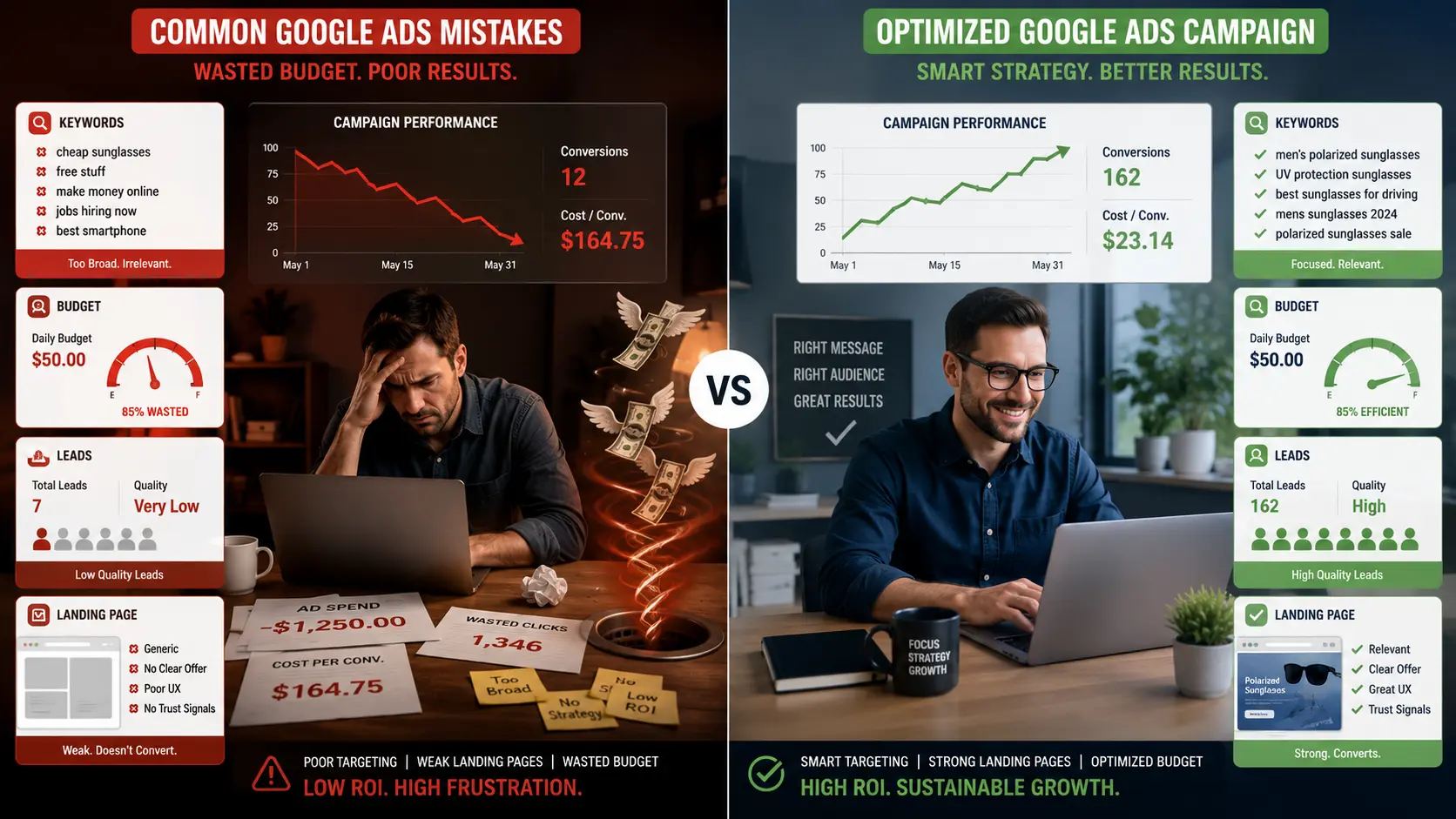
Common Google Ads Mistakes Small Businesses Should Avoid
Final Thoughts on Google Ads for Small Business
Why Strategy Matters More Than Spending More
Higher budgets do not automatically create better results. A small campaign with focused keywords, strong landing pages, and accurate tracking can outperform a larger campaign with poor targeting. Google Ads rewards clarity — know who you want to reach, what action you want them to take, and how much that action is worth to your business.
How to Build a Long-Term Google Ads System
Google Ads for small business can become a valuable growth channel when it is managed with patience, structure, and clear goals. Instead of spending money on broad campaigns, small businesses should focus on high-intent keywords, local targeting, conversion tracking, negative keywords, and continuous testing. With the right approach, Google Ads can help generate consistent leads and support long-term business growth.
Need Expert Help Managing Your Google Ads?
Get professional PPC management to improve targeting, reduce wasted spend, and build campaigns that generate real leads for your business.
View PPC Management Services →FAQs About Google Ads for Small Business
Yes, Google Ads can be good for small businesses because it helps them appear when people are actively searching for their products or services. It works best when campaigns use focused targeting, relevant keywords, and conversion tracking instead of simply paying for more clicks.
A good Google Ads budget for small business depends on the industry, location, competition, and value of each lead or sale. Many businesses start with a smaller test budget, collect data, improve campaigns, and scale only after results become measurable and consistent.
Yes, Google Ads can help local businesses attract nearby customers by targeting specific cities, service areas, or radius locations. Local ads work best when they include clear services, location-based wording, call options, and relevant landing pages.
Small businesses can use Performance Max campaigns, but they should have clear conversion tracking and strong creative assets before starting. Beginners may prefer Search campaigns first because they offer more keyword control and easier performance analysis.
Small businesses can avoid wasting money by using negative keywords, targeting only relevant locations, tracking conversions, reviewing search terms regularly, and improving landing pages. Starting with focused keyword groups and scaling only after seeing results also prevents budget waste.