

A content brief is a clear set of instructions that helps writers create focused, useful, and SEO-friendly content. Before writing begins, the brief explains the target keyword, secondary keywords, search intent, heading structure, audience, internal links, tone, and optimization notes.
For SEO, a content brief matters because it keeps the article aligned with what users are actually searching for. Instead of guessing what to include, writers get a roadmap that shows what the content should cover and how it should be structured. A strong content brief also saves editing time — it reduces confusion, prevents missing key topics, and helps teams create better SEO content from the start.
What Is a Content Brief?
Content Brief Meaning
A content brief is a document or guideline that explains the purpose, direction, and structure of a piece of content. It gives writers the information they need before they start writing. A content brief can be used for many types of content, including blog articles, landing pages, service pages, product pages, SEO content updates, and guest posts. The goal is simple: help the writer understand what the page should achieve, who it is for, and how it should be written.
Why Writers and SEO Teams Use Content Briefs
Writers and SEO teams use content briefs because they connect SEO strategy with content creation. A writer may know how to write well, but without a clear brief, they may not fully understand the search intent, target audience, or optimization goals. A good content brief helps:
- Save time and reduce revisions
- Improve consistency across multiple articles
- Keep the article focused and on-topic
- Match search intent from the start
- Make internal linking easier to plan
- Maintain quality across freelance and in-house content teams

Why a Content Brief Is Important for SEO
How a Content Brief Supports Search Intent
Search intent is one of the most important parts of SEO writing. It explains what the user wants when they search for a keyword. For example, someone searching for "content brief" usually wants to know what it means, why it matters, what it includes, and how to create one — they are not looking to buy software immediately. A content brief helps define this intent before writing starts, telling the writer whether the page should educate, compare, sell, explain, or solve a problem.
How a Content Brief Improves Content Optimization
Good SEO content does not only depend on keywords. It also needs structure, readability, internal links, clear answers, and useful examples. A strong brief supports the full content optimization process by giving writers clear instructions before the article is written. When the structure is planned in advance, the article becomes easier to read and easier for search engines to understand — the writer knows which topics to cover, where to add internal links, and how to answer the reader's main questions.
A strong content brief does not slow down the writing process. It makes the article faster to write, easier to edit, and more aligned with what readers and search engines expect.
What to Include in an SEO Content Brief
Main Keyword, Secondary Keywords, and Search Intent
Every SEO content brief should include the main keyword, secondary keywords, search intent, target audience, recommended word count, suggested headings, internal links, external research notes, FAQs, image suggestions, tone of voice, and CTA direction. The main keyword gives the article its primary focus. Secondary keywords help support the topic naturally. Search intent explains what the reader wants from the content.
For example, if the main keyword is "content brief," secondary keywords may include "SEO content brief," "content brief template," and "how to write a content brief." These terms help the writer cover the topic more completely without forcing keywords into the article.
Heading Structure and Content Guidelines
Headings make content easier to write, scan, and understand. A good content brief should include a clear H1, H2, and H3 structure before writing begins. This helps the writer cover the topic fully, answer user questions, improve readability, and keep the article organized. Headings also prevent the article from becoming too broad or unfocused — each section should have a clear purpose and move the reader closer to understanding the topic.

How to Write a Content Brief Step by Step
How to Write a Content Brief Before Writing Starts
If you want to learn how to write a content brief, start with the main keyword. This keyword should represent the main topic of the page. Next, analyze the search intent — look at what users expect when they search for that keyword. Then review competitor content to understand common headings, missing angles, and useful subtopics.
After that, select secondary keywords, create the article outline, add internal links, include writing instructions, prepare FAQ ideas, and add image and alt text notes. Before sending the brief to a writer, review it carefully — make sure it is clear, useful, and not overloaded with unnecessary details.
How to Make the Brief Clear for Writers
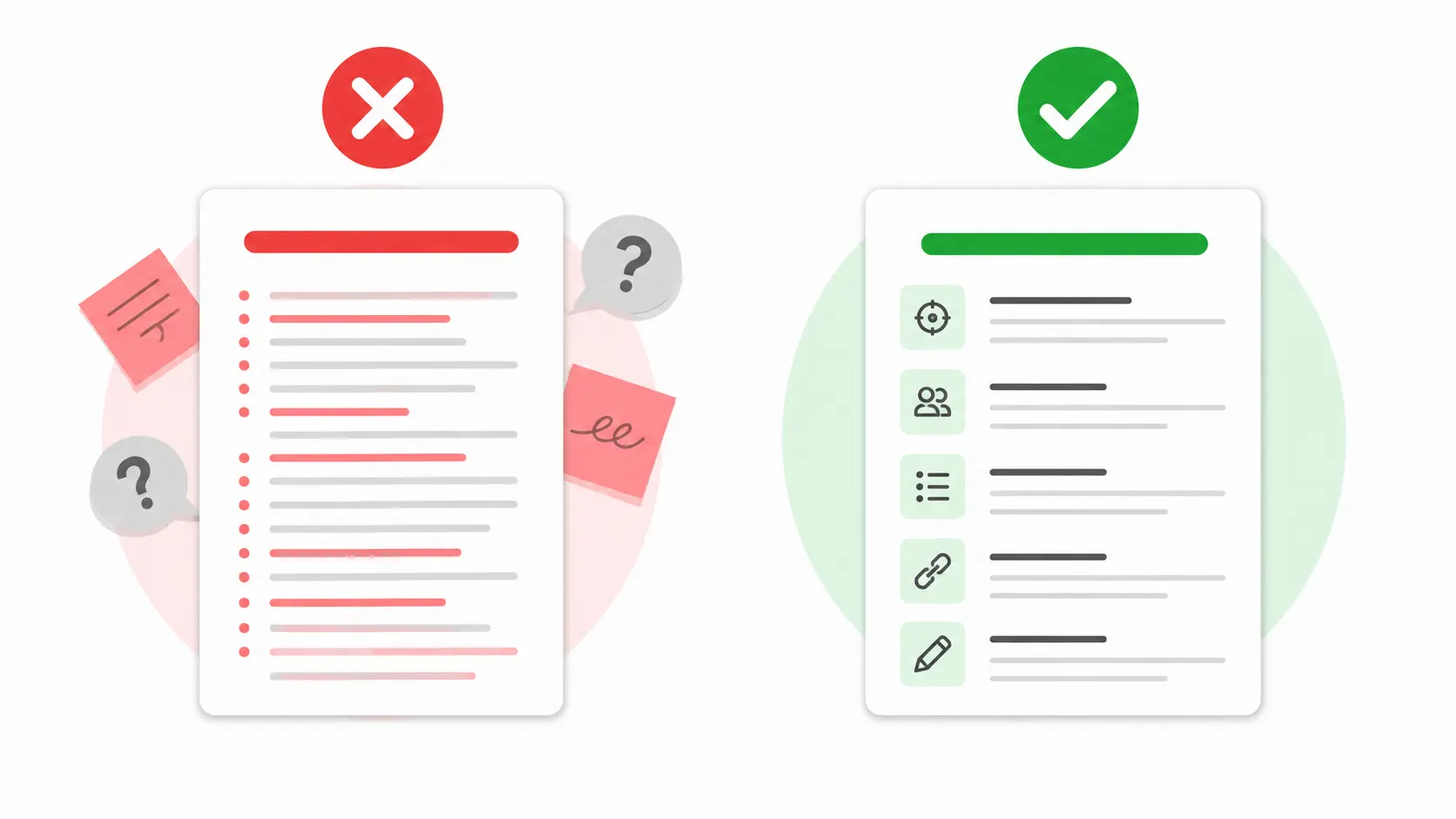
A content brief should guide the writer, not confuse them. If the brief is too complicated, the writer may spend more time trying to understand the instructions than writing the article. Use simple instructions, avoid keyword stuffing, give examples when needed, mention the target audience clearly, clarify the tone, and add "must include" and "avoid" notes.
Instead of saying "optimize heavily for SEO," say: "Include the main keyword naturally in the introduction, one H2, one H3, and the conclusion." Clear instructions lead to better content.
Content Brief Template for SEO Articles
Simple Content Brief Template
A content brief template makes the process easier because you can reuse the same structure for different articles. Use this simple format:
Example of a Content Brief for a Blog Post
Here is a simple example using this article's topic:
Common Content Brief Mistakes to Avoid
How AI Tools Can Help with Content Briefs
Using AI for Research and Structure
AI tools can help speed up keyword grouping, outline creation, FAQ ideas, and content structure. However, AI should support the strategy, not replace human judgment. For better results, writers and marketers can combine AI writing tools for content marketing with manual review, search intent analysis, competitor research, and brand knowledge. AI can help create a first draft of a brief, but the final version should still be checked carefully.
Why Human Review Still Matters
AI can generate useful ideas, but humans need to check accuracy, originality, tone, brand fit, and SEO quality. A human editor can decide whether the structure truly matches the search intent, whether the examples are helpful, and whether the article will serve the reader better than competing pages. Before sending a brief to a writer, review it for clarity and remove anything unnecessary.
Final Thoughts on Creating a Better Content Brief
Content Brief Checklist Before Publishing
- Main keyword is included clearly
- Secondary keywords are added naturally
- Search intent is defined and clear
- H2 and H3 structure is prepared
- Internal links are included with anchor text
- Key reader questions are answered
- FAQs are added for conversational queries
- Image alt text suggestions are prepared
- Writer instructions are clear and specific
- Brief is easy to follow without confusion
Why a Strong Content Brief Improves SEO Content
A strong content brief improves the whole writing process. It gives writers direction, helps SEO teams maintain quality, and makes the final article more useful for readers. Instead of creating content based on guesses, you create content with a clear plan — one that helps the writer understand the keyword, the audience, the structure, and the goal.
If you want better SEO articles with fewer revisions, start with a clear content brief before writing begins.
Need Help Creating Better SEO Content?
Get professional content writing and optimization support to build a stronger content strategy with clear briefs, structured articles, and better results.
View Content Writing Services →Frequently Asked Questions
A content brief is a document that gives writers clear instructions before they create content. It usually includes the main keyword, secondary keywords, search intent, heading structure, internal links, target audience, tone, and important questions to answer.
An SEO content brief should include the main keyword, secondary keywords, search intent, recommended word count, H1, H2 and H3 structure, internal links, external research notes, FAQs, image alt text, tone of voice, CTA direction, and clear writing instructions for the writer.
To write a content brief, choose the main keyword, analyze search intent, review competitor content, add secondary keywords, create a heading structure, include internal links, list key reader questions, prepare FAQ ideas, and give clear writing instructions. Review the brief carefully before sending it to a writer.
A content brief helps writers understand exactly what the article should cover. It saves time, improves content quality, reduces revisions, and helps the final article match SEO goals and reader expectations. Writers spend less time guessing and more time creating useful content.
AI tools can help create content briefs by suggesting keywords, headings, FAQs, and topic ideas. However, the final brief should still be reviewed by a human for accuracy, originality, tone, and SEO quality. AI works best when it supports human strategy rather than replacing it.