
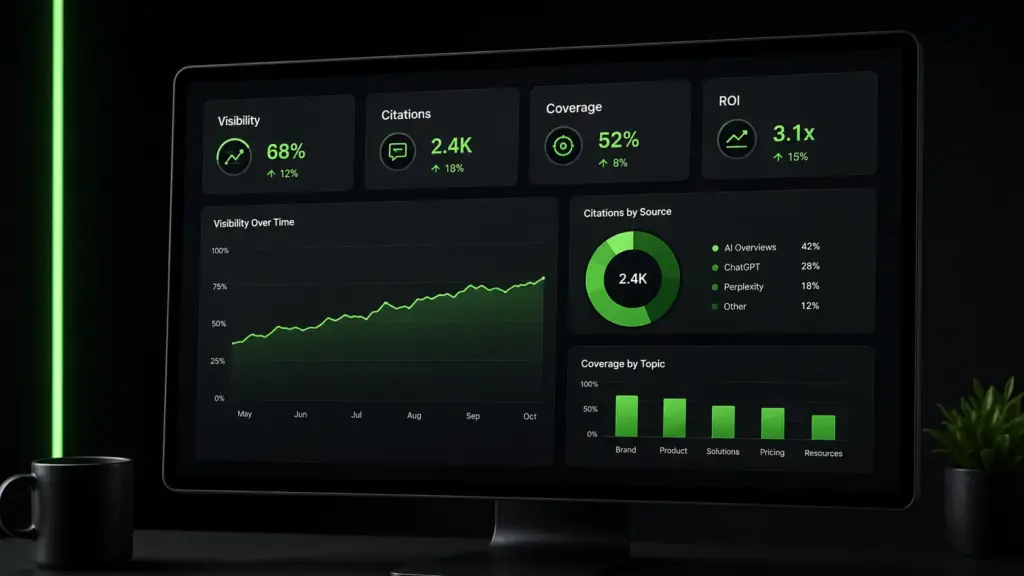
AI search visibility metrics KPIs help businesses measure whether their brand appears, earns citations, and influences decisions inside ChatGPT, Google AI Overviews, Perplexity, Gemini, and other answer engines. The strongest framework combines presence, prominence, sentiment, traffic, and conversion data.
Tracking clicks alone misses much of the value because AI platforms often answer questions without sending a visit. Better measurement shows where your brand appears, how often competitors outrank it, which pages earn citations, and whether visibility contributes to branded demand or revenue.
Why AI Search Visibility Metrics KPIs Need a New Framework
Traditional SEO Data Tells Only Part of the Story
Traditional SEO reporting centers on rankings, impressions, clicks, sessions, and conversions. Those measures remain valuable, but generative search changes the journey. A user may read a recommendation in an AI response, remember a brand, and return later through branded search or a direct visit.
That makes AI search performance metrics broader than standard organic reporting. They must capture exposure and downstream impact. The difference becomes clearer when comparing GEO vs SEO and their main differences.
AI Visibility Tracking Needs a Fixed Prompt Set
Reliable AI visibility tracking starts with a repeatable prompt library. Group prompts by awareness, comparison, purchase, troubleshooting, and branded intent. Test the same prompts on a consistent schedule across priority platforms.
Record the answer, cited sources, brand mentions, competitor mentions, position, sentiment, and date. Because outputs vary, use repeated runs and evaluate trends instead of treating one response as definitive.
12 AI Search Performance Metrics That Matter
Presence, Citations, and Competitive Visibility
The first six metrics show whether AI platforms recognize and surface your brand.
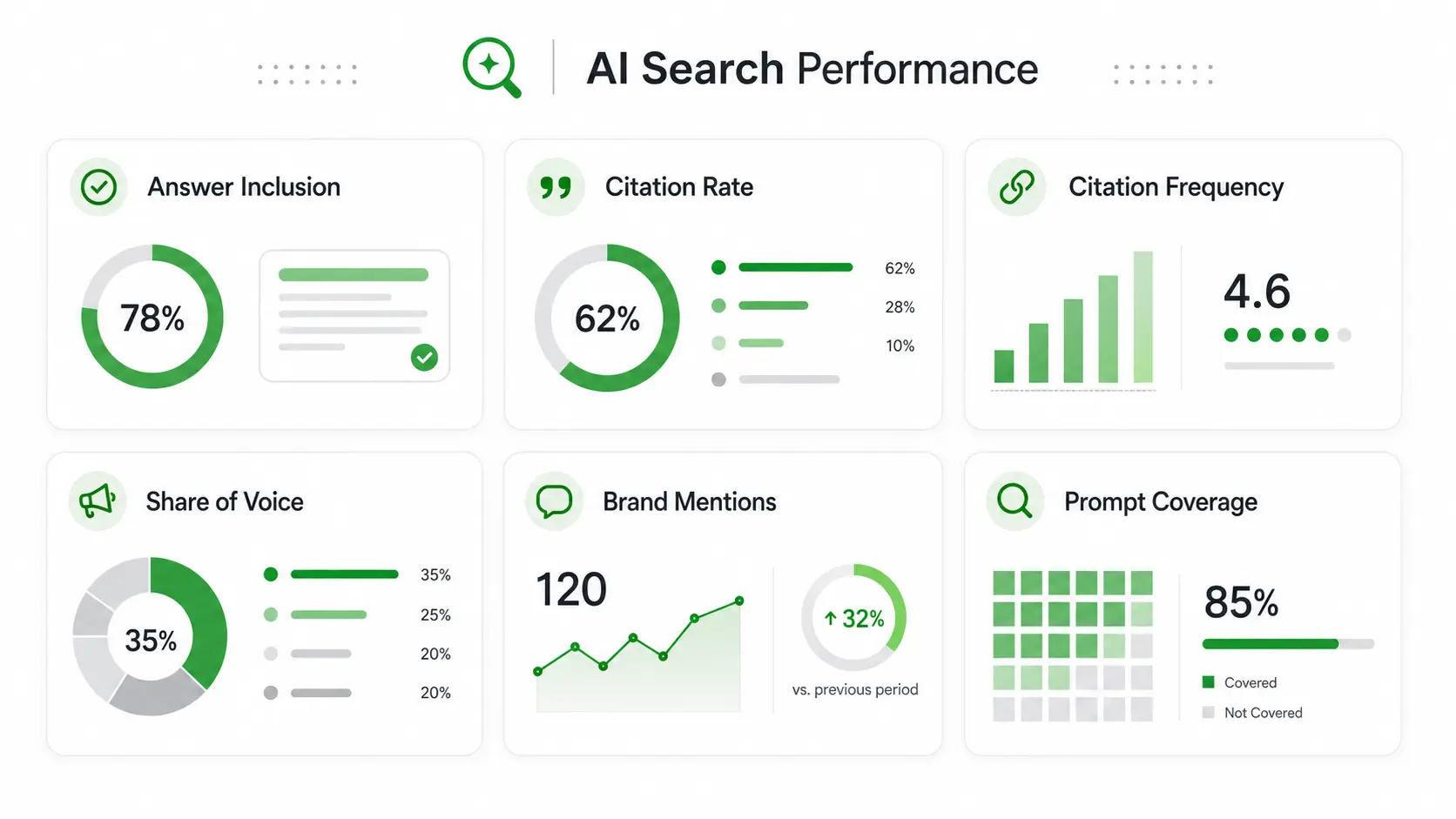
These AI search KPIs reveal whether content is merely indexed or actively used. A rising inclusion rate with a flat citation rate may mean the brand is recognized, but its website is not yet the preferred supporting source.
Prominence, Sentiment, Traffic, and Outcomes
The next six metrics measure visibility quality and commercial value.
Together, these metrics prevent teams from celebrating mentions that are negative, buried, irrelevant, or commercially weak. Ten favorable recommendations for purchase-intent prompts may be more valuable than 100 passing mentions for broad informational questions.
How to Measure Brand Visibility Across AI Platforms
Build a Platform-by-Platform Scorecard
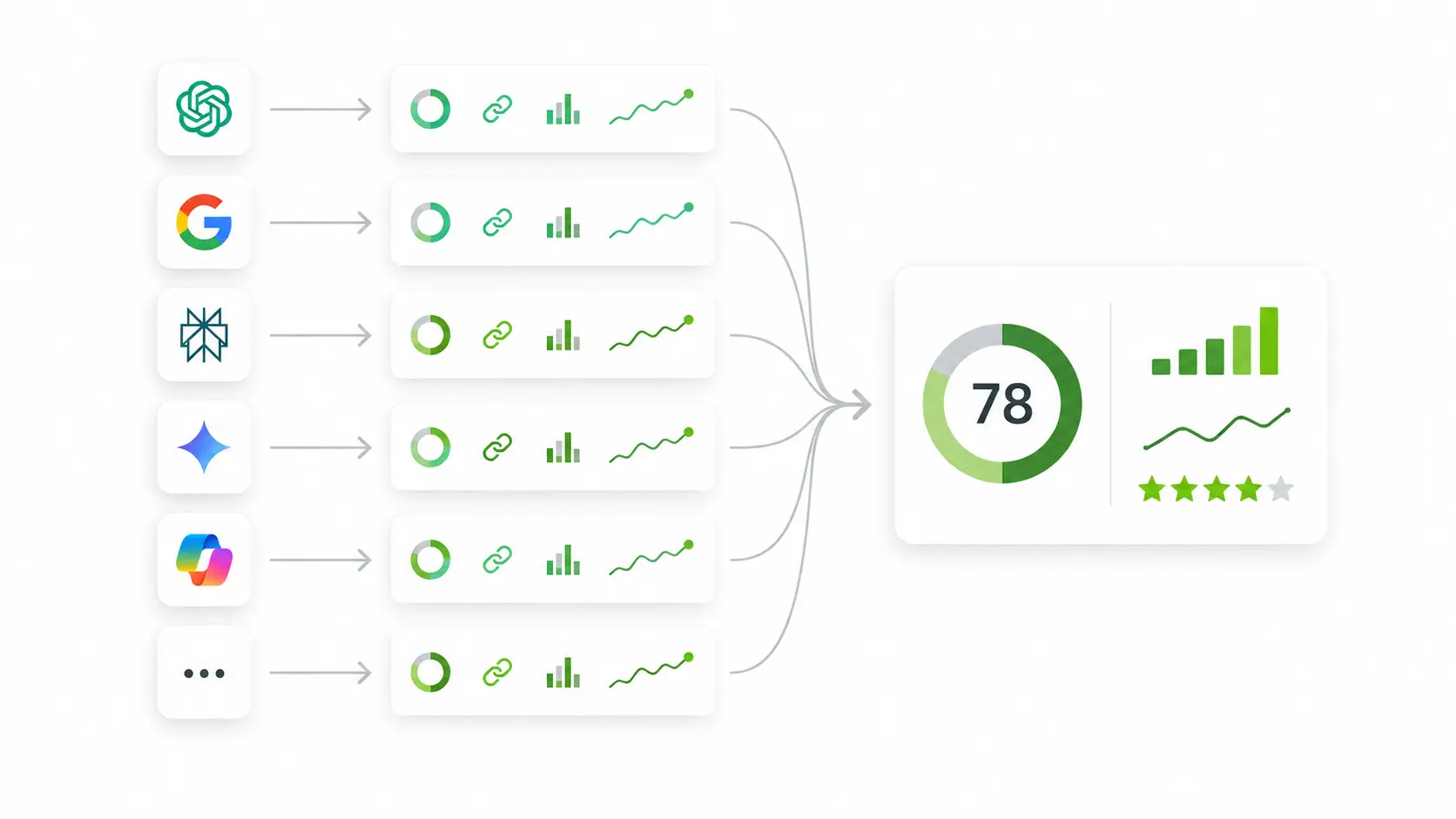
Create separate reporting views for ChatGPT, Google AI Overviews, Perplexity, Gemini, Copilot, and other platforms relevant to your audience. Each platform retrieves and cites information differently, so one combined average can hide major gaps.
For every platform, track:
- Answer inclusion rate
- Citation rate and cited URLs
- Mention prominence
- Competitor share of voice
- Brand sentiment
- Recommendation rate
- Referral traffic where detectable
Then create a blended score for executive reporting. Weight platforms by audience fit and business value instead of treating them equally.
A software company may give more weight to ChatGPT and Perplexity, while a local service provider may prioritize Google AI Overviews. The weighting should reflect customer behavior rather than platform popularity alone.
Connect AI Data With SEO and Analytics
Compare citation gains with branded impressions, direct traffic, assisted conversions, and engagement on cited pages. Tag known AI referrers in analytics and annotate major content updates so performance changes can be connected to specific actions.
AI measurement should not replace SEO reporting. It should extend it. The practical differences are explained in AI search optimization vs SEO, while the wider planning process is covered in this AI SEO 2026 guide.
This combined view matters because AI influence may appear before referral traffic. A prospect might discover a company in an AI-generated comparison, search for the company later, and convert through a branded result. The final click belongs to traditional search, but AI contributed to discovery.
Which AI Search KPIs Prove a GEO Strategy Is Working?
Look for Coordinated Movement
A GEO strategy is working when several indicators improve together. The clearest pattern is higher prompt coverage, citation share of voice, recommendation rate, and branded demand over multiple reporting periods.
One citation is not proof. Stronger evidence appears when more pages become cited, visibility expands across prompt clusters, sentiment stays positive, and commercial-intent prompts begin featuring the brand.
Businesses should also examine competitive movement. An increasing citation count may look impressive until the team discovers that competitors are growing twice as quickly. Share-of-voice measurements provide the context that raw totals lack.
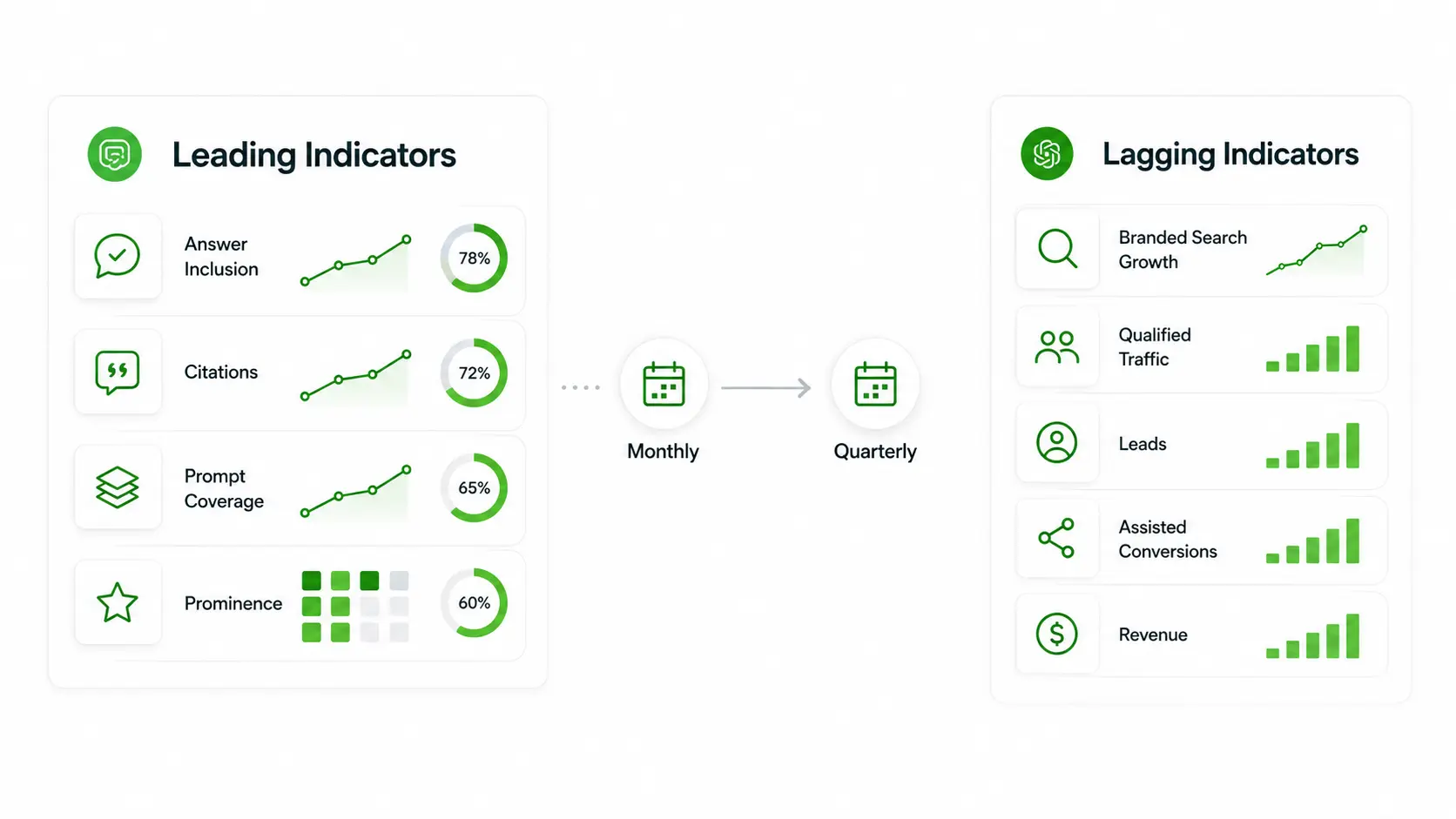
Use Leading and Lagging Indicators
The best dashboard separates short-term platform volatility from durable gains. A temporary drop on one platform may not require action when the brand continues gaining citations, positive recommendations, and demand across the wider AI search ecosystem.
Frequently Asked Questions
Start with answer inclusion rate, citation rate, citation share of voice, brand mention frequency, prompt coverage, recommendation rate, and sentiment. Connect those measures to branded search growth, AI referral engagement, assisted conversions, and revenue. This combination shows whether your brand appears in AI answers and whether that exposure contributes to meaningful business outcomes.
Build a fixed set of high-value prompts and test them consistently across ChatGPT, Google AI Overviews, Perplexity, Gemini, and other relevant platforms. Record mentions, citations, answer position, sentiment, competitors, and cited pages. Use repeated tests because generated answers change, and add analytics data to identify referral visits, branded demand, and conversion movement.
The strongest signs are sustained growth in prompt coverage, citation rate, citation share of voice, recommendation rate, and positive sentiment. These should be supported by more cited pages and stronger visibility for commercial-intent questions. Over time, branded searches, direct visits, qualified leads, and assisted conversions should also improve.
Monitor priority prompts monthly to identify meaningful trends without overreacting to daily output changes. High-value commercial prompts can be reviewed weekly during campaigns or major content updates. Compare results over several reporting periods and preserve response records so changes in citations, prominence, competitors, and sentiment can be audited.
Yes. Referral traffic is only one part of AI search measurement and may understate influence. Businesses can still track answer inclusion, citations, brand mentions, recommendation frequency, prompt coverage, prominence, sentiment, and competitive share of voice, then compare these with branded searches, direct traffic, leads, and revenue trends.