
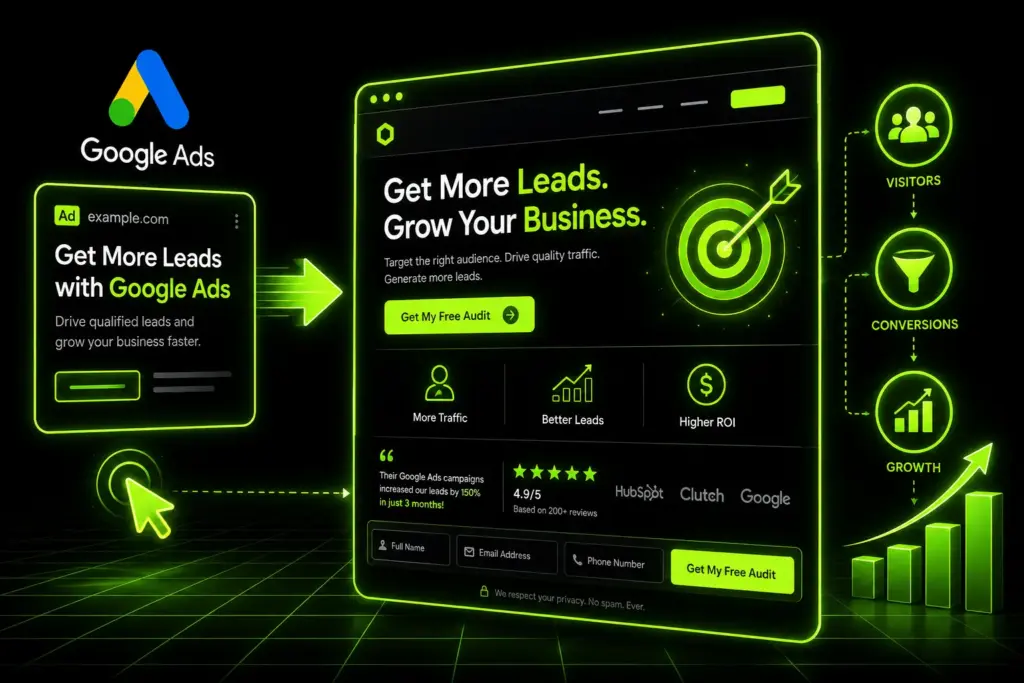
A Google Ads landing page is a dedicated page created to turn paid traffic into leads, sales, bookings, quote requests, or inquiries. It is not just another website page. It should match the ad, explain the offer clearly, build trust quickly, and guide the visitor toward one focused action.
Even a strong Google Ads campaign can lose money if the landing page is slow, confusing, too generic, or disconnected from the ad message. The click may be paid, but the conversion is earned on the page. That is why landing page quality plays such an important role in PPC performance.
What Makes a Good Google Ads Landing Page?
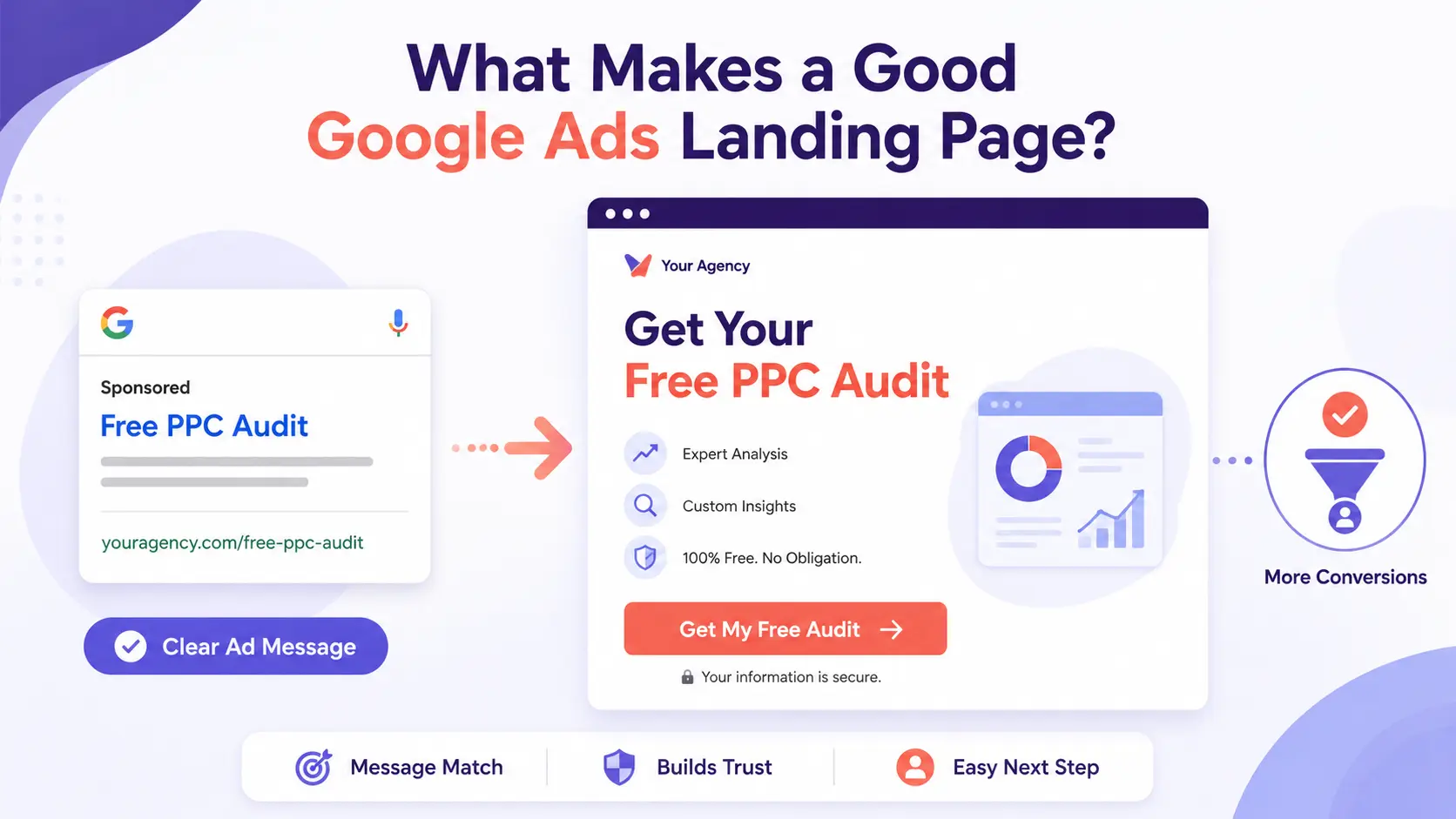
A good Google Ads landing page gives visitors exactly what they expected after clicking the ad. It removes confusion, confirms relevance, and makes the next step easy.
A Google Ads Landing Page Must Match the Ad Message
Message match is one of the most important parts of PPC success. If your ad promotes a free consultation, the page should clearly mention that consultation. If your ad highlights a discount, the landing page should continue that same offer. The headline, offer, service, pricing language, and call to action should all feel connected to the ad.
For example, if an ad says "Get a Free PPC Audit," the landing page headline should not simply say "Digital Marketing Services." A stronger headline would be "Get a Free PPC Audit for Your Business." That small alignment can make the experience feel more trustworthy and intentional.
Clear Layout, Fast Loading, and One Main Goal
A strong PPC landing page should be simple, focused, and easy to use. It should not overwhelm visitors with too many options, long menus, unrelated services, or competing calls to action. The best landing pages usually have:
- One clear headline and one main offer
- One primary call to action
- Simple supporting content
- Fast loading speed
- Mobile-friendly design
- Trust signals near decision points
Relevance, clarity, speed, trust, and focus. If the visitor understands the offer and knows what to do next, the page is doing its job.
Why Google Ads Landing Page Optimization Matters
Google Ads landing page optimization matters because every paid click costs money. If the page does not convert, the campaign becomes more expensive than it needs to be.
Landing Page Optimization Improves Conversion Quality
Optimization is not only about getting more leads — it is about getting better leads from the same ad spend. A page with clear messaging, strong proof, simple forms, and helpful content can attract visitors who understand the offer before they submit a form or book a call. This is where professional landing page optimization can help — improving headlines, CTAs, layout, mobile experience, and form design.
Small improvements can make a big difference. A clearer headline may reduce confusion. A shorter form may increase submissions. Stronger trust signals may reduce hesitation. Better page speed may stop people from leaving before the page loads.
Better Landing Pages Can Improve PPC Efficiency
A better landing page helps campaigns get more value from the same budget. When more visitors convert, your cost per lead can decrease. When the page attracts qualified leads, your sales team wastes less time on poor-fit inquiries.
This is especially important for service businesses and local companies managing tight ad budgets. If you are running Google Ads for small business, your landing page needs to work hard — you may not have room for wasted clicks, weak messaging, or slow pages.
10 Proven Tips for Better PPC Landing Page Results
The following tips can help you build a stronger PPC landing page and improve your landing page conversion rate without making the page complicated.
What the Above-the-Fold Section Should Answer
CTA Examples: Weak vs Strong
Click Here
Learn More
Book My Consultation
Start My Free Trial
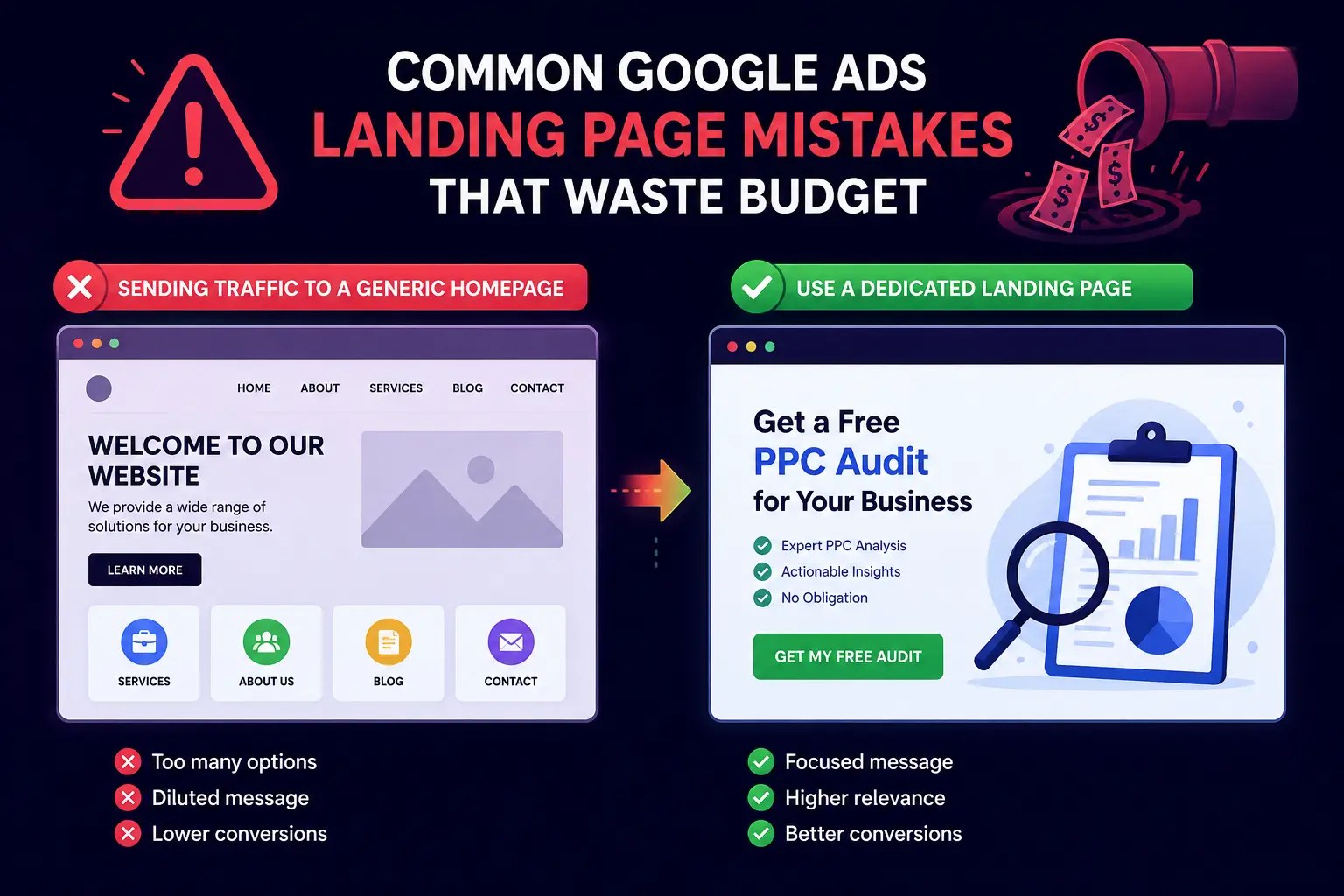
Common Google Ads Landing Page Mistakes That Waste Budget
Some landing page problems quietly drain ad spend. The campaign may get clicks, but the page fails to turn those clicks into meaningful results.
How to Improve Your Landing Page Conversion Rate
Improving your landing page conversion rate starts with tracking the right actions and using data to make focused changes.
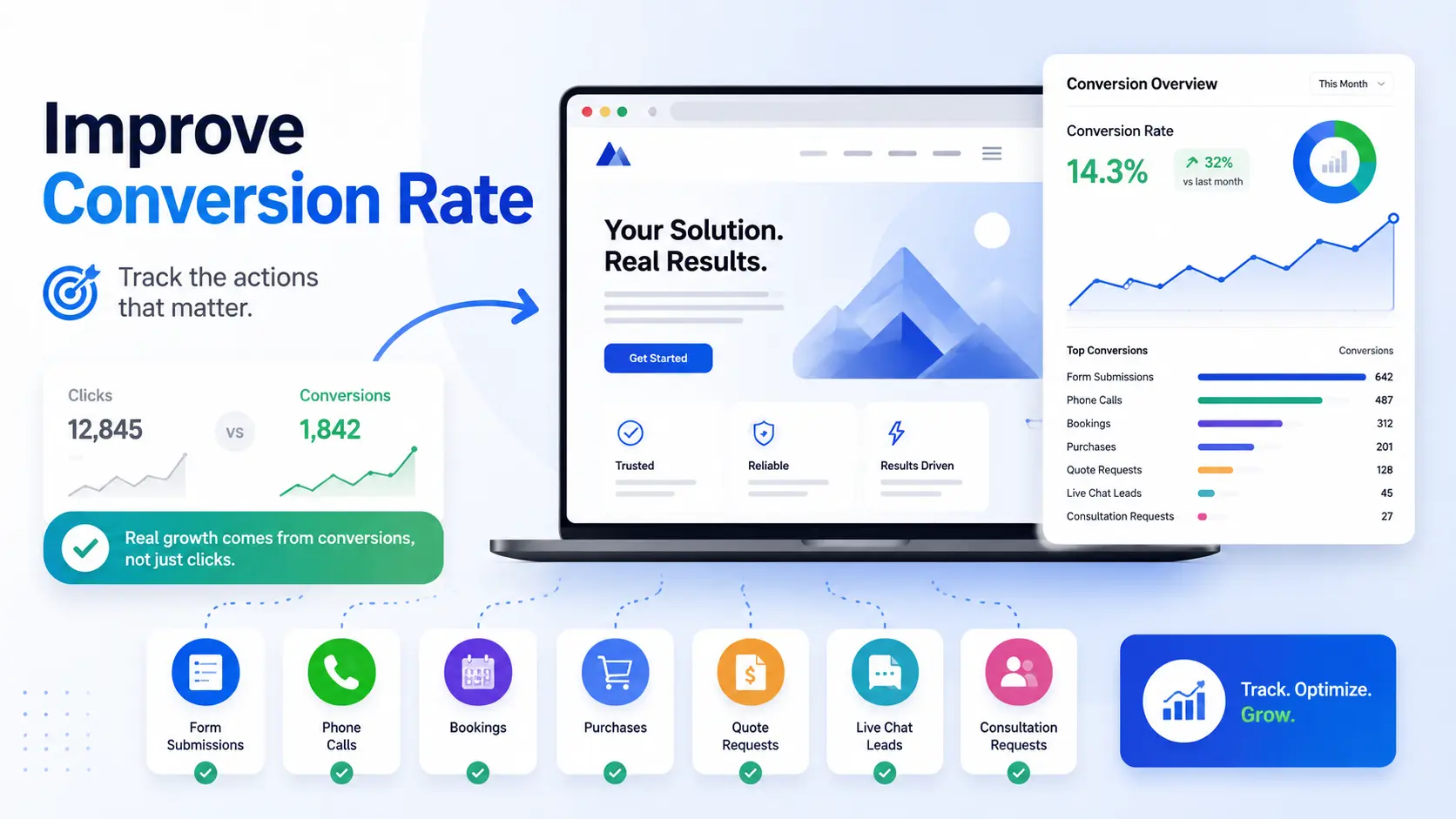
Track the Right Conversion Actions
Track the actions that actually matter to your business — form submissions, phone calls, bookings, purchases, quote requests, live chat leads, or consultation requests. Without accurate tracking, you may not know whether your page is working. Clicks alone do not prove success.
Use Data to Improve Your PPC Landing Page
Review these signals to see where visitors lose interest:
- Conversion rate and bounce rate
- Scroll depth across the page
- Form completion rate
- Cost per conversion
- Lead quality from submitted forms
If users leave quickly, your headline or page speed may need work. If they scroll but do not convert, the CTA or offer may be weak. If they start the form but do not finish it, the form may be too long or confusing.
A strong Google Ads landing page is never "set and forget." It should improve over time as you learn what your visitors respond to.
Need Help Improving Your PPC Landing Pages?
Get professional landing page optimization and PPC management to turn more clicks into leads, calls, and conversions.
View Landing Page Optimization →Frequently Asked Questions
A Google Ads landing page is a dedicated page created for visitors who click on a paid search ad. Its main goal is to turn visitors into leads, customers, bookings, or inquiries. Unlike a general website page, it focuses on one offer, one message, and one clear action to improve PPC campaign results.
A good Google Ads landing page has a clear headline, strong message match, fast loading speed, mobile-friendly design, trust signals, and a clear call to action. It should continue the promise made in the ad and make it easy for the visitor to take the next step without distractions.
Landing page optimization improves Google Ads conversions by making the page clearer, faster, more relevant, and easier to use. Better headlines, stronger CTAs, shorter forms, improved trust signals, and mobile-friendly layouts can help more visitors complete the desired action after clicking an ad.
Using a homepage as a PPC landing page is usually not the best option. Homepages often include many links, messages, and distractions. A dedicated PPC landing page is more focused because it matches the ad intent and guides visitors toward one specific conversion goal.
A good landing page conversion rate depends on the industry, offer, audience, and campaign type. Instead of focusing only on a general benchmark, compare your page against your own past performance. If changes reduce cost per lead and increase qualified conversions, the landing page is moving in the right direction.