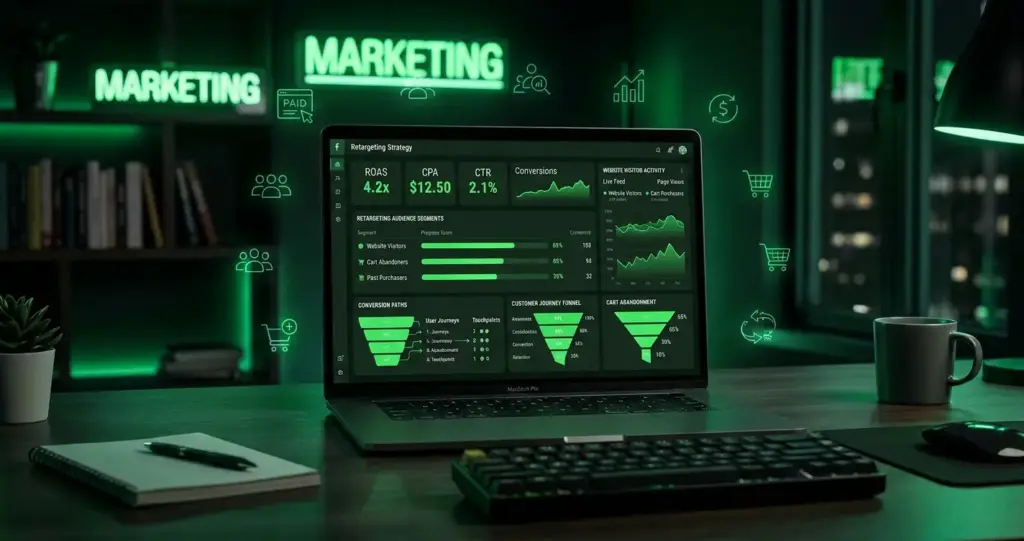
Facebook Ads retargeting is a paid advertising strategy that helps you reconnect with people who have already interacted with your business. Instead of showing ads only to cold audiences, retargeting focuses on people who already know something about your brand — making the message more relevant and often improving the chance of turning interest into action.
A simple example is an online store visitor who views a product but leaves without buying. Later, they see an ad reminding them of that product, possibly with a testimonial, offer, or benefit-focused message. That is retargeting in action.
What Is Facebook Ads Retargeting?
How Facebook Ads Retargeting Works
Facebook Ads retargeting connects your ads with people who have already taken an action related to your business — website visits, product views, video watches, lead form opens, or social media engagement. Retargeting audiences can include:
Why Retargeting Is Different from Cold Advertising
Cold advertising introduces your business to people who may not know you yet. Retargeting speaks to people who have already shown interest. That difference matters because warm audiences usually need a different message.
Needs education, awareness, and initial trust. No prior knowledge of your brand.
Has already interacted. Needs reassurance, proof, urgency, or a stronger offer to return.
Already converted. Best for upsells, cross-sells, loyalty offers, or referral campaigns.
Facebook retargeting ads should not simply repeat the same message used in cold campaigns. Retargeting works best when the ad reflects what the person has already done.
Why Facebook Ads Retargeting Matters for Conversions
Warm Audiences Are More Likely to Convert
People rarely buy the first time they see a brand. They may compare options, get distracted, wait for payday, or need more confidence before making a decision. Retargeting helps you stay visible during that decision window.
| Business Type | Retargeting Use Case |
|---|---|
| Service business | Show case studies to website visitors |
| Ecommerce brand | Show product reminders to cart abandoners |
| Coach / Consultant | Retarget video viewers with a booking offer |
| Lead generation | Follow up with form openers who did not submit |
| SaaS / Software | Retarget pricing page visitors with a free trial |
Retargeting Helps Reduce Wasted Ad Spend
If you are paying to bring people to your website, you should also have a plan to bring the right people back. Without retargeting, many interested visitors leave and never return. A good retargeting setup can support lead generation, ecommerce sales, appointment bookings, webinar sign-ups, and repeat purchases.
Retargeting does not replace cold advertising — it makes your paid traffic more efficient by following up with people who already have interest.
How to Create a Facebook Retargeting Campaign
Choose the Right Retargeting Audience
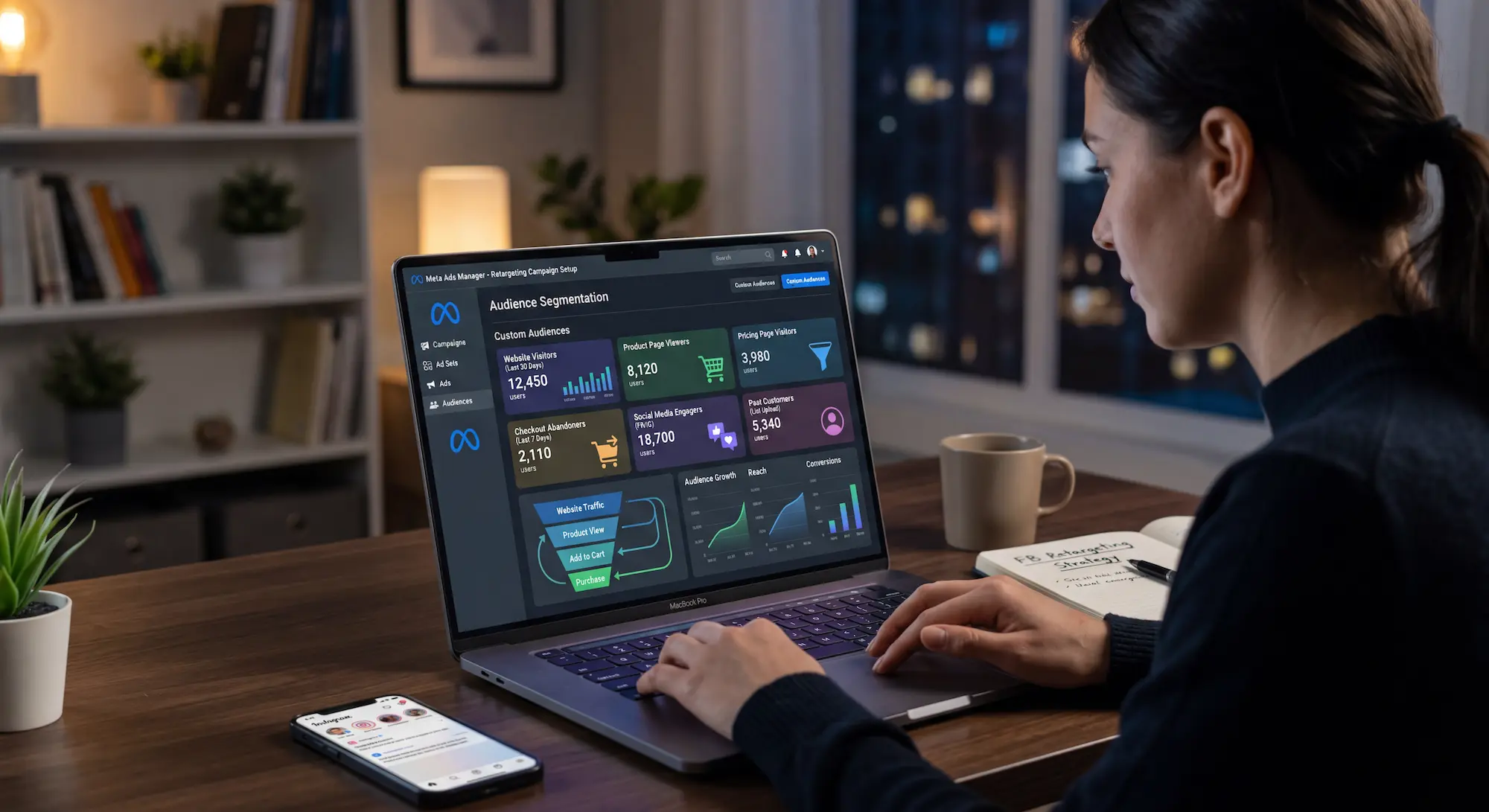
An effective Facebook retargeting campaign starts with audience selection. The goal is to group people based on their level of intent — someone who visited your homepage 30 days ago is not the same as someone who added a product to cart yesterday.
Useful audience segments include recent website visitors, product page viewers, pricing page visitors, lead form openers, checkout abandoners, and social media engagers. You can also use customer lists to reconnect with existing leads or past buyers. Better segmentation usually leads to better messaging.
Set a Clear Campaign Goal Before Launching
Before launching, decide what action you want people to take — buy, book a call, complete a form, download a guide, or return to a product page. Your campaign goal should match the audience's intent.
| Audience Segment | Likely Goal | Ad Approach |
|---|---|---|
| Cart abandoners | Purchase | Product reminder + urgency or offer |
| Blog readers | Lead capture | Related lead magnet or free resource |
| Instagram engagers | Build trust | Testimonial or behind-the-scenes content |
| Pricing page visitors | Book a call | Consultation or demo offer |
| Past customers | Repeat purchase | Upsell, loyalty offer, or new product |
Facebook Ads Retargeting: 9 Best Ways to Win More Sales
Common Facebook Retargeting Ads Mistakes to Avoid
Using the Same Message for Every Audience
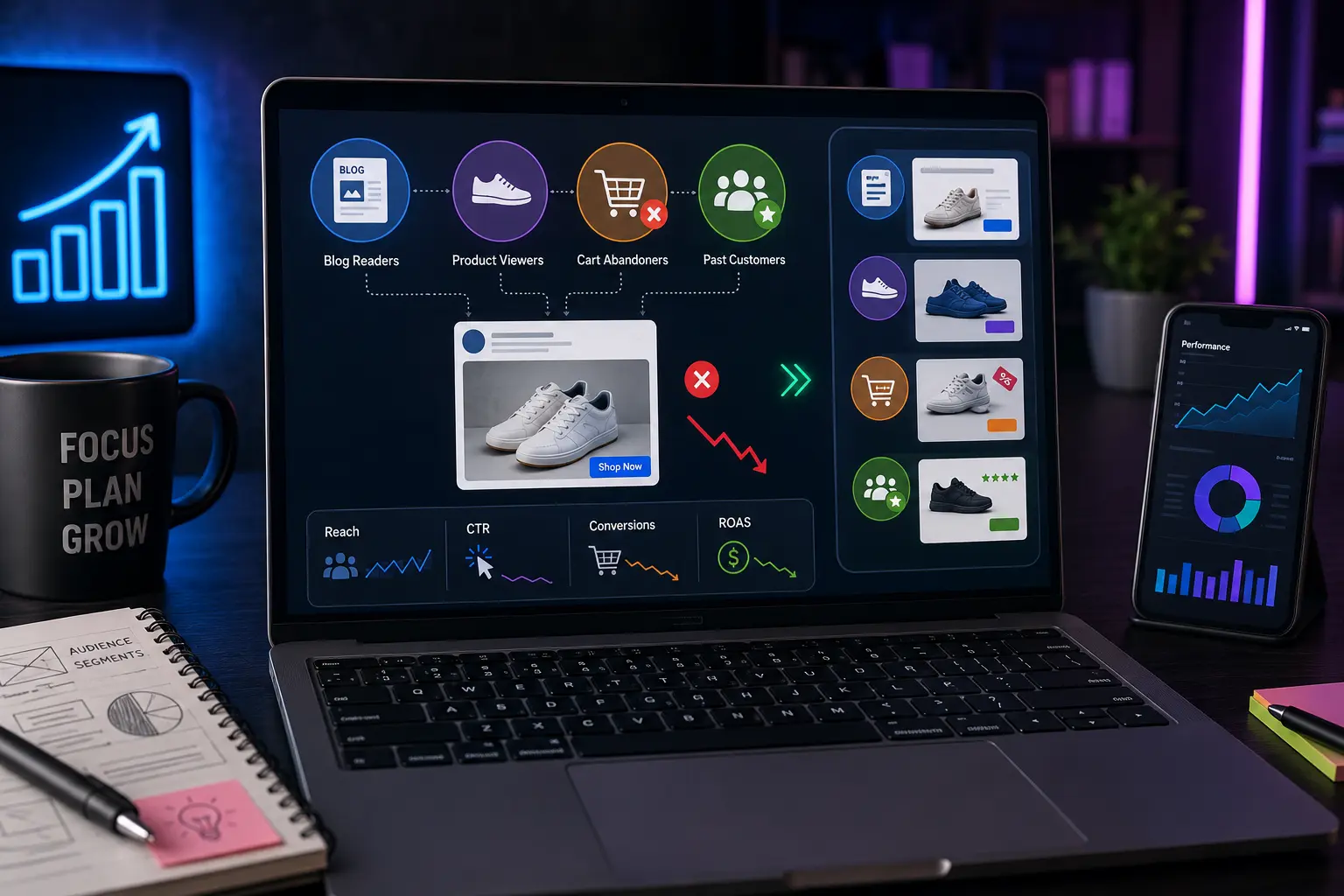
The biggest mistake is treating all warm users the same. A blog reader, product viewer, cart abandoner, and past customer are in different stages of the journey. When every audience sees the same message, your ads become less relevant. Create separate messages for different behaviors to make your campaign feel helpful instead of generic.
Ignoring Frequency, Creative Fatigue, and Exclusions
Retargeting can quickly become inefficient when exclusions and creative refreshes are ignored. Avoid showing purchase reminders to recent buyers, using the same creative for months, or targeting very small audiences with high daily budgets.
| Common Mistake | Better Approach |
|---|---|
| Same ad for all warm audiences | Segment by behavior and intent level |
| No buyer exclusions | Exclude recent purchasers from sales campaigns |
| Same creative for weeks | Refresh ads when frequency or CTR drops |
| Generic cold-style copy | Write for warm users — focus on proof and urgency |
| Tracking only clicks | Monitor conversions, ROAS, and lead quality |
How Facebook Ads Retargeting Fits into a Wider PPC Strategy
Combine Retargeting with PPC Ads Management
Facebook Ads retargeting works best when it is connected to a wider paid advertising strategy. Cold campaigns bring in new attention. Retargeting campaigns bring back warm prospects. Search campaigns capture people who are actively looking for solutions. When these channels work together, your advertising becomes more complete.
Businesses that want structured planning, tracking, and optimization can benefit from professional PPC management services that connect retargeting with the full customer journey.
Improve Retargeting Results with Better Ad Copy
Retargeting success depends heavily on the message. Your audience already showed interest, so your ad should answer: "Why should I come back now?" Use clear benefits, social proof, urgency, guarantees, and simple calls to action. Avoid vague copy like "Learn more" when the user is already close to buying.
When you segment audiences, match messages to intent, refresh creatives, exclude buyers, and track results — your campaigns become a smarter system that turns warm attention into sales.
Need Help With Your Facebook Ads Strategy?
Get professional PPC management to build smarter retargeting campaigns, reduce wasted spend, and improve conversions across every stage of the funnel.
View PPC Management Services →Frequently Asked Questions
Facebook Ads retargeting is a paid advertising strategy that shows ads to people who have already interacted with your business. This can include website visitors, product viewers, cart abandoners, social media engagers, lead form openers, or past customers. Because these users already know your brand, retargeting can help turn previous interest into conversions.
A Facebook retargeting campaign works by creating audiences based on website actions, Meta Pixel events, customer lists, or engagement with your Facebook and Instagram content. Once these audiences are created, you can show them specific ads based on their behavior — such as reminding product viewers to return or encouraging lead form openers to complete the next step.
Retargeting is important because most people do not convert during their first interaction with a business. A retargeting campaign gives you another chance to reach warm users with more relevant messages. This can reduce wasted spend, improve conversion rates, and help your Meta Ads budget focus on people who are already closer to taking action.
Yes, Facebook retargeting ads can be very useful for small businesses because they focus on people who have already shown interest. Instead of spending the entire budget on cold audiences, small businesses can reconnect with warmer prospects, recover lost leads, and improve advertising efficiency without needing a very large budget.
The best audience depends on your goal, but high-intent users often perform well. These include cart abandoners, product page viewers, pricing page visitors, lead form openers, and people who spent meaningful time on your website. For best results, each audience should receive a message that matches its level of interest.