
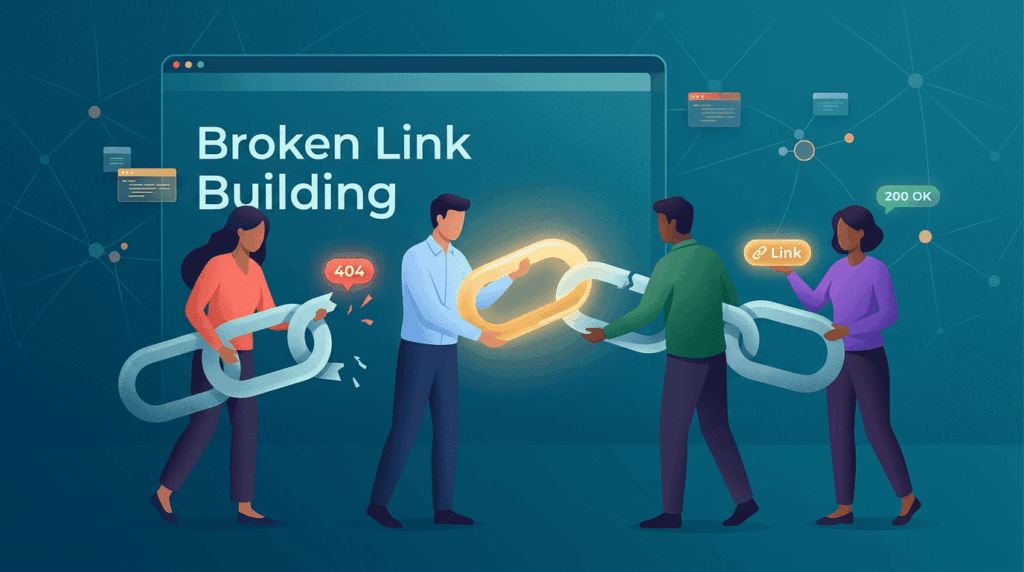
Broken link building is an off-page SEO strategy where you find dead links on other websites and suggest your own relevant content as a replacement. It works because you are not just asking for a backlink — you are helping website owners fix a poor user experience.
In SEO, broken links usually point to pages that no longer exist, often returning a 404 error. The strategy involves finding these dead links on other websites and convincing web admins to replace them with working links to your website.
This guide explains what broken link building is, how to do it properly, which tools help, and when using a professional service makes sense.
What Is Broken Link Building in SEO?
Broken link building in SEO is the process of identifying external links that no longer work, creating or matching a better resource, and asking the website owner to replace the dead link with your page.
It is a value-first link building method. Instead of sending a generic pitch, you give the editor a clear reason to act: their page has a broken reference, and your content can help repair it.
Why Broken Links Happen
Broken links happen for many reasons. A website may delete an old article, change its URL structure, move content without setting up redirects, or shut down completely. Common causes include:
- Deleted blog posts or resources
- Changed URLs without redirects
- Expired domains
- Removed PDFs or reports
- Rebranded websites
- Outdated resource pages
- Incorrectly typed links
For users, broken links are frustrating. For website owners, they can weaken trust and reduce the quality of a page. That is why many editors are open to fixing them when someone points them out politely.
How Broken Link Building Helps SEO
Broken link building helps SEO by earning backlinks from relevant pages that already link to related resources. Backlinks can support search visibility when they come from useful, trustworthy, and contextually relevant websites.
The benefit is straightforward: you improve another website's page while gaining a natural backlink to content that deserves to be referenced.
How Broken Link Building Works
The process works best when it follows a clear workflow. You find dead links, check whether they are relevant, create or match replacement content, and contact the right person.
This is not about sending hundreds of emails to random websites. The quality of the opportunity matters more than the number of prospects.
Finding Dead Link Opportunities
There are several ways to find broken link opportunities. Good places to search include:
- Competitor pages with broken backlinks
- Niche resource pages
- Industry glossary pages
- Old statistics articles
- Tool and software lists
- Blog posts with many outbound links
- University, nonprofit, or association pages
Replacing Broken Pages With Better Content
Your replacement page must match the original intent of the dead link. Do not suggest your homepage if the dead link pointed to a detailed guide. A strong replacement page should be:
- Closely related to the dead resource
- Updated and accurate
- Easy to read and non-promotional
- More useful than the original
- Relevant to the linking page's audience
The closer your content matches the broken reference, the higher your chance of earning the link. Relevance is the single most important factor in broken link outreach.
Broken Link Building Strategy Step by Step
A strong campaign needs research, content quality, and careful outreach. Below is a practical process you can follow.
A broken link building tool helps you find dead links faster. Manual searching works, but tools save time and reveal opportunities you may miss. Useful tool types include:
- Backlink checkers (Ahrefs, Semrush)
- Site audit and crawl tools
- Chrome extensions for broken links
- Outreach management platforms
- Spreadsheets for tracking prospects
A tool gives you data, but your judgment decides whether the opportunity is worth pursuing.
Not every broken link is worth chasing. Before reaching out, review:
- Is the linking website relevant to your niche?
- Does the page have real value and traffic?
- Is the broken link placed in meaningful context?
- Would your page genuinely help the reader?
- Is the anchor text natural and topically aligned?
- Is the page likely to be maintained and updated?
This step protects your time and keeps your outreach professional.
Your email should be short, specific, and genuinely useful. Mention the page, point out the broken link, explain what it used to reference, and suggest your replacement.
Subject: Broken link on your SEO resources page
Hi [Name],
I was reading your guide on [topic] and noticed one of the links appears to be broken. The link to [dead resource] currently leads to a 404 page.
I recently published a detailed resource on [your topic] that may work as a replacement because it covers [specific benefit].
Here is the page: [URL]
Either way, I thought you might want to know about the broken link.
Best,
[Your Name]
Keep the tone friendly and pressure-free. You are helping them fix a problem, not demanding a link.
Common Mistakes to Avoid
Broken link campaigns fail when they become too automated or too self-serving. The strategy works because it is helpful. Once that helpfulness disappears, response rates drop.
Pitching Irrelevant Replacement Content
The biggest mistake is suggesting content that does not match the original link. If a resource page links to a deleted article about "technical SEO audits" and you pitch a general homepage about digital marketing services, the editor has no reason to use it.
Relevance is the difference between helpful outreach and spam.
Treating Outreach Like Spam
Mass emailing hundreds of websites with the same message damages your reputation. Avoid these habits:
- Using generic greetings with no personalization
- Hiding your real purpose in the email
- Sending irrelevant or low-quality replacement links
- Overusing exact-match anchor text suggestions
- Following up too aggressively
- Claiming your content is "perfect" without any reasoning
Your email should feel like a real person reviewed their page and found a genuine issue.
When to Use a Broken Link Building Service
A broken link building service can be useful when you do not have time to research prospects, create replacement content, find contacts, and manage outreach. This strategy is simple in theory, but it is time-consuming when done properly.
What a Good Service Should Include
A trustworthy service should not promise hundreds of links quickly or rely on spammy placements. Look for providers that offer:
- Competitor broken backlink research
- Resource page analysis and qualification
- Replacement content recommendations
- Personalized outreach and follow-up management
- Clear, transparent reporting
- Natural anchor text planning
- Quality checks before link approval
How to Measure Results
Do not measure broken link building only by the number of emails sent. Track these metrics:
- Number of qualified prospects identified
- Outreach response rate
- Links earned and domain relevance
- Referral traffic from acquired links
- Anchor text diversity
- Ranking and organic traffic improvements
- Link retention over time
The strongest results come from campaigns that prioritize fewer, better prospects instead of chasing volume. Quality over quantity is the strategy.
Need Help Building Quality Links?
Get expert link building support that focuses on relevance, authority, and long-term SEO results.
View Link Building Services →Frequently Asked Questions
Broken link building is an SEO strategy where you find dead links on other websites and suggest your own relevant content as a replacement. It helps website owners fix broken references while giving your site a chance to earn a quality backlink. The method works best when your replacement page closely matches the original link's topic and user intent.
To do broken link building, find dead links using SEO tools, check what the broken page used to cover, create or choose a relevant replacement page, and email the website owner with a helpful suggestion. The most important step is relevance — your content must genuinely improve the page where the broken link appears.
In SEO, broken link building is a white-hat link acquisition method that helps websites earn backlinks by replacing outdated or dead external links. It supports SEO because relevant backlinks can improve authority, discoverability, and referral traffic. It also improves user experience by helping publishers remove links that lead to error pages.
The best broken link building tool depends on your workflow. Backlink tools help find competitor broken pages, site audit tools reveal 404 errors, and browser extensions can scan resource pages for dead links. Many SEO teams combine several tools with a spreadsheet or outreach platform to manage prospects, contacts, and campaign status.
Yes, broken link building is still effective when done carefully. It works because the outreach is based on solving a real problem for the website owner. However, it is less effective when marketers send generic emails, suggest irrelevant pages, or target low-quality websites. Quality research and useful replacement content are essential.