
Alt text SEO is one of the simplest image optimization steps, yet it is often ignored, duplicated, or misused. When written well, image alt text helps search engines understand visual content, supports accessibility for screen reader users, and gives your images better context within the page. The goal is not to force keywords into every image — the goal is to describe images clearly, naturally, and usefully so both users and search engines understand why the image matters.
What Is Alt Text SEO?
Alt text SEO is the practice of writing descriptive alternative text for images in a way that supports accessibility, image optimization, and search visibility. Alt text, also called alternative text, is added to an image's HTML or image field inside a CMS.
Alt Text SEO Meaning
Alt text describes what an image shows. It helps assistive technologies explain visual content to users who cannot see the image. It also appears when an image cannot load properly, giving users a text-based description instead of leaving an empty space. From an SEO perspective, alt text gives search engines more context about the image — they look at many signals, including page content, filenames, captions, surrounding text, and image alt text. Clear SEO alt text can help connect the image with the topic of the page.
Difference Between Image Alt Text and Image Title
Image alt text and image title text are not the same. Image alt text describes the image and is important for accessibility and image SEO. Image title text usually provides extra information and may appear as a tooltip in some browsers or content management systems. For most SEO and accessibility work, alt text matters more than image title text — if you only optimize one field, prioritize useful image alt text.
Why Alt Text SEO Is Important for Image Optimization
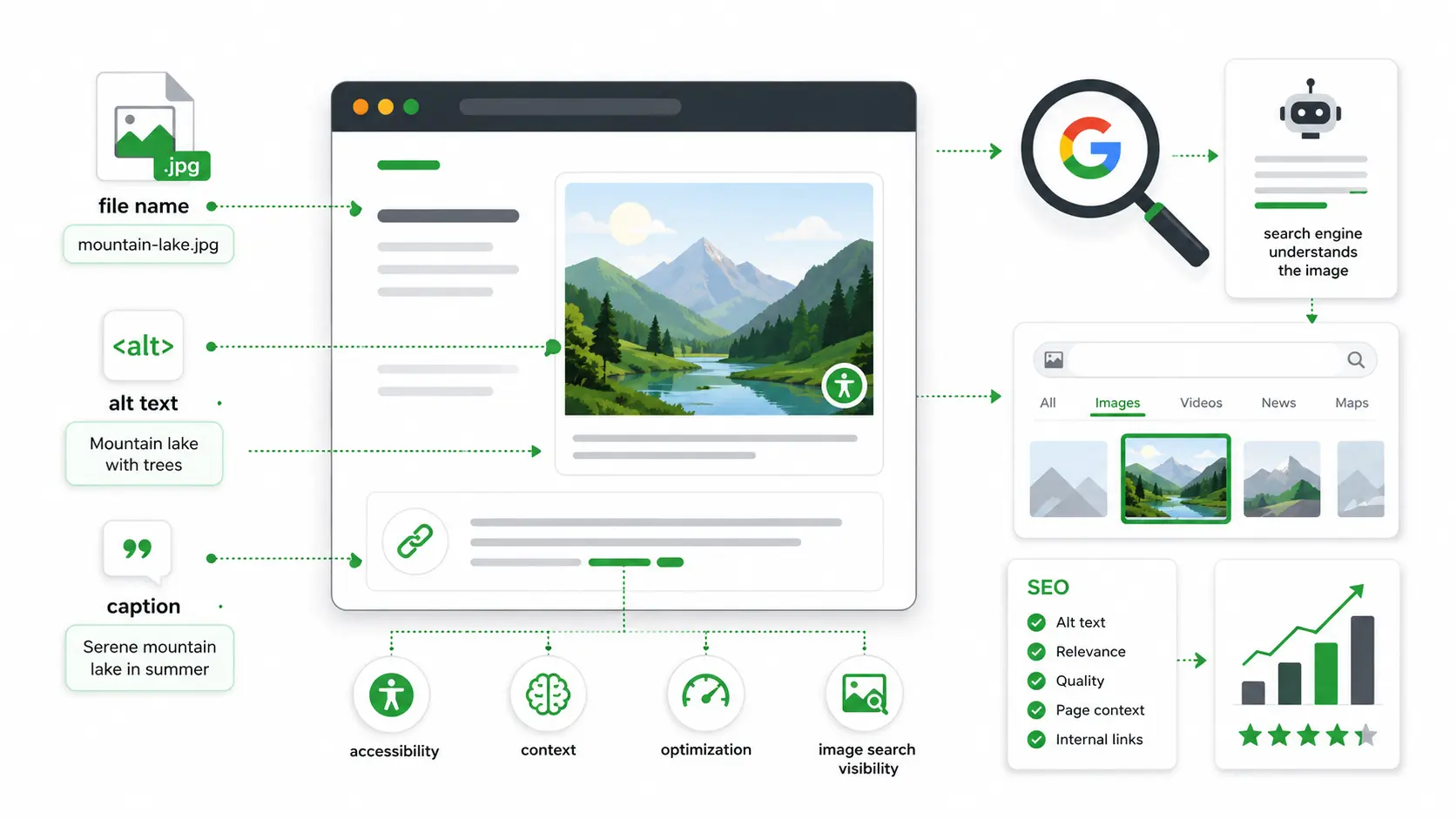
Alt text SEO is important because images are part of the content experience. A page with strong writing but poorly optimized images can still miss opportunities for accessibility, relevance, and image search visibility.
How Alt Text Helps Search Engines Understand Images
Search engines do not understand images exactly the way humans do. They use surrounding page signals to interpret visual content — including the image file name, caption, page topic, headings, internal links, and alt text. For example, an image named seo-dashboard.png with clear alt text gives much more context than a file named IMG_2049.png with no alt text at all.
Alt text is one part of a complete on-page SEO strategy, alongside headings, metadata, internal links, and content structure. For businesses that need help improving these elements, professional on-page SEO services can make the optimization process more consistent.
How Alt Text Supports Accessibility
Alt text also supports users with visual impairments. Screen readers can read the alt text aloud, helping users understand what an image communicates. Good alt text should be short, focused, and relevant to the page context. Avoid unnecessary phrases like "image of" or "picture of" because screen readers already identify the element as an image.
How to Write SEO-Friendly Image Alt Text
SEO-friendly alt text starts with the image, not the keyword. Ask what the image shows, why it is included, and how it supports the surrounding section.
How to Use SEO Alt Text Naturally
SEO alt text should describe the image first. Add the focus keyword only when it fits naturally.
The first example describes the image clearly and includes the keyword naturally. The second example is keyword stuffing — it does not help users, and it makes the page feel over-optimized.
How to Match Alt Text with Page Context
Alt text should match the surrounding content. The same image can need different alt text depending on where it appears.
For example, if an image appears in a section about WordPress image optimization, the alt text could be:
If the same image appears in a section about editorial workflow:
To keep image optimization consistent, include alt text instructions inside every article plan. A clear content brief guide can help writers understand which images need descriptions and how keywords should be used naturally.
Alt Text Best Practices for SEO and Accessibility
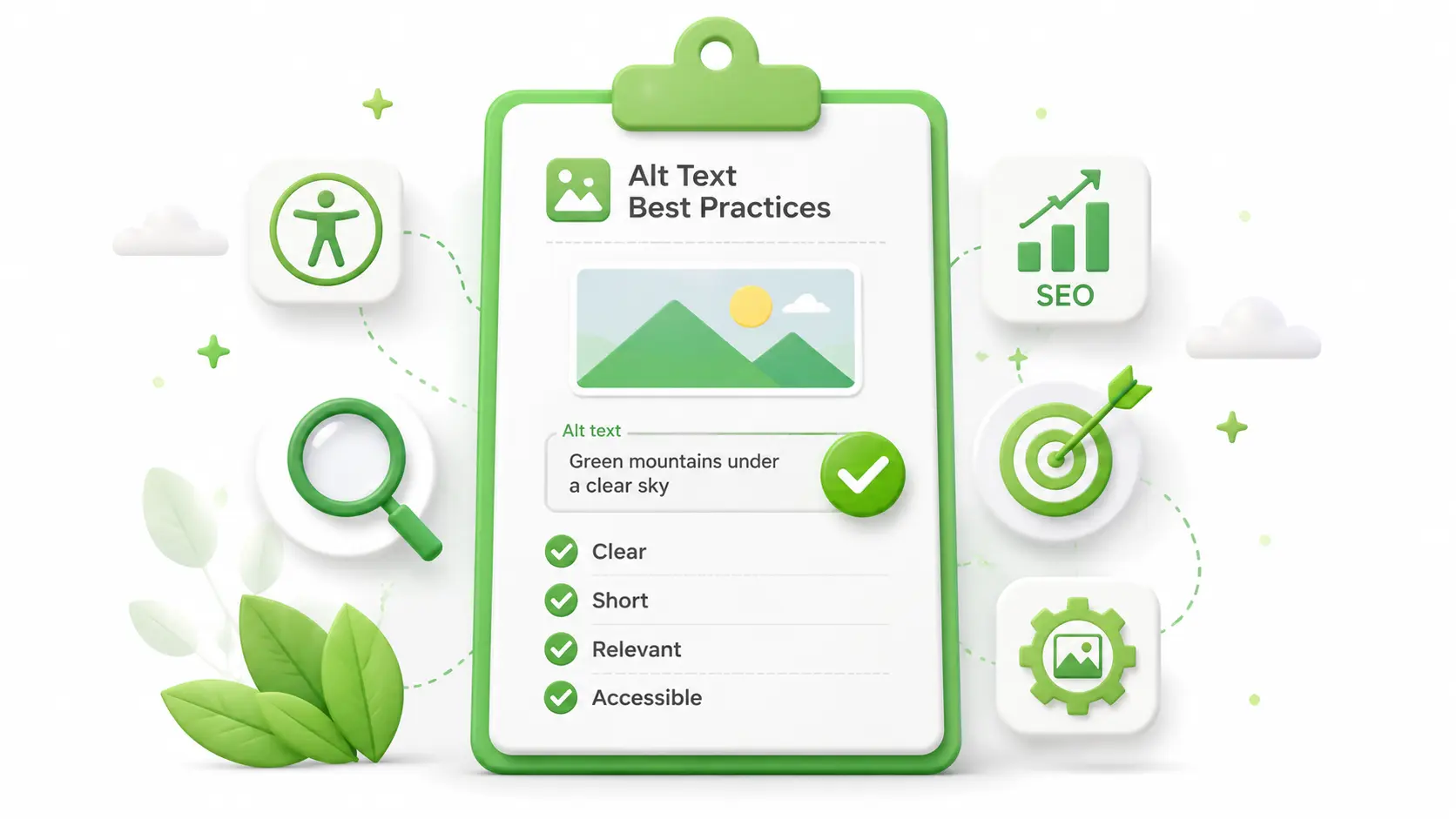
Strong alt text best practices help you avoid both SEO over-optimization and accessibility problems. The best alt text is specific enough to be useful but short enough to be easy to understand.
Alt Text Best Practices for Blog Images
- Describe the image clearly before thinking about keywords
- Keep the text short and useful — one sentence is usually enough
- Add the main keyword only when it fits naturally
- Avoid keyword stuffing in image alt text
- Do not repeat the same alt text for every image
- Use empty alt text for purely decorative images when appropriate
- Match the alt text with the page topic and section
- Avoid vague descriptions like "image," "banner," or "photo"
A helpful rule: describe the image as if you were explaining it to someone who cannot see it. Do not describe every tiny detail — focus on the part that matters in the content.
Alt Text SEO Best Practices for Service Pages
Service pages should use image alt text that supports the page's main topic and conversion goal. Generic descriptions waste context.
The specific version is clearer, more useful, and more connected to the service being offered. The image alt text supports the page topic without sounding forced.
Common Alt Text SEO Mistakes to Avoid
Poor alt text can reduce accessibility value and make your SEO look unnatural. The biggest mistakes usually happen when alt text is treated as a keyword field instead of a description field.
How to Review and Improve Existing Image Alt Text
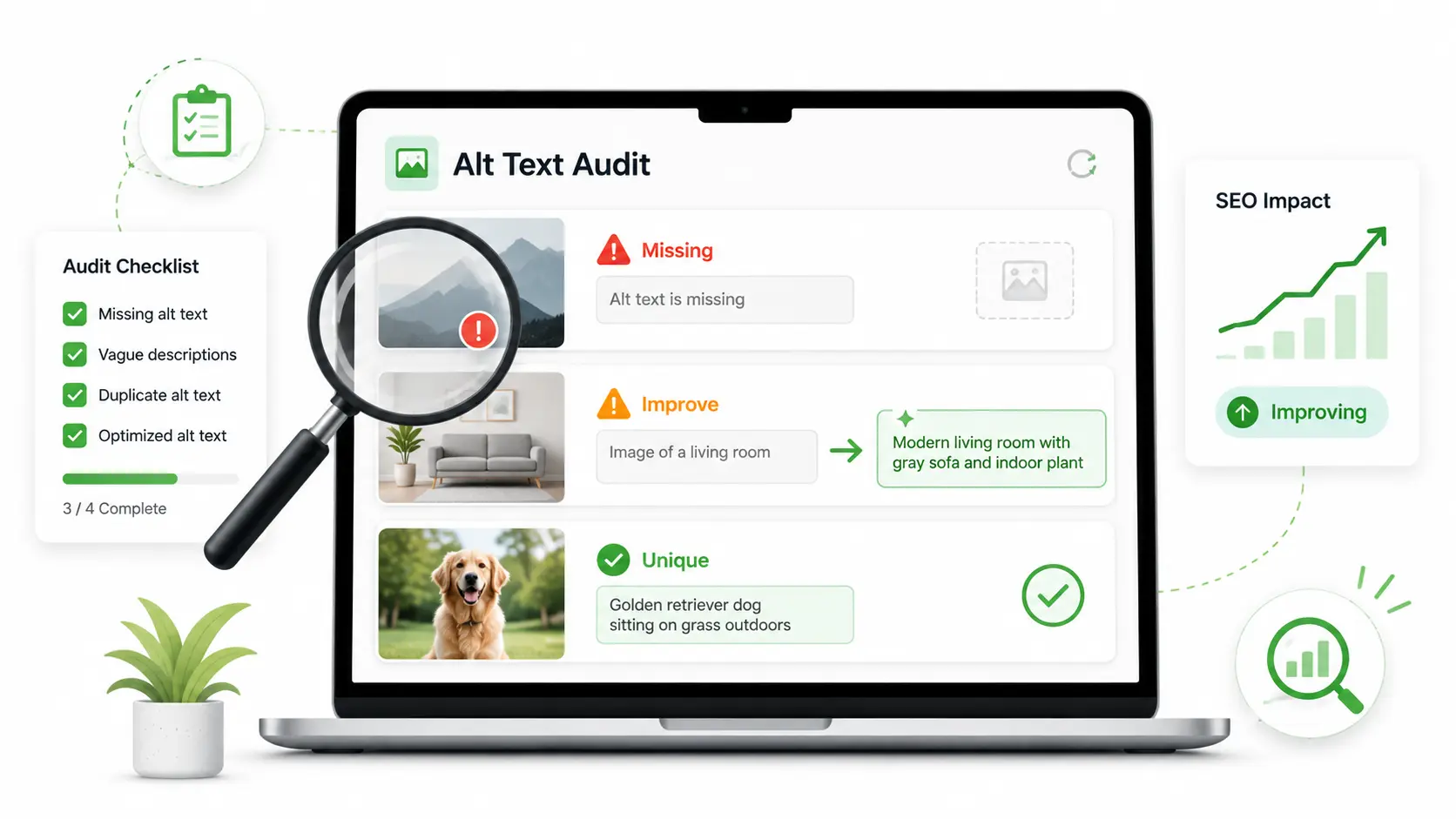
An alt text audit can improve older content without rewriting the whole page. Start with pages that already get traffic, rank for important keywords, or support conversions.
Alt Text SEO Audit Checklist
- Find pages with missing alt text
- Review images on high-traffic pages first
- Check whether alt text describes the image accurately
- Remove keyword stuffing from existing alt text
- Improve vague alt text with more specific descriptions
- Make sure product, blog, and service page images have unique descriptions
Alt text is not the only image SEO factor. File size, lazy loading, crawlability, and indexing also matter. A complete technical SEO audit can help identify deeper image optimization issues beyond alt text alone.
When to Update Old Image Alt Text
Update old image alt text when the image description is unclear, the target keyword has changed, the page content was updated, the alt text is duplicated, or the image supports an important conversion or ranking page. You should also review alt text when refreshing old blog posts — a page may have strong written content but weak image optimization. Improving image alt text can make the page more complete and accessible.
Need Help With On-Page SEO and Image Optimization?
Get professional on-page SEO support to improve alt text, headings, metadata, internal links, and content structure across your website.
View On-Page SEO Services →Frequently Asked Questions
Alt text SEO is the practice of writing clear alternative text for images so search engines and screen readers can understand what an image shows. It supports image optimization, improves accessibility, and helps connect images with the surrounding page topic. Good alt text should be descriptive, natural, and useful instead of being written only for keywords.
Image alt text should usually be short, clear, and specific. In most cases, one concise sentence is enough to describe the image. The goal is not to explain every small visual detail, but to describe the most important part of the image based on the page context. Avoid long, keyword-heavy descriptions.
Yes, you can include keywords in SEO alt text when they fit naturally. The main purpose of alt text is to describe the image, not to repeat keywords. If the keyword accurately describes the image and supports the page topic, it can be included. If it feels forced, write a more natural description instead.
Common alt text mistakes include leaving important images without alt text, using the same alt text on multiple images, stuffing keywords, writing vague descriptions, or describing the wrong image. Another mistake is adding alt text to decorative images when they do not provide useful information for users.
Alt text can help search engines understand image content and may support visibility in image search. It works best when combined with relevant page content, descriptive filenames, proper image placement, fast loading, and strong overall page optimization. Alt text alone is not enough, but it is an important supporting factor.