
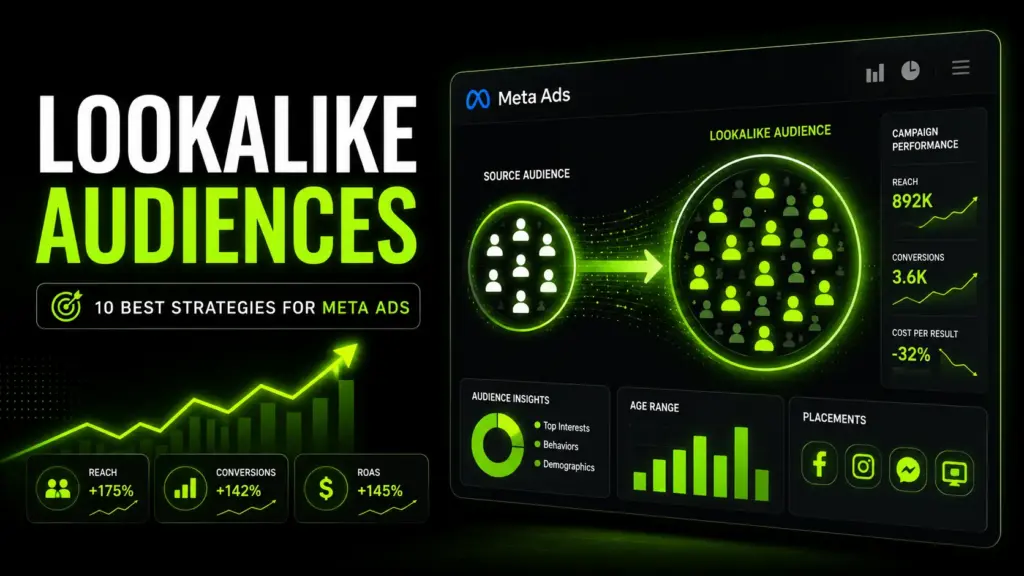
Lookalike audiences are targeting groups built from people who share similar characteristics with your existing customers, leads, website visitors, or engaged users. In Meta Ads, they help advertisers reach new people who are more likely to be interested in a product or service because they resemble an existing high-value audience.
Instead of targeting completely cold users, lookalike audiences use source data to find people with similar behaviors, interests, and patterns. This makes them useful for scaling campaigns, improving targeting quality, and increasing conversions. Meta also lets advertisers choose audience size by percentage, where smaller percentages usually match the source more closely and broader percentages increase reach.
What Are Lookalike Audiences?
Lookalike Audiences Meaning
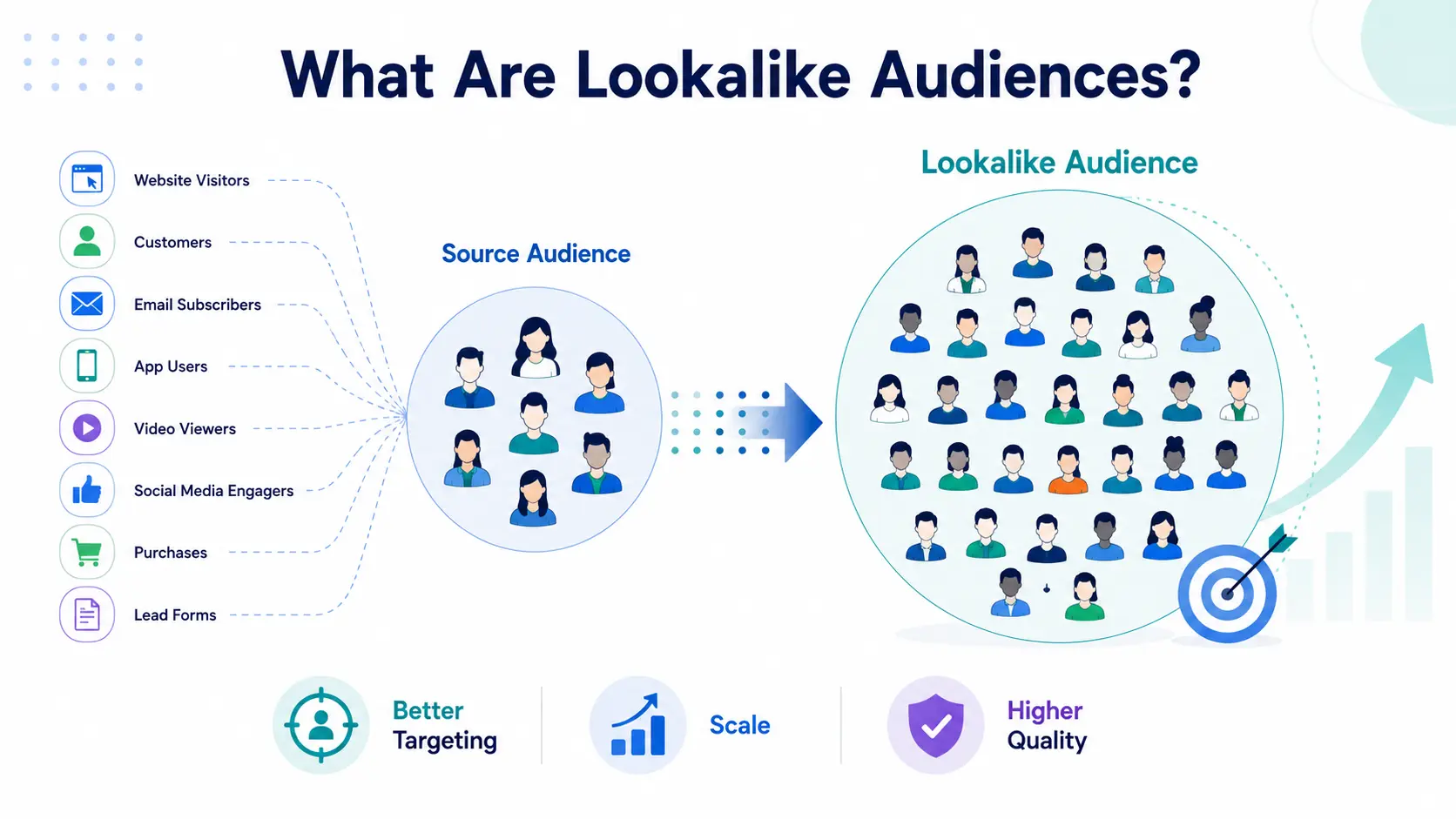
Lookalike audiences are groups of new potential customers who are similar to an existing audience you already have. This existing audience is called the source audience. A source audience can include website visitors, past customers, email subscribers, app users, video viewers, social media engagers, people who completed purchases, and people who submitted lead forms. Meta uses this source data to find new people who share similar patterns with your existing audience.
Why Lookalike Audiences Matter for Advertisers
Lookalike audiences matter because they help advertisers reach people who are more likely to respond to ads. Instead of relying only on interests, demographics, or broad targeting, advertisers can use real customer data to guide campaign targeting. They are useful for:
- Finding new potential customers at scale
- Improving lead quality from paid campaigns
- Increasing purchase conversions
- Reducing wasted ad spend on irrelevant users
- Expanding beyond retargeting audiences
How Lookalike Audiences Work in Meta Ads
How Meta Finds Similar Users
Meta analyzes the source audience and looks for shared patterns — behavior, engagement, interests, demographics, and purchase activity. Then it creates a new audience of people who are similar to that source group. For example, if your best customers often visit your website, engage with product pages, and complete purchases, a Meta lookalike audience can help you reach new users with similar patterns.
Facebook Lookalike Audience vs Meta Lookalike Audience
A Facebook lookalike audience originally referred to lookalike targeting inside Facebook Ads. Today, the same concept is managed through Meta Ads Manager, where campaigns can run across Facebook, Instagram, Messenger, and the Audience Network. A Meta lookalike audience gives advertisers a broader way to reach similar users across Meta's full advertising ecosystem.
How to Create a Lookalike Audience
Step 1: Choose a Strong Source Audience
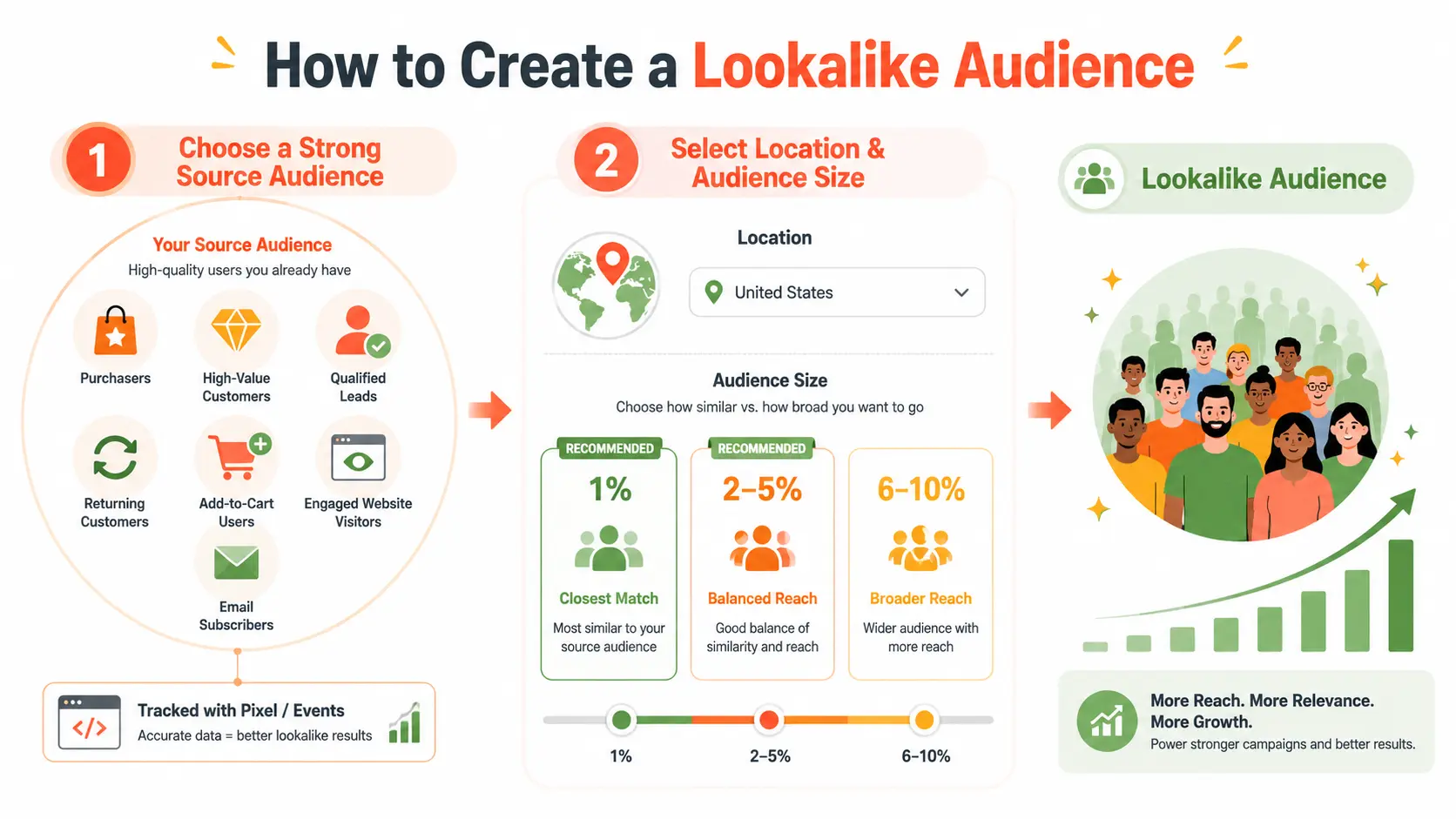
The quality of your source audience is one of the most important parts of any lookalike audience strategy. A strong source audience should include people who already show value to your business — purchasers, high-value customers, qualified leads, returning customers, add-to-cart users, website visitors with high engagement, and email subscribers who opened or clicked campaigns.
For website-based audiences, a properly installed Meta Pixel is important. You can follow this Meta Pixel guide to track website events more accurately.
Step 2: Select Location and Audience Size
After choosing the source audience, select the target country or region, then choose the audience size. For most campaigns, starting with 1% or 2% is usually the safest approach — broader audiences can be tested later when you want to scale.
Most similar to source — best for conversion campaigns
Broader reach with still-relevant targeting for scaling
Largest audience — best for awareness campaigns
10 Best Lookalike Audience Strategies for Meta Ads
Matching the Audience to the Funnel Stage
Best Practices for Better Ad Performance
Use Enough Source Audience Data
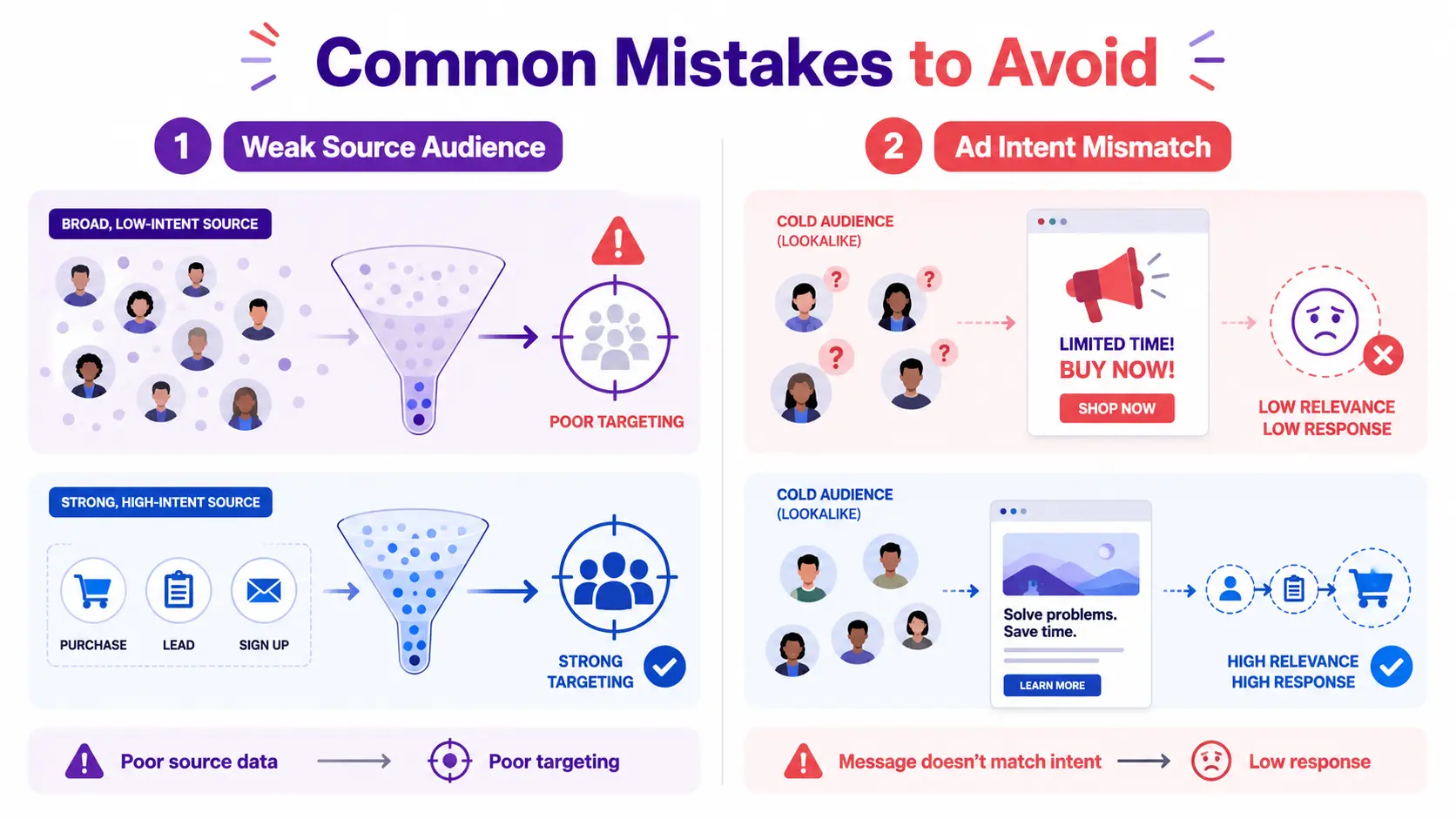
A lookalike audience needs enough data to work well. Meta generally recommends a source audience of 1,000 to 5,000 people, although source quality matters heavily. Strong source audiences usually include clear actions such as purchases, leads, subscriptions, or high-value website behavior.
Keep Testing Your Lookalike Audience Strategy
There is no single perfect setup for every business. A successful lookalike audience strategy usually requires testing different source audiences, audience sizes, creatives, offers, and campaign objectives. Useful tests include:
- Customer list vs website visitor lookalike
- 1% vs 3% vs 5% lookalike audience sizes
- Purchase lookalike vs lead lookalike
- Broad targeting vs lookalike targeting
- Different creatives for the same audience
The best lookalike audience strategy is one you keep improving. Test sources, sizes, and creatives regularly to find what works best for your business and funnel.
Common Mistakes to Avoid
Final Thoughts on Lookalike Audiences
Lookalike audiences are one of the most useful targeting options for scaling Meta Ads. They help advertisers reach new people who are similar to existing customers, leads, or engaged users. When built from strong source data, they can support better targeting, stronger lead quality, and improved campaign performance.
The key is to use the right source audience, test different audience sizes, match campaigns to funnel stages, and review performance regularly. A strong lookalike audience strategy works best when it is supported by clean Meta Pixel tracking, clear campaign goals, strong creatives, and consistent optimization.
Need Help Scaling Your Meta Ads With Better Targeting?
Get professional PPC management to build stronger lookalike audiences, improve targeting quality, and scale campaigns with better results.
View PPC Management Services →FAQs About Lookalike Audiences
Lookalike audiences are groups of new users who share similar characteristics with an existing source audience. This source audience can include customers, website visitors, leads, or people who engaged with your brand. Meta uses this data to find new people with similar behaviors and patterns.
Lookalike audiences work by analyzing a source audience and finding users with similar behaviors, interests, and patterns. Meta compares the source audience with users in a selected country or region, then builds a new audience based on similarity. The size percentage controls how closely the new audience matches the source.
The best source audience is usually made of high-value users — such as purchasers, qualified leads, returning customers, or people who completed important actions like checkout initiations or lead form submissions. A source audience of 1,000 to 5,000 people with strong behavioral signals tends to perform best.
A 1% lookalike audience is usually the most similar to your source audience and is a good starting point for conversion campaigns. Larger audiences such as 2–5% provide more reach for scaling, while 6–10% audiences are broader and better suited for awareness campaigns.
Lookalike audiences and retargeting serve different purposes. Retargeting focuses on people who already interacted with your brand, while lookalike audiences help you reach new people similar to your existing customers or leads. A strong Meta Ads strategy often uses both together across different funnel stages.