
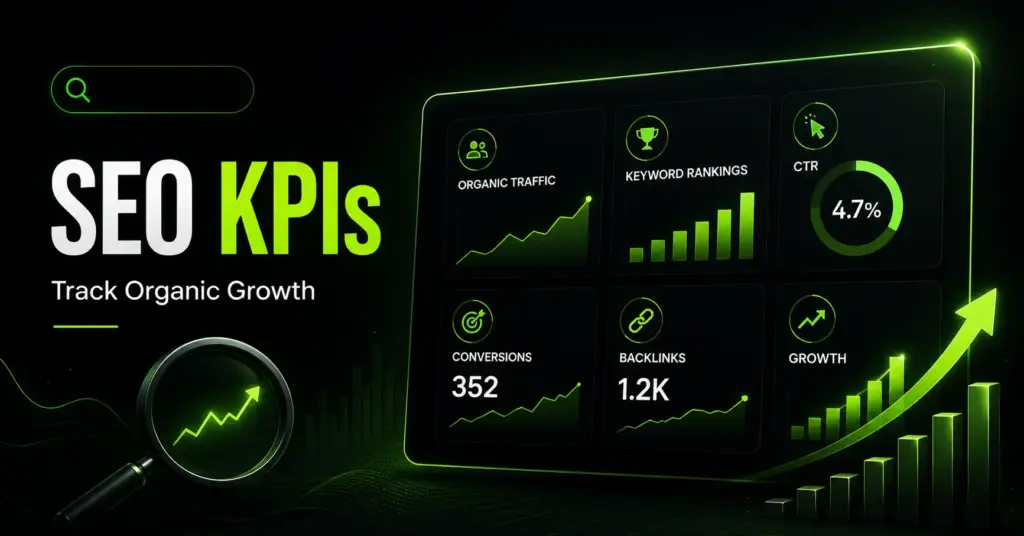
SEO KPIs are measurable indicators that show whether your SEO strategy is improving organic visibility, traffic, rankings, engagement, and conversions. Instead of guessing whether your SEO work is effective, SEO KPIs help you measure real progress using data.
These SEO performance metrics can include organic traffic, keyword rankings, search impressions, click-through rate, backlinks, indexed pages, engagement rate, and organic conversions. When tracked correctly, they show what is working, what needs improvement, and where to focus your content, technical SEO, and link-building efforts.
For businesses, marketers, and website owners, SEO KPIs are important because they connect search performance with real business goals. In this guide, you will learn the 15 best SEO KPIs to track organic growth and improve long-term results.
What Are SEO KPIs?
SEO KPIs Meaning
SEO KPIs are key performance indicators used to measure the success of search engine optimization. They help you understand how your website performs in organic search and whether your SEO strategy is moving in the right direction. These KPIs can measure visibility, traffic, rankings, user behavior, technical health, backlinks, and conversions. In simple terms, SEO KPIs turn search performance into measurable results.
Why SEO KPIs Matter for Organic Growth
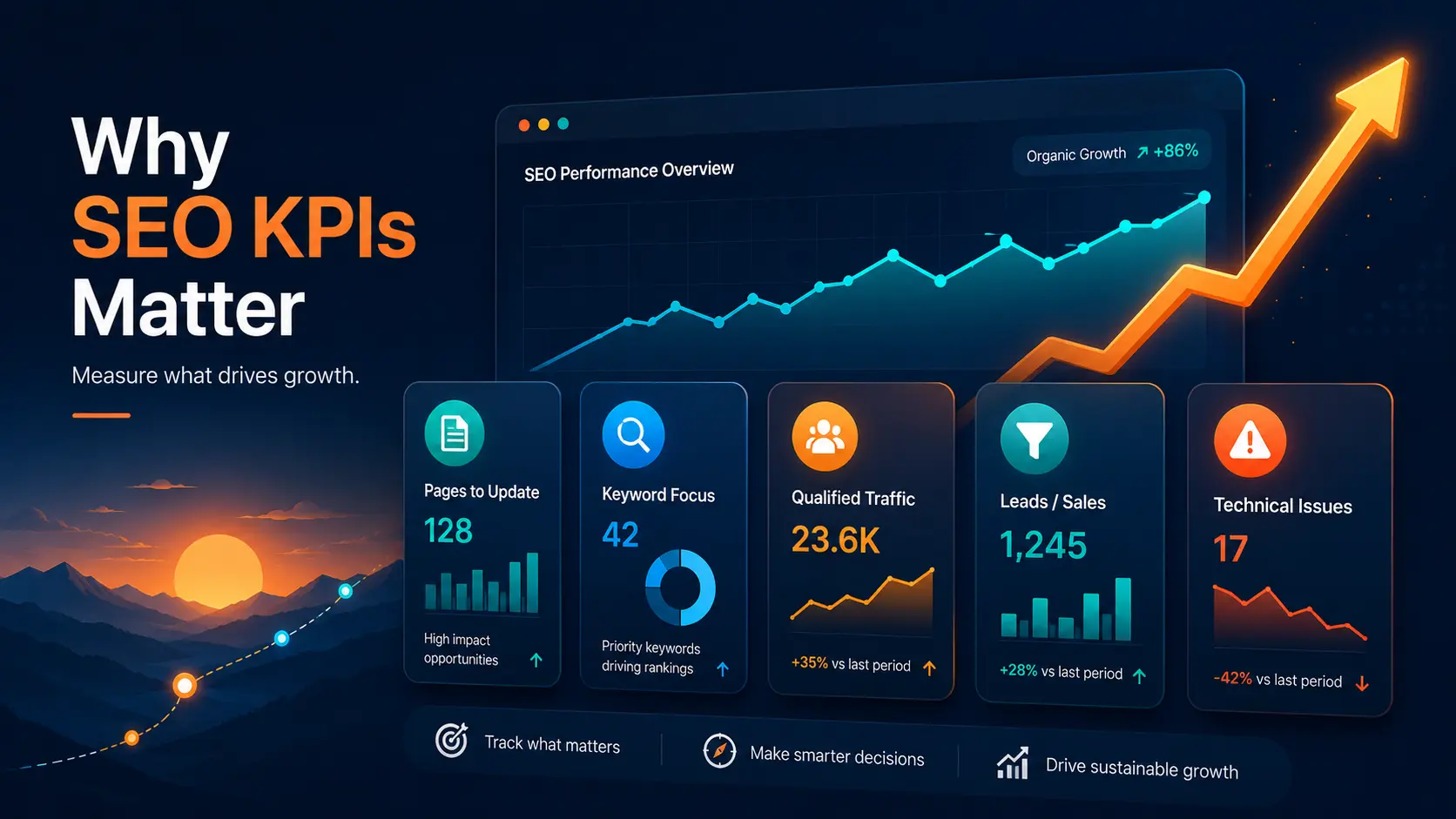
SEO KPIs matter because they make SEO easier to evaluate. Instead of only publishing content, building links, or optimizing pages, you can clearly see whether those actions are improving search performance. They help you decide:
- Which pages need updating
- Which keywords deserve more focus
- Which content brings qualified traffic
- Which pages generate leads or sales
- Which technical issues may be hurting performance
Without clear SEO success metrics, it is easy to focus on tasks that look productive but do not actually improve organic growth.
15 Best SEO KPIs to Track Organic Growth
How to Use SEO KPIs to Improve Your Strategy
How SEO KPIs Help Improve Content Strategy
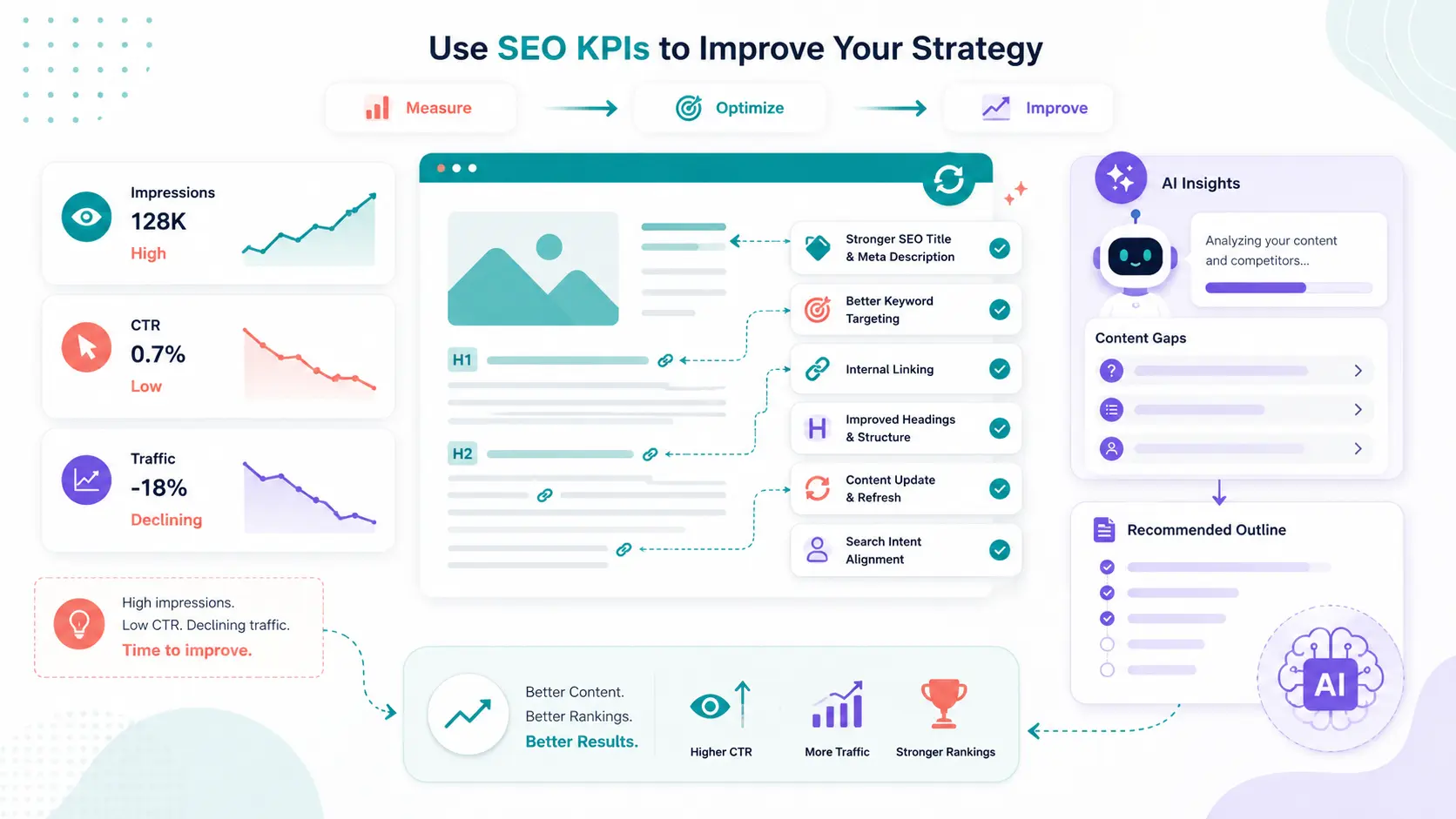
SEO KPIs help you understand which content deserves more attention. For example, a page with high impressions but low CTR may need a stronger SEO title and meta description. A page with declining traffic may need updated information, better keyword targeting, new internal links, improved headings, stronger examples, or better search intent alignment.
You can also use AI tools to analyze content gaps, build outlines, and improve SEO workflows. For deeper guidance, read this guide on how to use AI for SEO.
How SEO KPIs Support Ranking Improvements
SEO KPIs show where ranking opportunities exist. If a page ranks between positions 5 and 15, small improvements may help it move higher. Useful actions include expanding thin sections, adding FAQs, improving internal linking, refreshing outdated content, optimizing image alt text, and strengthening topical relevance.
As search evolves, it is also useful to measure visibility beyond traditional blue links. Learn more about this shift in AI search optimization vs SEO.
Common SEO KPI Tracking Mistakes
Tracking Too Many Metrics
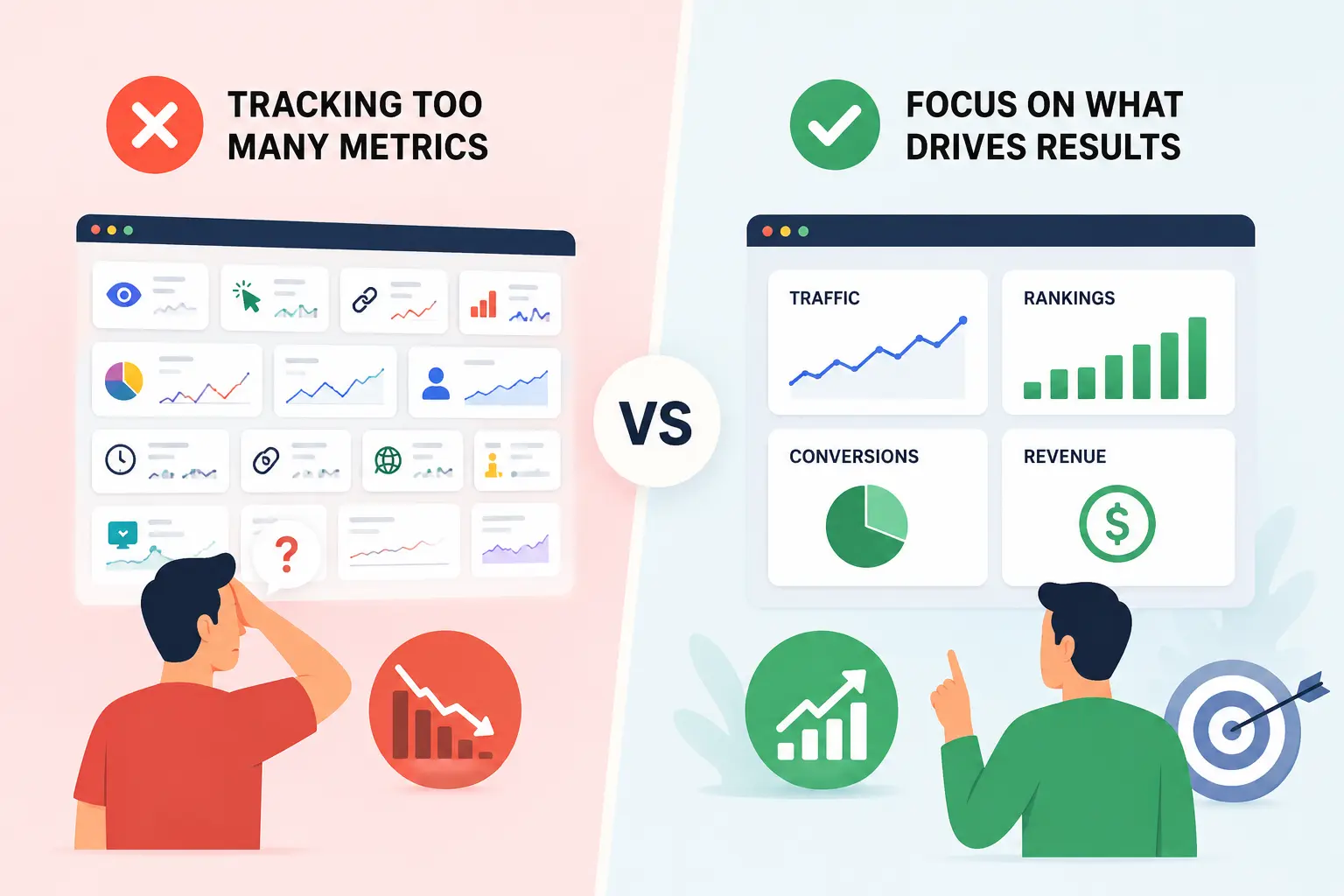
One common mistake is tracking too many metrics without knowing which ones matter most. Not every metric is equally important for every website.
- An eCommerce site may focus more on organic revenue, product page traffic, and conversion rate
- A blog may focus more on organic sessions, rankings, impressions, and engagement
- A service website may prioritize leads, calls, and form submissions
Ignoring Business Goals
SEO KPIs should connect to business goals. Traffic alone is not always enough — a website can receive many visitors but still fail to generate leads or sales. The best SEO reporting combines visibility metrics, traffic metrics, engagement metrics, technical metrics, and conversion metrics.
The strongest SEO strategy tracks a balanced mix. Visibility, traffic, engagement, technical health, backlinks, and conversions together give you a complete picture of organic performance.
SEO KPIs Checklist
Use this checklist when reviewing your SEO performance metrics:
- Organic traffic is increasing over time
- Target keywords are improving in rankings
- Search impressions are growing
- Organic CTR is healthy
- Important pages are indexed
- Organic conversions are tracked
- Top pages are updated regularly
- Internal links are added naturally
- Technical issues are monitored
- Backlink quality is reviewed
- Content performance is checked monthly
- Organic leads or revenue are measured
Final Thoughts on SEO KPIs
SEO KPIs help you measure what really matters in organic search. Instead of focusing only on rankings, you should track a balanced mix of visibility, traffic, engagement, technical health, backlinks, and conversions.
The best SEO success metrics depend on your website goals. For a blog, organic traffic and keyword visibility may be the priority. For a service business, leads and conversions may matter more. For an eCommerce site, revenue from organic search is one of the most important KPIs. By tracking the right SEO KPIs consistently, you can improve your content strategy, identify ranking opportunities, and build a stronger long-term SEO performance system.
Need Help Improving Your SEO Performance?
Get professional on-page SEO support to track the right KPIs, improve content structure, and build a stronger organic growth strategy.
View On-Page SEO Services →FAQs About SEO KPIs
SEO KPIs are measurable indicators used to track the performance of your organic search strategy. They help you understand whether your website is gaining more visibility, traffic, rankings, engagement, and conversions from search engines.
The most important SEO KPIs depend on your website goals. However, organic traffic, keyword rankings, organic conversions, CTR, search impressions, indexed pages, backlinks, and engagement metrics are usually essential for most websites.
SEO KPIs should usually be reviewed monthly. Some metrics, such as rankings and technical issues, can be checked weekly, while broader performance trends should be analyzed over longer periods to account for seasonal and algorithmic changes.
SEO KPIs show which pages are performing well and which pages need improvement. For example, high impressions with low CTR may mean the title or meta description needs work, while declining traffic may show that content needs updating with fresher information, stronger internal links, or better search intent alignment.
SEO metrics are individual data points, while SEO KPIs are the most important metrics connected to specific goals. For example, organic traffic is a metric, but it becomes a KPI when your goal is to increase qualified search traffic from target keywords.