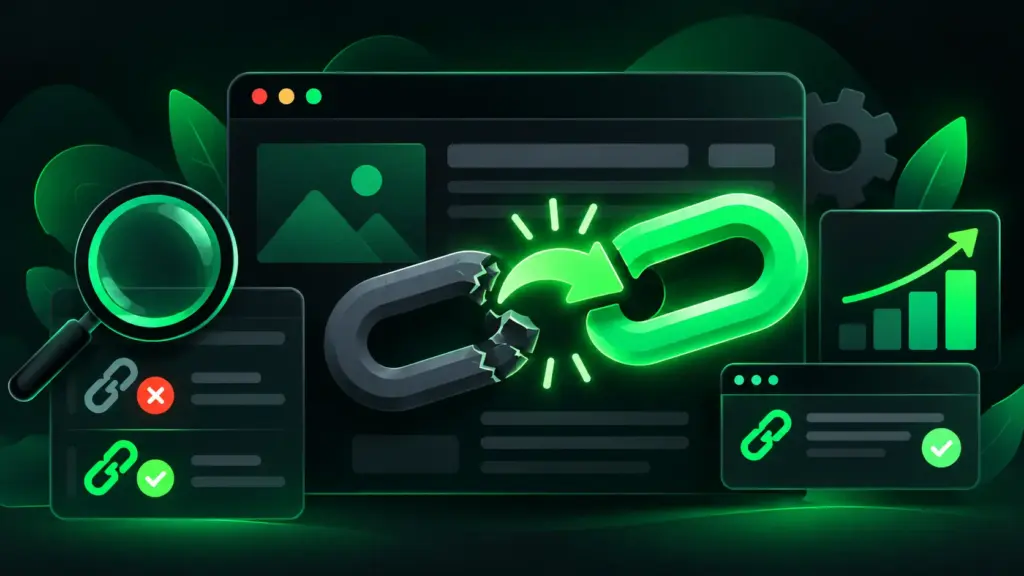
Link reclamation is the process of recovering valuable backlinks that have been lost, removed, broken, or disconnected from the pages they were originally meant to support. Instead of concentrating only on earning new links, it helps protect SEO value your website has already earned.
A practical strategy may involve restoring links that disappeared after content updates, fixing backlinks that lead to 404 pages, correcting outdated URLs, and identifying relevant unlinked brand mentions that could become useful backlinks.
The goal is not to recover every link that ever pointed to your website. Effective reclamation focuses on relevant, trustworthy opportunities that improve the experience for users while preserving valuable connections between your content and other websites.
Table of Contents
- What is link reclamation and how does it work?
- Why link reclamation matters for SEO
- How to find and recover lost backlinks
- Broken link reclamation vs. unlinked brand mentions
- How to turn unlinked brand mentions into backlinks
- How often should you check for lost or broken backlinks?
- Link reclamation best practices
- A step-by-step recovery workflow
- Frequently asked questions
What Is Link Reclamation and How Does It Work?
Link Reclamation Explained
Link reclamation starts by identifying backlinks that no longer work as expected and determining why they were lost.
A backlink can disappear for many reasons. A publisher may update an article and remove the link. The linking page may be deleted. Your destination page may have moved to another URL. A website migration may also leave external links pointing to pages that now return errors.
Once you know why a backlink was lost, you can decide whether it can and should be recovered.
The solution might involve:
- Restoring a deleted page.
- Redirecting an outdated URL.
- Correcting an incorrect destination.
- Asking a publisher to update a removed or outdated link.
- Leaving the link alone when recovering it would provide little value.
Some situations can be fixed entirely on your website, while others require communication with the website that originally linked to you.
How Does Link Reclamation Help SEO?
Backlinks help connect relevant information across the web. When a useful link stops working, both users and website owners can lose value.
Recovering worthwhile links may help preserve pathways to important content, reduce unnecessary 404 errors, restore referral traffic, and protect some of the value created by previously earned backlinks.
It can also improve website maintenance.
For example, discovering that dozens of external sites link to an outdated URL may reveal a redirect problem that needs attention. Fixing that problem does more than recover individual links; it creates a better experience for everyone trying to reach the resource.
Why Link Reclamation Matters for SEO
Recover Value You Have Already Earned
Earning quality backlinks can take substantial effort.
A website may link to you because you published original research, created a useful guide, developed a tool, provided expert commentary, or received media coverage. If that backlink later breaks because a URL changed, the original reason for the link may still exist.
This is what makes lost backlink recovery valuable.
Instead of beginning with a publisher who has never heard of you, you are dealing with a page that previously referenced your website or content. In many cases, the underlying relationship or editorial context already exists.
Consider a website that linked to one of your guides two years ago. You later combined that guide with a newer article and deleted the old URL without adding an appropriate redirect. The external website may still contain the link, but visitors now reach a 404 page.
A relevant redirect could repair the problem without any outreach.
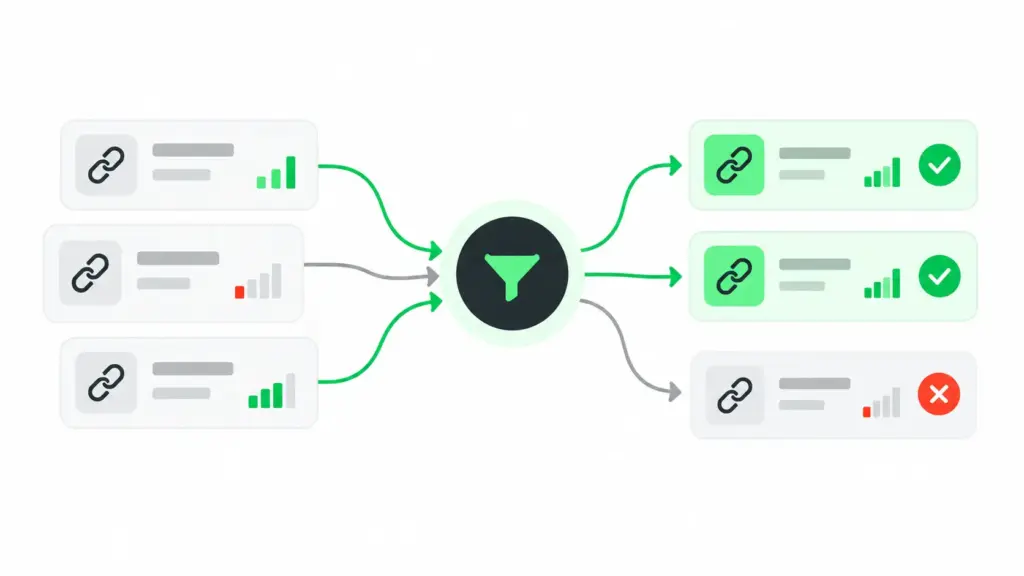
Which Lost Backlinks Should You Recover?
Not every missing backlink deserves attention.
Before taking action, evaluate:
- The relevance of the linking website.
- The context surrounding the original link.
- The quality of the linking page.
- Whether the page still receives or can send referral traffic.
- Whether your current content still satisfies the original reason for the link.
- Whether restoring the link would genuinely help users.
Quality matters more than simply restoring the largest possible number of links.
You should also avoid assuming every lost backlink is beneficial. If a source appears questionable, unrelated, or manipulative, review the link more carefully. Understanding how to review potentially toxic backlinks can help you distinguish useful recovery opportunities from links that may not deserve your time.
How to Find and Recover Lost Backlinks
Run a Link Reclamation Audit
A link reclamation audit helps you identify what changed and which links are worth investigating.
Start by reviewing backlinks that your SEO platform reports as recently lost. Compare them with current backlinks and inspect high-value losses manually. You can use Ahrefs Site Explorer to identify lost backlinks and prioritize recovery opportunities. Enter your website’s domain, navigate to the Backlinks report, and select the Lost filter to view backlinks that have disappeared. You can narrow the results using filters such as Domain Rating (DR), organic traffic, link attributes, and the reason the backlink was lost. Pay particular attention to links marked as removed, as well as links affected by redirects or unavailable pages. Review the most relevant opportunities, verify whether each backlink is actually missing, and export the results to organize your link reclamation efforts.
A useful process is:
- Export your current and lost backlink data.
- Identify backlinks that disappeared or now point to errors.
- Open the linking page manually.
- Confirm whether the backlink is actually missing or broken.
- Check the previous destination URL.
- Determine why the link stopped working.
- Find the most relevant current destination.
- Decide whether a technical fix or outreach is needed.
- Record the outcome.
- Monitor the link after making changes.
Manual verification is important.
SEO tools provide valuable data, but a backlink may appear lost because a page temporarily failed to load, changed its canonical URL, redirected elsewhere, or was unavailable during a crawl.
Check what is actually happening before contacting a publisher.
Use the Right Lost Backlink Recovery Method
Lost backlink recovery should address the cause of the problem rather than applying the same solution to every link.
If an external backlink points to an old page that has a clear replacement, a relevant permanent redirect may be enough.
If the original content was accidentally deleted and remains valuable, restoring the page may make more sense.
If the linking website changed your URL incorrectly, outreach may be necessary.
If a publisher removed the backlink but continues to reference your original study, graphic, tool, or resource, you may politely suggest adding the relevant link again.
However, if the source page has disappeared completely or the website is no longer active, there may be nothing practical to reclaim.
Knowing when not to pursue a lost link can save as much time as knowing how to recover one.
Broken Link Reclamation vs. Unlinked Brand Mentions
What Is Broken Link Reclamation?
Broken link reclamation focuses on backlinks that lead users to a page that no longer works properly.
A common example is a backlink pointing to a 404 page after a website restructures its URLs.
Other causes can include:
- Deleted pages.
- Incorrect URLs.
- Failed website migrations.
- Outdated content paths.
- Missing redirect rules.
- Changed product or service URLs.
When a valid backlink already exists but the destination is broken, the first step is usually to check whether you control the problem.
If you do, you may be able to solve it without asking the publisher to change anything.
For example, imagine ten relevant websites still link to:
example.com/old-seo-study
You move the research to:
example.com/research/seo-study
If the old address now returns a 404, creating an appropriate redirect can immediately repair the visitor journey for those backlinks.
What Are Unlinked Brand Mentions?
Unlinked brand mentions are different because there may never have been a backlink in the first place.
An unlinked mention occurs when another website references your company, product, founder, research, data, graphic, or resource without making that reference clickable.
For example:
A journalist writes, “The research was conducted by Example Company,” but does not link to the research or the company’s website.
The difference can be summarized simply:
Broken link reclamation repairs or restores a link that already exists or previously existed.
Unlinked brand mention outreach tries to convert an existing textual reference into a useful backlink.
Both can support your backlink strategy, but they should not be treated as identical processes.
How Do I Turn Unlinked Brand Mentions Into Backlinks?
Find Relevant Unlinked Brand Mentions
Start by monitoring the web for references to terms strongly associated with your organization.
Search for mentions of:
- Your company name.
- Website name.
- Product names.
- Service names.
- Founders or recognized experts.
- Original studies.
- Proprietary statistics.
- Branded frameworks.
- Unique images or graphics.
- Tools and calculators.
Then determine whether the page already links to your website.
A brand mention may be unlinked even though another part of the article contains a link to you, so reviewing the entire page helps avoid unnecessary outreach.
More importantly, determine whether adding a backlink would genuinely make sense.
A passing mention of a company name does not automatically need a hyperlink. A reference to a specific study, report, tool, or resource usually creates a clearer reason to provide readers with direct access to the original material.
Contact Publishers With a Reader-Focused Request
When you identify a worthwhile opportunity, make the request easy to understand.
Avoid presenting the backlink as something you are entitled to receive.
Instead, explain how adding the link could help readers access the material being referenced.
A simple outreach message could look like this:
“Thanks for mentioning our research in your article. I noticed readers currently don’t have a direct link to the original study. If helpful, you can link the mention to the research page so they can review the complete data.”
Keep the message short and specific.
Avoid requesting keyword-heavy anchor text or asking publishers to replace natural wording simply for SEO purposes.
The strongest request usually suggests the most relevant destination page and leaves the editorial decision with the publisher.
How Often Should You Check for Lost or Broken Backlinks?
Create a Regular Link Reclamation Schedule
There is no universal schedule that works for every website.
For active websites that publish frequently, earn regular media mentions, or make ongoing content changes, reviewing important lost backlinks monthly is a reasonable starting point.
A broader backlink review can then be performed periodically to identify patterns and lower-priority issues.
Stable websites may need less frequent reviews.
However, certain website changes should trigger an additional audit regardless of your normal schedule.
Check your backlinks after:
- A site migration.
- A domain change.
- Large URL changes.
- Content consolidation.
- Major page deletions.
- A rebrand.
- Large-scale redirect work.
- A new website design.
- Major digital PR campaigns.
Website migrations deserve particular attention because valuable external links can easily continue pointing to old destinations.
Monitor Important Backlinks Between Audits
You do not necessarily need to manually review your entire backlink profile every week.
Instead, use alerts or monitoring systems for your highest-priority links and pages.
Pay special attention to backlinks pointing toward:
- Original research.
- Popular evergreen content.
- Commercially important pages.
- Tools and calculators.
- High-traffic resources.
- Major PR placements.
Automated monitoring can alert you when something changes. You can then investigate manually to determine whether action is necessary.
This combination of automation and periodic manual auditing keeps the process manageable.
Link Reclamation Best Practices
Prioritize Quality Over Quantity
Successful reclamation is not about recovering every possible backlink.
A link from a highly relevant article that sends interested visitors may be more useful than dozens of unrelated links from weak pages.
Evaluate potential recovery opportunities based on:
- Relevance.
- Editorial context.
- Website quality.
- Destination-page usefulness.
- Referral potential.
- Natural placement.
- Reader value.
This approach also improves outreach.
Instead of sending hundreds of generic requests, you can focus on situations where restoring or adding a link has a clear editorial purpose.
Avoid Common Link Reclamation Mistakes
Several mistakes can undermine an otherwise useful strategy.
Avoid:
- Trying to recover every link you lose.
- Redirecting every deleted URL to your homepage.
- Contacting publishers before manually checking the page.
- Sending generic mass outreach.
- Asking for links from irrelevant websites.
- Demanding exact-match anchor text.
- Redirecting old pages to unrelated content.
- Assuming every unlinked mention should become a backlink.
- Ignoring backlinks during website migrations.
- Focusing on link counts instead of relevance.
- Treating reclamation as a replacement for earning new links.
Reclamation should complement your wider SEO and link-building strategy.
You still need valuable content, strong technical SEO, internal linking, useful resources, and legitimate reasons for other websites to reference your work.
A Simple Link Reclamation Workflow
Step-by-Step Link Reclamation Checklist
Use the following process to keep campaigns organized:
- Find recently lost backlinks.
- Locate backlinks pointing to broken pages.
- Identify relevant unlinked brand mentions.
- Verify each opportunity manually.
- Check the quality and relevance of the source.
- Determine why the backlink was lost.
- Identify the best current destination page.
- Fix technical problems on your own site first.
- Add relevant redirects where necessary.
- Contact publishers when an external edit is required.
- Track outreach and responses.
- Verify recovered backlinks.
- Continue monitoring important links.
Separating technical fixes from outreach can make the entire process more efficient.
If you can repair a backlink through a relevant redirect, there may be no reason to ask an editor to update an old article manually.
How to Measure Link Reclamation Results
Tracking your results helps determine whether your process is improving over time.
Useful measurements include:
- Lost backlinks identified.
- Valuable backlinks recovered.
- Broken destination pages fixed.
- Relevant redirects created.
- Unlinked mentions discovered.
- Unlinked mentions converted into backlinks.
- Outreach responses.
- Referring domains restored.
- Referral visits generated by recovered links.
You can also record why links were lost.
For example, if many lost backlinks result from deleted pages, your content removal process may need improvement.
If migrations repeatedly produce broken external links, redirect planning may need more attention.
Reclamation data can therefore reveal broader technical and content-management problems.
Three Important Questions to Ask Before Reclaiming a Link
Is the Backlink Still Relevant?
A link that made sense three years ago may no longer be useful today.
Check whether your page still provides information that matches the surrounding context. If your content has changed significantly, another destination may be more appropriate.
Will Recovering the Link Help Readers?
Reader value should be the strongest reason for repairing or requesting a link.
If someone reading the source page would benefit from accessing your original research, tool, guide, or referenced resource, the recovery request has a clear purpose.
Can I Fix the Problem Without Outreach?
Always investigate technical solutions first.
A missing redirect, deleted page, or incorrectly configured URL can sometimes be fixed entirely on your own site.
This saves time for both you and the publisher.
Conclusion
Link reclamation is one of the most practical ways to protect backlinks and mentions your website has already earned. By finding lost links, repairing broken destinations, monitoring important pages, and evaluating relevant unlinked brand mentions, you can recover useful opportunities that might otherwise disappear.
The key is to prioritize relevance and user value rather than raw backlink numbers. Fix technical problems first, use outreach selectively, and avoid reclaiming questionable links simply because they once existed.
When link reclamation becomes part of routine SEO maintenance, it can help preserve valuable connections while revealing technical and content issues before they affect more of your backlink profile.
Frequently Asked Questions About Link Reclamation
What Is Link Reclamation in SEO?
Link reclamation is the process of finding valuable backlinks that were lost, removed, or made ineffective and taking appropriate steps to restore their usefulness. This may involve redirecting an old URL, restoring deleted content, correcting a broken destination, or contacting a publisher. The objective is to preserve worthwhile backlinks and referral paths rather than trying to recover every link that has ever pointed to a website.
How Do I Recover a Lost Backlink?
Start by checking the linking page manually and identifying why the backlink disappeared. If your destination URL changed, restore the content or create a relevant redirect when appropriate. If the publisher removed or changed the link while still referencing your resource, consider contacting them with the correct destination. Prioritize links from relevant, trustworthy pages instead of spending time recovering low-value links.
Are Unlinked Brand Mentions Worth Turning Into Backlinks?
They can be valuable when the mention appears on a relevant page and a link would help readers access the original company, research, tool, product, or resource being discussed. Not every brand mentioned needs a backlink. Focus on situations where there is a natural reason for readers to visit the referenced source, and suggest the most relevant destination rather than automatically requesting a homepage link.
Should I Reclaim Every Backlink I Lose?
No. Some links come from irrelevant, outdated, low-quality, or inactive pages and may not be worth recovering. Review the linking page, context, relevance, and potential reader value before taking action. A focused campaign that recovers strong links is generally more useful than pursuing every missing backlink simply to increase your total link count.
How Often Should I Perform a Link Reclamation Audit?
Active websites can start by reviewing important lost backlinks monthly and performing broader checks periodically. Stable websites may need less frequent audits. Additional reviews are especially useful after site migrations, major URL changes, content consolidation, rebranding, redesigns, or large digital PR campaigns. Automated alerts can help identify important changes between scheduled audits without requiring constant manual monitoring.