
What Are Toxic Backlinks?
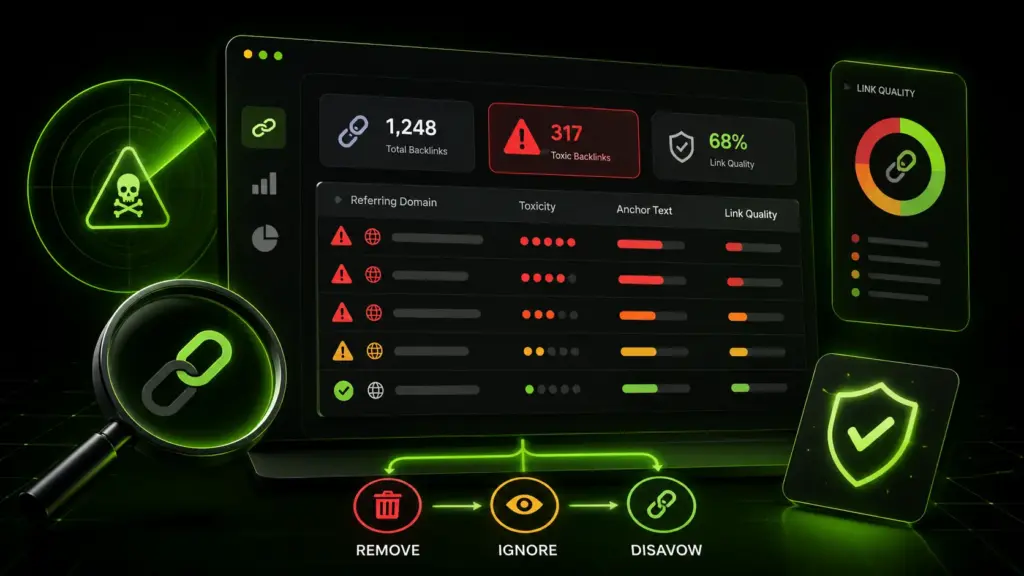
Toxic backlinks are external links pointing to your website that may look spammy, unnatural, irrelevant, or manipulative. They can come from poor-quality domains, automated pages, hacked websites, link schemes, or pages created only to pass link value.
The important word is "may." A link that looks weak is not always dangerous. Some websites collect random scraper links or strange referral links without doing anything wrong. That is why every suspicious link should be reviewed in context before you remove or disavow it.
Toxic Backlinks Explained Simply
A backlink is supposed to act like a trust signal. When a real website links to your content because it is useful, relevant, or credible, that link can support your SEO. Toxic backlinks are different — they often look unnatural because they are placed on pages with no real editorial value. For example, a local plumbing website receiving hundreds of links from unrelated foreign casino pages would raise concern. SEO tools often use the term "toxic" to describe links with spam signals, but their scores are not final proof. A manual review is still needed.
Toxic Backlinks vs Low-Quality Backlinks
Low-quality backlinks are not always toxic. A weak link may come from a small blog, a new website, or a page with low authority — that does not automatically mean it can hurt your rankings. A truly risky link usually has stronger warning signs: manipulative anchor text, a link network origin, an irrelevant page, or placement beside hundreds of unrelated outbound links. The difference matters because overreacting can lead you to remove links that are harmless or even useful.
Why Toxic Backlinks Can Affect SEO Performance
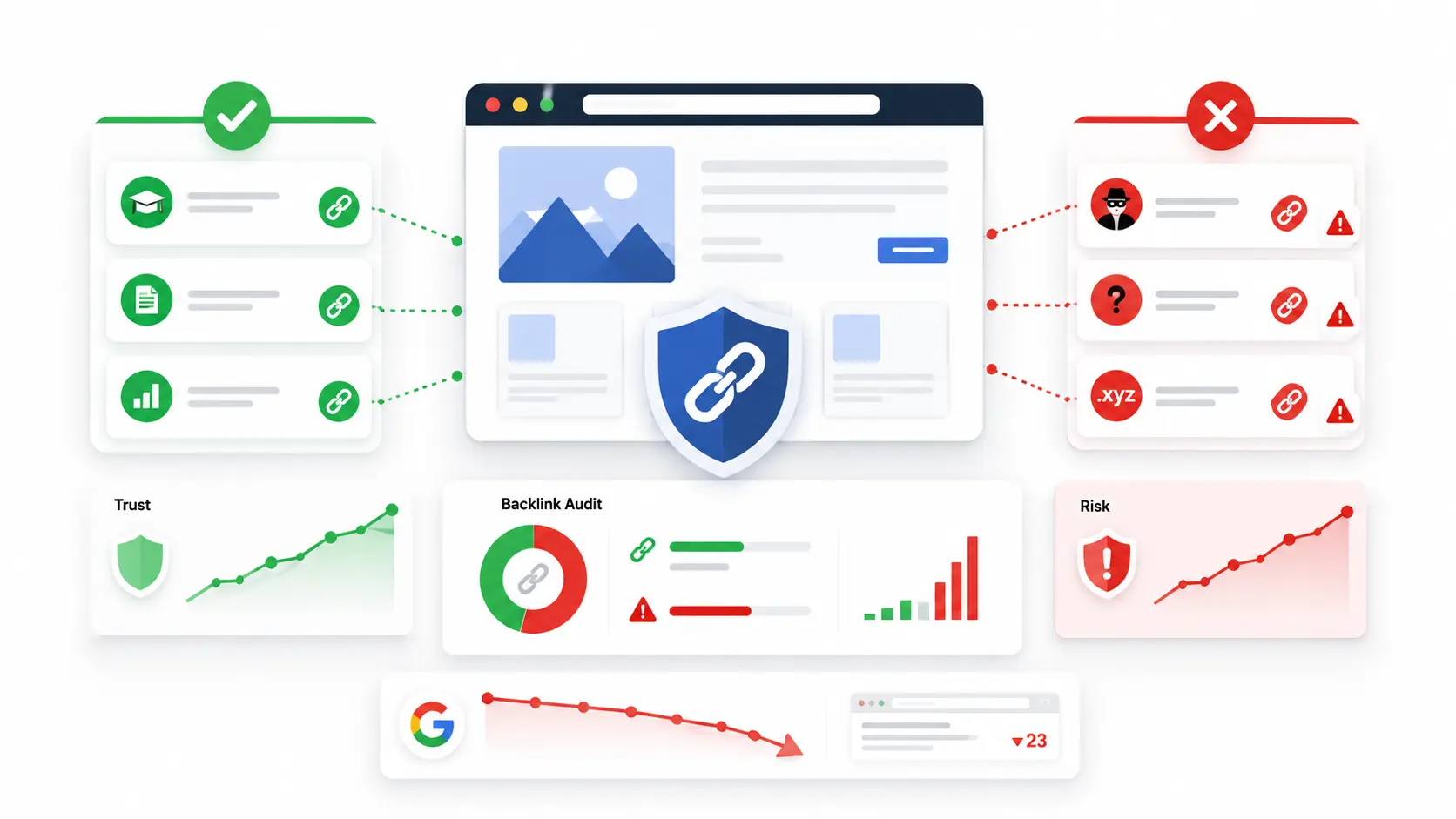
Search engines look at backlinks to understand trust, authority, relevance, and popularity. If your backlink profile contains many unnatural links, it may make your website look less reliable. That does not mean every spam link will damage your SEO — search engines are often good at ignoring obvious junk. The bigger risk appears when there is a repeated pattern that suggests links were built to manipulate rankings.
How Toxic Backlinks May Weaken Trust
A healthy backlink profile usually includes relevant links from real websites, natural anchor text, and gradual growth over time. A suspicious profile may show repeated exact-match keywords, links from unrelated domains, and sudden spikes from poor-quality sources. Toxic backlinks can weaken trust because they make the site's link profile look artificial — especially in competitive niches where link quality can influence how search engines evaluate authority.
Toxic links should also be reviewed alongside broader site health. A ranking drop is not always caused by links. Crawl errors, indexation issues, page speed, content quality, and structure can also affect performance. A complete technical SEO service review can help separate backlink problems from technical issues.
When Toxic Backlinks Become a Serious Problem
Suspicious links become more serious when they are connected to paid link schemes, private blog networks, hacked pages, automated spam, or past low-quality SEO work. The risk is also higher when many links use the same commercial anchor text — if dozens of unrelated domains link with the exact same money keyword, the pattern may look manipulative. A manual action or warning inside Google Search Console should always be treated seriously.
Common Signs of Bad Backlinks
Bad backlinks often share similar signals. One signal alone may not prove that a link is harmful, but several signals together can show a pattern worth reviewing.
Irrelevant or Spammy Referring Domains
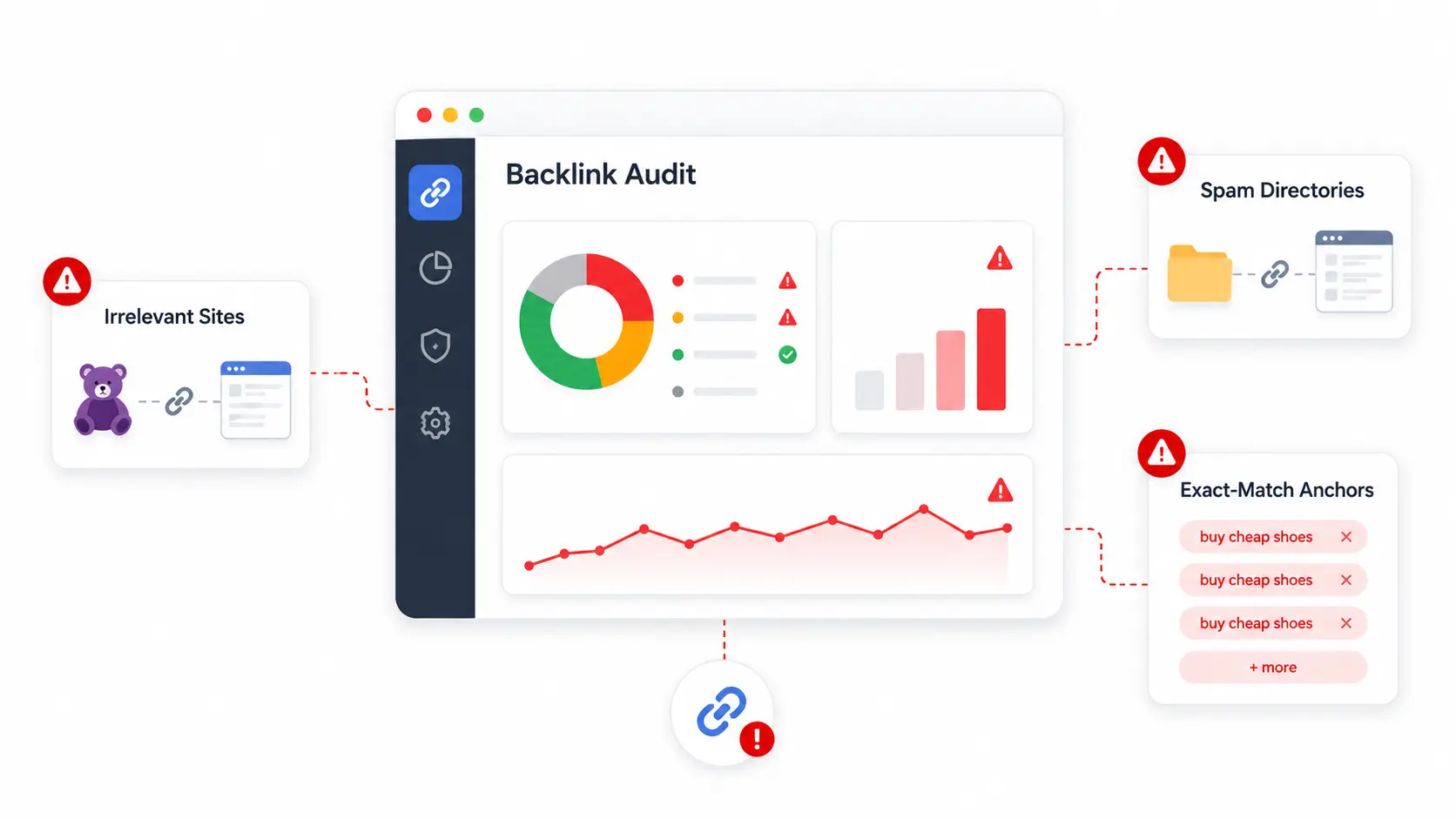
Links from websites with no topical connection can look suspicious, especially when they come from scraped pages, adult sites, gambling sites, auto-generated domains, or pages filled with unrelated outbound links. Foreign-language links are not always bad — they become questionable when there is no audience, topic, brand, or business reason for that website to link to you.
Over-Optimized Anchor Text
Anchor text is the clickable text in a link. Natural backlink profiles usually include branded anchors, URL anchors, generic anchors, and some descriptive phrases. Over-optimized anchor text happens when too many links use the same commercial keyword — this can make your backlink profile look engineered rather than earned.
- Links from irrelevant or unrelated websites
- Links from spammy or low-quality directories
- Links from hacked or auto-generated pages
- Repeated exact-match commercial anchor text
- Links from pages with hundreds of unrelated outbound links
- Links from low-quality private blog networks
- Links from websites with no real traffic or topical value
How to Find Toxic Backlinks During a Backlink Audit
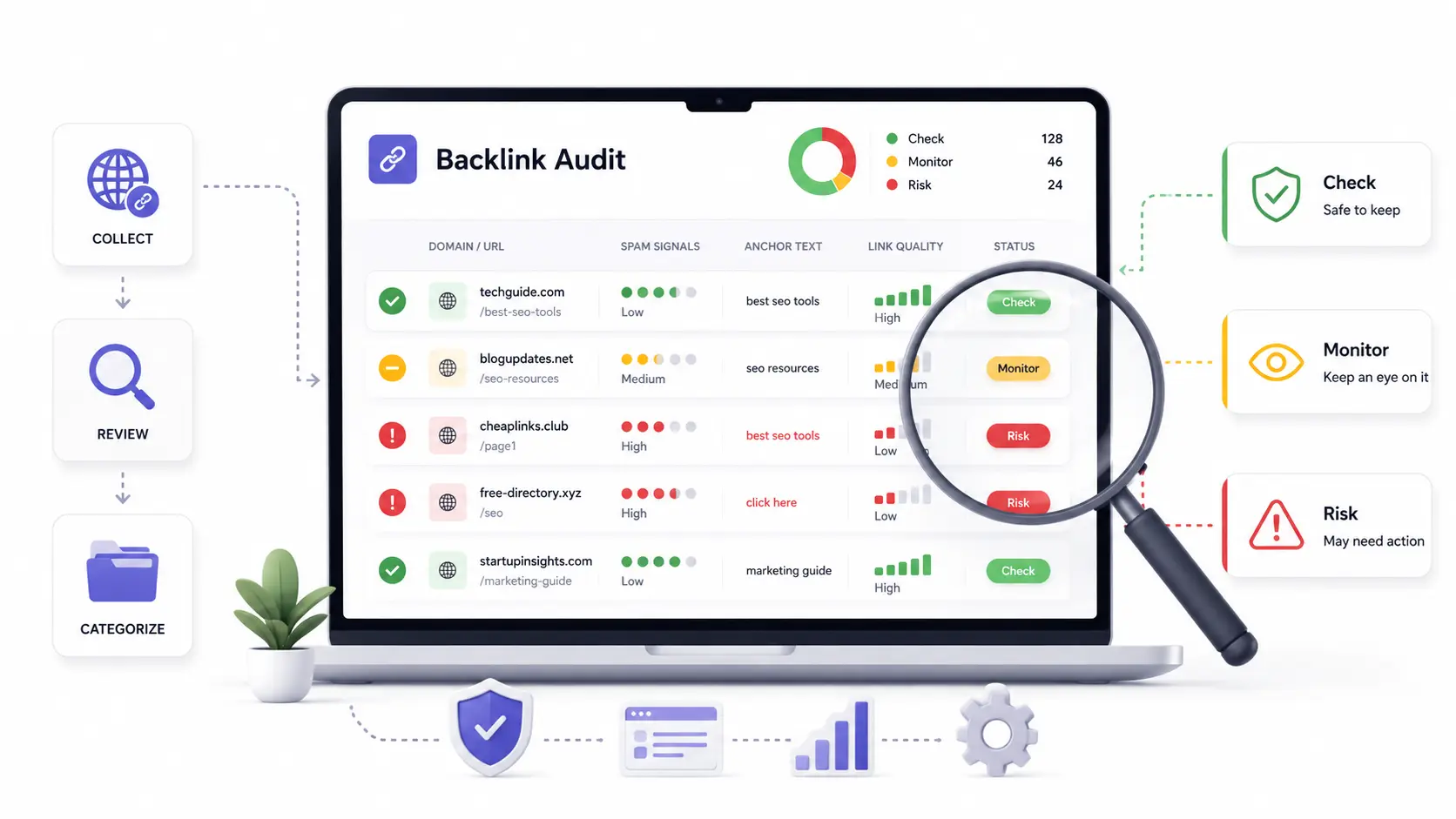
A backlink audit is the process of collecting, reviewing, and categorizing links that point to your website. The goal is not to panic over every weak link — the goal is to understand which links are harmless, which should be monitored, and which may need action.
Use a Toxic Backlink Checker Carefully
A toxic backlink checker can help you find suspicious links faster. These tools often flag domains based on spam signals, anchor text patterns, low authority, high outbound link counts, or other risk indicators. However, tool scores should support your review, not replace it — a link marked as toxic by a tool may simply come from a small or unfamiliar website. Before taking action, open the linking page, check the context, and decide whether the link truly looks manipulative. A professional backlink audit service can help separate harmless low-quality links from links that may create real SEO risk.
Compare Link Data from Multiple Sources
Backlink data can vary from tool to tool. For a clearer view, compare data from Google Search Console, Ahrefs, Semrush, SE Ranking, Majestic, or similar backlink tools. Export the links, remove duplicates, and review referring domains first — domain-level review helps you spot patterns faster than checking thousands of individual URLs one by one.
How to Review Links Before Taking Action
The review stage is where many website owners make mistakes. They see a high toxicity score and immediately create a disavow file. That can be risky. A safer approach is to review each suspicious link based on relevance, placement, anchor text, page quality, and repeated patterns.
Check Relevance, Placement, and Anchor Text
Ask whether the linking website is related to your niche — a relevant link from a real article is very different from a keyword-stuffed link placed in a spam page footer. Then check placement: is the link inside useful content, or hidden in a list of random links? Does the page appear written for humans, or does it look generated only for search engines? Finally, review anchor text — branded anchors and natural phrases are usually less concerning than repeated exact-match commercial keywords.
Look for Patterns, Not Just Single Links
One suspicious link is usually less important than a repeated pattern. If many links come from similar domains, use the same anchor text, or appear suddenly, the risk is higher. Patterns can reveal link networks, automated spam, negative SEO attempts, or old link-building campaigns. This is why a backlink audit should focus on the overall profile, not isolated links.
A single strange link rarely causes real damage. It is the repeated pattern of unnatural signals that creates genuine SEO risk worth acting on.
Should You Remove, Disavow, or Ignore Toxic Backlinks?
After reviewing your links, divide them into three groups: ignore, remove, and disavow. This keeps the process organized and reduces the chance of harming your own backlink profile.
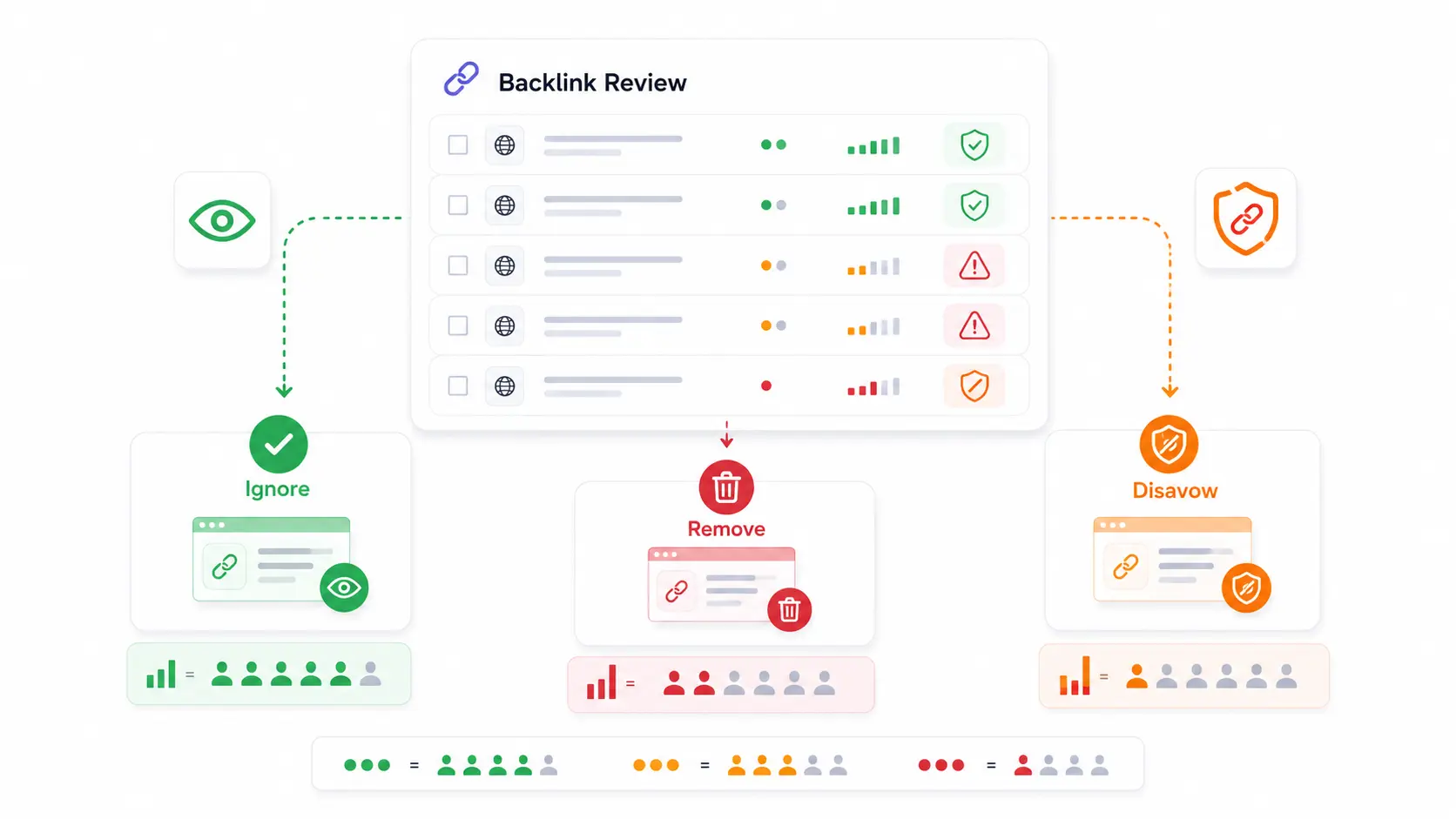
Random low-value spam links, scraper links, and weak links with no clear manipulative pattern. Monitor without acting unless a pattern develops.
Clearly harmful links from identifiable sites. Contact the site owner and request removal before considering disavow.
Links that are clearly manipulative, connected to link schemes, or linked to manual action risk — when removal is not possible.
When to Ignore Bad Backlinks
You can often ignore random low-value spam links, scraper links, and weak links that do not show a clear manipulative pattern. Ignoring does not mean being careless — it means the link does not justify action based on available evidence. If a suspicious link has no clear impact and no pattern behind it, monitoring may be enough.
When to Remove or Disavow Toxic Backlinks
Removal or disavow may be considered when links are clearly manipulative, paid, part of a link scheme, created by previous SEO work, or connected to manual action risk. Try removal first — contact the site owner and request removal if the link is clearly harmful. If removal is impossible and the risk is strong, disavow may be appropriate. Use disavow carefully: incorrect use can remove link signals that may still have value. The goal is not to erase every imperfect backlink — it is to reduce clear risk.
Toxic Backlinks Checklist
A calm checklist makes the review process easier and helps avoid emotional decisions based only on tool warnings.
- Export backlink data from multiple tools
- Remove duplicate URLs and domains
- Check referring domain relevance
- Review anchor text distribution
- Identify spammy or suspicious domains
- Look for sudden backlink spikes
- Review links from directories and blog networks
- Separate weak links from truly risky links
- Try removal first when possible
- Use disavow only when there is clear risk
Final Toxic Backlinks Review Steps
At the end of your review, categorize links into three groups: ignore (weak or random links with no clear risk), remove (links you can reasonably ask site owners to delete), and disavow (links with strong manipulative signals or links connected to manual action concerns). This simple system keeps your backlink cleanup safer and more controlled.
Final Thoughts on Toxic Backlinks
Toxic backlinks should be reviewed carefully, but they should not create panic. A tool score is only a starting point — link quality depends on context, relevance, placement, anchor text, and repeated patterns. The smartest approach is to run a backlink audit, review links manually, and take action only when there is a clear reason.
Long term, the best protection is earning better links. A strong backlink strategy helps you build safer, more relevant authority and reduces the need to rely on low-quality link sources. When you focus on quality instead of fear, toxic backlinks become a manageable SEO issue rather than a constant threat.
Need Help With a Professional Backlink Audit?
Get expert backlink analysis to separate harmless links from genuine risks, with a clear action plan for removal, disavow, and long-term link quality improvement.
View Backlink Audit Service →Frequently Asked Questions
Toxic backlinks are links from external websites that may look spammy, unnatural, irrelevant, or manipulative. They can come from poor-quality directories, hacked pages, automated sites, or link schemes. However, not every weak backlink is toxic — a careful review is needed to understand whether the link creates real SEO risk.
Toxic backlinks can hurt rankings if they are part of a manipulative link pattern or violate search engine guidelines. Random spam links are often ignored, but repeated unnatural backlinks with over-optimized anchors or suspicious sources should be reviewed. The risk is higher when the links were intentionally built to manipulate rankings.
The best way to find bad backlinks is to run a backlink audit using multiple tools and manually review the results. Check domain relevance, anchor text, page quality, outbound links, traffic signals, and repeated patterns. A toxic backlink checker can help you find suspicious links faster, but manual judgment is still important.
No, you should not disavow every link marked as toxic by a tool. Some links may look suspicious but still be harmless. Disavow should be used carefully when links are clearly manipulative, connected to link schemes, or create manual action risk. Incorrect disavow use can remove links that may still have value.
A backlink audit should be done regularly, especially after major ranking drops, link-building campaigns, website migrations, or suspicious backlink spikes. For most websites, reviewing backlinks every few months is enough. Competitive niches may need more frequent checks because link spam and negative SEO risks can appear faster.