
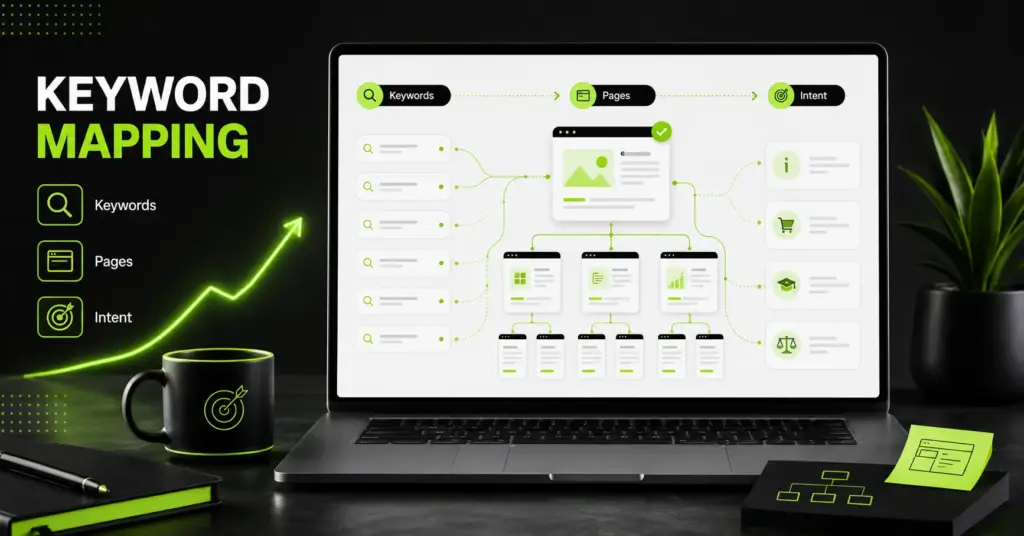
Keyword mapping is the process of assigning target keywords to specific website pages based on search intent, topic relevance, and business goals. Instead of collecting keywords and using them randomly, you connect each keyword to the page that can best satisfy the searcher's need.
A strong keyword mapping SEO process helps prevent keyword cannibalization, improves page structure, and turns keyword research into a clear action plan. It also supports a stronger keyword mapping strategy because you can see which pages already exist, which pages need updates, and which new content should be created.
In this guide, you will learn how to build a practical map, organize keywords by intent, and use the process to improve content planning and on-page SEO.
What Is Keyword Mapping in SEO?
How Keyword Mapping Connects Keywords to Website Pages
Keyword mapping means matching each target keyword with the most relevant page on your website. That page may be your homepage, a service page, category page, landing page, or blog post.
For example, a commercial keyword such as "content writing services" should usually point to a service page. An informational keyword such as "how to organize SEO keywords" may be better suited to a blog post. The goal is simple: every important keyword should have a clear destination. This gives search engines a cleaner structure to understand and gives users a better path to the information they need.
Why Keyword Mapping Is Different from Keyword Research
Keyword research helps you find search terms people use. Keyword mapping organizes those search terms into a website structure. Think of keyword research as collecting the ingredients — mapping is the recipe that shows where each ingredient belongs.
Without it, you may create several pages that overlap, miss important content gaps, or target the wrong intent. This is why keyword mapping connects keyword data with real SEO decisions, including page creation, page updates, internal linking, and metadata optimization.
Why Keyword Mapping Is Important for SEO Strategy
Keyword Mapping Helps Prevent Keyword Cannibalization
Keyword cannibalization happens when multiple pages target the same or very similar keyword with the same intent. This can confuse search engines because they may struggle to decide which page should rank. If three blog posts all target "keyword mapping," they may compete with each other instead of building one strong page.
A clear map helps assign one primary keyword to one main page. Related pages can support that page, but each needs a unique purpose, a distinct angle, and clear internal links that support the main topic.
Keyword Mapping Strategy Improves Content Planning
A keyword mapping strategy helps you decide what to create, update, merge, or remove. Instead of publishing content based on random ideas, you can identify gaps in your website structure. A good map can show:
- Which keywords already have assigned pages
- Which existing pages need better optimization
- Which topics need new content
- Which pages overlap too much
- Which service pages need supporting blog posts
This makes SEO planning more practical. Your content calendar becomes connected to actual ranking opportunities instead of isolated blog ideas.
How to Create a Keyword Mapping Template
What to Include in a Keyword Mapping Template
A keyword mapping template should be simple enough to use but detailed enough to guide SEO decisions. At minimum, include the fields that help you understand the keyword, the intent, and the assigned page. A strong template should include:
- Target keyword and secondary keywords
- Search intent
- Assigned page URL and page type
- Title tag, meta description, and H1
- Internal links
- Content status and priority level
These columns help your team understand what each page should target and what needs to happen next. A page may already exist but need a stronger title tag, better headings, or deeper content.
Simple Keyword Mapping Template Example
| Page Type | Target Keyword | Secondary Keywords | Search Intent | Assigned URL | Status |
|---|---|---|---|---|---|
| Service Page | content writing services | SEO content writing, blog writing services | Commercial | /content-writing-services/ | Existing |
| Service Page | on-page SEO services | on-page SEO, SEO optimization services | Commercial | /on-page-seo-services/ | Existing |
| Blog Post | keyword mapping | keyword mapping SEO, keyword mapping template | Informational | /keyword-mapping/ | New |
To create your own template, start with your most important services, products, categories, or content topics. Then assign keywords based on the page that best matches the searcher's intent. The template should not stay static — update it as your website grows.
7 Powerful Steps to Organize SEO Keywords with Keyword Mapping
Step 1: Collect Your Main and Secondary Keywords
Start by collecting primary keywords, secondary keywords, long-tail keywords, and related search terms. Use your existing keyword research, website data, customer questions, and competitor observations. Do not only look for high-volume terms — some lower-volume keywords can bring highly qualified visitors because they show clearer intent.
Step 2: Group Keywords by Search Intent
Search intent is the reason behind a search. Grouping keywords by intent helps you choose the right page type. The four main types are:
- Informational: The user wants to learn something
- Commercial: The user is comparing options
- Transactional: The user is ready to take action
- Navigational: The user wants a specific brand, page, or website
A blog post usually works well for informational intent. A service page is often better for commercial or transactional intent.
Step 3: Assign Keywords to the Right Pages
Each important keyword should have one clear destination page. Service-related keywords should usually go to service pages, while educational queries should usually go to blog posts. This keeps your website organized and prevents different pages from competing for the same purpose.
Step 4: Check Existing Pages Before Creating New Ones
Before writing a new article, check whether an existing page can be improved instead. Many websites create too much new content while ignoring pages that already have authority, links, or rankings. Ask:
- Is there already a page targeting this topic?
- Does the current page match the search intent?
- Can the existing page be expanded or improved?
- Are two pages too similar and better merged?
Updating the right page can often be more effective than creating another thin page.
Step 5: Build Internal Links Between Related Pages
A clear keyword map also helps you connect blog posts with important service pages — such as your content writing services page when planning article production, and your on-page SEO services page when optimizing page structure.
Internal links help users move through your website naturally. They also help search engines understand which pages are important and how your topics connect. Use descriptive anchor text — avoid generic phrases like "click here" when a specific phrase explains the destination better.
Step 6: Optimize Titles, Meta Descriptions, and Headings
Keyword mapping guides your on-page elements. Once a keyword is assigned to a page, you can use it naturally in the title tag, meta description, H1, H2s, URL, and body content. The goal is clarity — search engines and readers should quickly understand what the page is about. Use secondary terms to support the main topic without repeating the same phrase too often.
Step 7: Review and Update Your Keyword Map Regularly
Your keyword map should change as your website changes. Review it when you publish new pages, update services, notice ranking drops, or see search intent shift. A practical review every few months can help you catch problems early — old content that needs refreshing, stronger internal links, or new keyword opportunities that deserve their own page.
Common Keyword Mapping Mistakes to Avoid
Targeting the Same Keyword on Too Many Pages
One of the biggest mistakes is assigning the same main keyword to several pages. This creates overlap and weakens your ranking potential. Every major keyword should have one primary page. Related pages can support that page, but they should target different angles or subtopics.
For example, one main guide can target "keyword mapping," while supporting posts can cover keyword clustering, SEO content planning, or search intent analysis.
Ignoring Search Intent When Mapping Keywords
A keyword should not be assigned only because it has search volume — the page must match what the user expects to find. If someone searches for "how to create a keyword mapping template," they likely want instructions, examples, and a usable structure. Sending that user to a generic service page would not satisfy the intent.
Good mapping starts with the user's goal. When intent and page type align, your content has a stronger chance of performing well.
How Keyword Mapping Supports Content Writing and On-Page SEO
Keyword Mapping SEO Benefits for Content Teams
Keyword mapping SEO helps writers understand which keyword belongs to each page, what angle to follow, and which related terms should be included. This makes briefs clearer — a writer can see the target keyword, secondary terms, internal links, page purpose, and search intent before drafting. The result is more focused content and fewer disconnected blog posts.
It also helps editors avoid overlap. If a topic already exists, the team can update the existing page instead of publishing a competing article.
How Keyword Mapping Improves On-Page Optimization
A map supports better headings, metadata, internal links, URL structure, and content depth. It gives every page a defined job. A mapped page should have a clear title, focused H1, useful subheadings, relevant internal links, and enough depth to answer the search query. This makes optimization more consistent across the entire website and makes your SEO plan easier to manage over time.
Need Help With SEO Content Planning?
Get professional on-page SEO and content writing support to build a stronger, more organized website structure.
View On-Page SEO Services →Frequently Asked Questions
Keyword mapping in SEO is the process of assigning target keywords to specific website pages based on search intent, topic relevance, and page purpose. It helps organize your website structure, prevents different pages from competing for the same keyword, and makes it easier to plan content that supports organic rankings.
To create a keyword mapping template, start with columns for the target keyword, secondary keywords, search intent, assigned URL, page type, title tag, meta description, internal links, and content status. This gives you a clear overview of which keywords belong to which pages and what needs to be optimized.
Keyword mapping is important because it connects keyword research with real website pages. Instead of collecting keywords without direction, you can organize them into a structured SEO plan. This helps improve content relevance, reduce keyword cannibalization, strengthen internal linking, and guide future content creation.
A keyword map should be reviewed regularly, especially after publishing new content, changing service pages, or noticing ranking drops. For active websites, checking the map every few months can help keep your SEO structure clean, updated, and aligned with current search intent.
Yes, keyword mapping can make content writing more strategic. It shows writers which keyword each page should target, what search intent to follow, and how the content should connect with other pages. This helps create focused, useful, and SEO-friendly content instead of disconnected blog posts.