
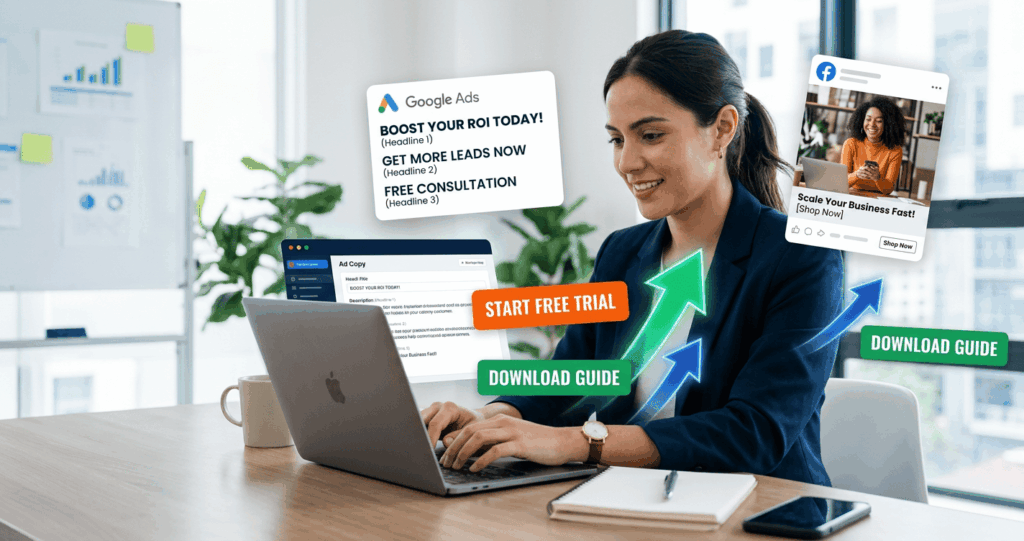
What Is Ad Copywriting?
Ad copywriting is the process of writing persuasive text for advertisements with one clear goal: getting the right person to take action. That action may be clicking a search ad, buying a product, booking a consultation, downloading a guide, or sending an inquiry.
Unlike general content writing, advertising copywriting has limited space and limited time. A person may only see your headline for a second before deciding whether to click or scroll away. That means every word must earn its place.
Good ad copy does three things quickly:
- Captures attention
- Communicates value
- Gives the reader a clear next step
For example, a weak ad says, "We offer digital marketing services." A stronger version says, "Get more qualified leads with conversion-focused PPC campaigns." The second version is clearer because it focuses on the customer's desired result.
If your business already invests in paid advertising, strong copy can make your budget work harder. For brands that need support beyond ads, professional content writing services can also help keep messaging consistent across blogs, landing pages, emails, and campaigns.
Why Strong Ad Copy Matters
Ad Copywriting Connects Search Intent With Action
People click ads when the message matches what they want at that moment. Someone searching "emergency plumber near me" does not need a long brand story. They need speed, trust, and a simple way to call. Someone searching "best project management software" may need proof, benefits, and a reason to compare options. The copy must match the stage of awareness.
Strong copy answers questions like:
- What problem is the customer trying to solve?
- What outcome do they want?
- What fear or objection might stop them?
- What makes this offer better than another option?
- What should they do next?
When your ad answers those questions clearly, it becomes easier for the right audience to respond.
Advertising Copywriting Improves Paid Campaign Performance
Paid ads can fail even when the targeting is accurate. If the offer is unclear, the headline is boring, or the call to action is weak, people may ignore the ad. Advertising copywriting helps improve performance by making the message more relevant and persuasive — across Google Ads, Meta Ads, LinkedIn Ads, display ads, YouTube ads, and remarketing campaigns.
If your ads need better structure, testing, and conversion tracking, expert PPC management services can help connect the strategy, copy, budget, and performance data.
How to Write Ad Copy That Gets Clicks
Start With a Clear Offer
A good offer is not always a discount. It can be speed, convenience, expertise, quality, simplicity, or reduced risk. Before writing any ad, define these four points:
- Audience: Who is this for?
- Problem: What pain point are they facing?
- Promise: What result can you help them achieve?
- Action: What should they do next?
Once those answers are clear, writing becomes easier. You are translating customer intent into a short persuasive message — not guessing.
Match the Ad to the Landing Page
A common mistake is writing ads that promise one thing while the landing page says something else. If the ad says "Book a Free PPC Audit," the landing page should immediately show the same offer. The headline, form, proof points, and CTA should all support that promise.
The ad earns the click. The landing page earns the conversion. Message match between both is what makes the journey feel seamless.
10 Powerful Ad Copywriting Tips
1. Lead With the Main Benefit
People click because your offer helps them solve a problem or reach a goal. Instead of leading with features, lead with outcomes. "Advanced reporting dashboard included" becomes "See which campaigns bring leads, sales, and wasted spend." The second version explains why the feature matters.
2. Use the Customer's Language
The best ad copy often sounds like the customer's own thoughts. Avoid stiff, corporate wording when your audience uses simple language. A customer may not think, "I need a scalable lead generation solution." They may think, "I need more calls from serious buyers." Use language your audience recognizes instantly.
3. Make the Headline Specific
Vague headlines are easy to ignore. Specific headlines create stronger expectations and help people decide faster. "Grow Your Business Online" becomes "Get More Local Leads With Targeted Google Ads." Specificity also helps filter out the wrong clicks.
4. Add Proof Where Possible
Trust matters, especially when people see your brand for the first time. Add proof when it fits naturally — such as number of happy customers, years of experience, reviews or ratings, case study results, or guarantees. Proof should be honest and relevant. Avoid inflated claims that sound unrealistic.
5. Write a Strong Call to Action
A call to action tells people what to do next. Weak CTAs feel generic. Strong CTAs feel connected to the offer. Instead of "Click Here," use something specific: "Get Your Free Quote," "Book a Strategy Call," "Start Your Free Trial," or "Request a PPC Audit." The CTA should reduce friction and make the next step obvious.
6. Create Urgency Without Sounding Fake
Urgency can improve response, but only when it feels believable. False urgency damages trust. Good urgency is based on a real reason — limited booking slots, a seasonal offer, an event deadline, or limited stock. "Book this week to get your campaign audit before launch" feels more natural than "Hurry! Limited time only!" without context.
7. Address One Objection
Every buyer has doubts. Your copy can remove one of those doubts before the click. Simple lines like "No long-term contract," "Cancel anytime," "Free setup included," or "Designed for small businesses" lower perceived risk and make it easier to say yes.
8. Match Copy to Platform
Google Ads usually respond well to direct intent-based copy because users are actively searching. Social media ads often need stronger hooks because users are not always looking to buy at that moment. Google Ads copy should be clear, relevant, and benefit-driven. Social media copy can use curiosity, storytelling, emotional triggers, or problem-based openings.
9. Test More Than One Version
No copywriter can know the best-performing line before testing. Smart campaigns use multiple variations to test headlines, CTAs, offers, emotional angles, and proof points. Small wording changes can affect click-through rates and conversions. Testing replaces opinions with data.
10. Keep It Simple
Clear copy usually wins. If people need to reread your ad to understand it, the message is too complicated. Use short sentences. Remove filler. Replace jargon with plain language. Before publishing, ask: "Would my ideal customer understand this in three seconds?" If the answer is no, simplify.
Ad Copy Examples for Google Ads and Social Media
Google Ads Examples
Headline: Local Roof Repair Experts
Description: Fast roof inspections, honest pricing, and reliable repairs. Book your free estimate today.
Combines location intent, service clarity, trust, and a direct CTA.
Headline: Get More Leads From Google Ads
Description: Stop wasting spend on poor clicks. Launch targeted PPC campaigns built for measurable growth.
Speaks to a pain point and offers a clear outcome.
Headline: Learn Copywriting in 30 Days
Description: Follow simple lessons, real examples, and practical exercises. Start building better copy today.
Gives a timeline, format, and benefit.
Headline: Comfortable Shoes for Long Days
Description: Lightweight support, modern styles, and easy returns. Shop bestsellers before they sell out.
Highlights comfort, style, low risk, and urgency.
Social Media Ad Examples
"Running ads but not getting enough leads? Your targeting may be fine. Your message may be the problem."
CTA: Book a free ad review.
"Most ads fail before the landing page loads. Here's what your headline needs to fix first."
CTA: Download the free checklist.
"Need blog content that sounds human, ranks better, and supports your sales funnel? Get professionally written content built around your goals."
CTA: Explore content writing services.
"Before: clicks with no conversions. After: clear offers, stronger CTAs, and campaigns built around buyer intent."
CTA: Start your PPC strategy.
Common Advertising Copywriting Mistakes
Writing for Everyone
Ads written for everyone usually persuade no one. A strong ad speaks to a specific audience with a specific need. "Marketing solutions for all businesses" becomes "PPC campaigns for service businesses that need more qualified calls." The second version may reach fewer people, but it reaches better people.
Using Clever Words Instead of Clear Words
Clarity should come before cleverness. If the reader does not understand the offer, they will not click. Avoid vague phrases like "unlock your potential," "transform your future," "innovative solutions," or "next-level growth." Replace them with concrete benefits. "Turn more website visits into booked consultations" is stronger than any of those.
Ignoring the Customer's Stage of Awareness
Not every audience is ready to buy. Some need education. Some need comparison. Some need a final reason to act.
- Cold audiences may need problem-focused hooks, educational content, and low-risk offers
- Warm audiences may need case studies, product comparisons, and testimonials
- Hot audiences may need pricing clarity, limited-time bonuses, and strong CTAs
The more your ad matches the buyer's stage, the more natural the click feels.
Final Thoughts
Ad copywriting is not about writing louder ads. It is about writing clearer, sharper, more relevant messages that help the right people take the next step.
The best ads are built on customer intent, strong benefits, simple wording, and a clear call to action. Whether you are creating search ads, social ads, display ads, or remarketing campaigns, the same principle applies: say the right thing to the right person at the right moment.
Start with the customer's problem. Show the value of your offer. Remove one doubt. Then make the next step easy. When done well, ad copywriting can improve clicks, strengthen conversions, and make every advertising dollar work harder.
Need Help With Your Ad Copy or PPC Strategy?
Get expert support for paid campaigns, content writing, and conversion-focused messaging.
View PPC Management Services →Frequently Asked Questions
Ad copywriting is the process of writing persuasive words for advertisements. Its purpose is to get people to take a specific action, such as clicking an ad, buying a product, booking a call, or signing up for an offer. It focuses on clarity, benefits, emotion, proof, and a strong call to action.
Start with the customer's problem, then connect it to a clear benefit. Use specific headlines, simple language, proof points, and a direct call to action. Effective ad copy should match the search intent or platform behavior. It should also connect smoothly with the landing page so visitors immediately recognize the offer.
Ad copy should be as long as needed to make the offer clear, but as short as possible to keep attention. Google Ads require concise headlines and descriptions. Social media ads can be slightly longer when storytelling or education is useful. The best length depends on the platform, audience awareness, and offer complexity.
A good Google Ads example is: "Get More Leads From Google Ads — Launch targeted campaigns built to reduce wasted spend and increase qualified inquiries." A good social media example is: "Running ads but not getting leads? Your offer may be clear to you, but not to your buyers. Book a free ad review."
Yes. Performance Max campaigns use multiple assets across Google channels, so stronger headlines, descriptions, audience signals, and landing page messaging can improve engagement quality. Clear benefits, specific offers, and varied copy angles give the system better creative inputs to test. Better copy will not fix poor strategy, but it can support stronger campaign performance.